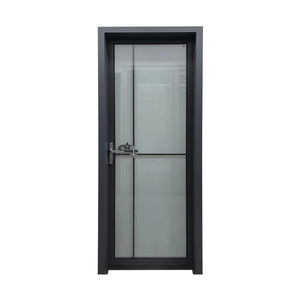
Aluminum Alloy Bathroom Glass Door Sliding Shower Room Door
Corrosion-resistant T6063 aerospace alloy framework with specialized water-barrier track configuration for moisture-heavy luxury suites.
Engineered for extreme wind loads, acoustic isolation, and long-term mechanical reliability across residential, commercial, and hospitality developments.
Corrosion-resistant T6063 aerospace alloy framework with specialized water-barrier track configuration for moisture-heavy luxury suites.
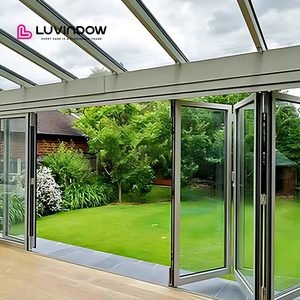
Heavy-duty polyamide thermal insulation breaks, German engineered hinge multi-point lock systems, and flush sill transitions.
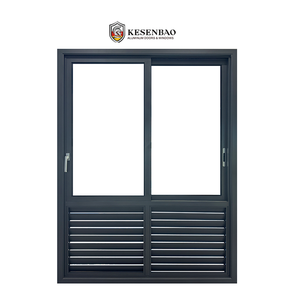
Certified AS2047, NFRC, CE compliant structural glazing with multi-chamber profiles engineered to withstand cyclic hurricane pressures.
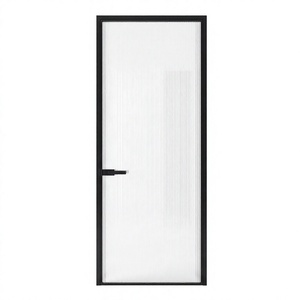
Al-Mg alloy structural core for enhanced rigidity, finished with electro-static fluorocarbon powder coating to resist harsh wash agents.
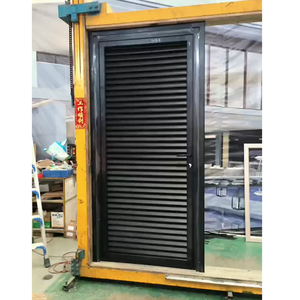
Aerodynamic vertical and horizontal ventilation blades providing solar shielding, airflow management, and intrusion security.
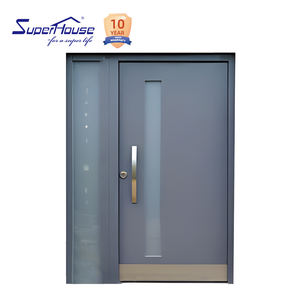
Miami-Dade NOA-tested structural vertical profiles with laminated SentryGlas interlayers for maximum missile impact resistance.
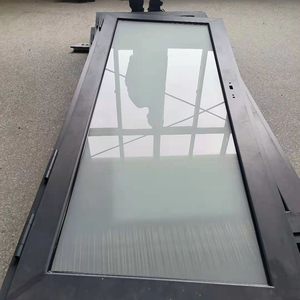
Continuous dual EPDM vulcanized sealing gaskets achieving Class 4 air-permeability and 600 Pa water tightness ratings.
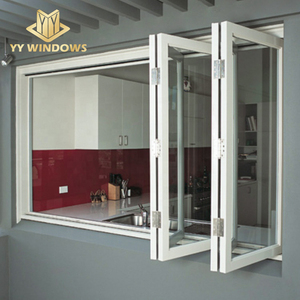
Stainless steel bottom-hung carriage rollers rated for 300kg sash weights, ensuring silky operation and structural stability.
A comprehensive engineering assessment of extrusion metallurgy, wind-load calculation methodology, thermal breaks, and surface longevity in contemporary vertical door assemblies.
In modern architectural fenestration, the specification of aluminium vertical doors—including oversized vertical pivot systems, vertical bi-folding walls, and vertical sliding entrance solutions—represents a sophisticated balance between structural dynamics and aesthetic transparency. As commercial facades and high-end residential estates trend toward floor-to-ceiling heights exceeding 3,500 mm to 6,000 mm, vertical doors face acute mechanical challenges. These include deflection under negative wind pressure, lateral racking loads, and localized stress at pivot points or hinge axes.
Leading Chinese exporters and manufacturers, concentrated in advanced industrial clusters like Foshan, Guangdong, have transformed precision production. By shifting from standard 6063-T5 aluminum profiles to high-tensile 6060-T66 and 6005A-T6 alloys, China’s industrial producers maintain strict cross-sectional tolerances (within ±0.15 mm). Integrating automated 5-axis CNC machining centers allows seamless milling of hardware recesses without introducing micro-fractures in structural profile webs. As a result, the vertical profiles can easily support high dead-load glazing assemblies while staying true along the entire vertical plane.
| Alloy & Temper | Yield Strength (Rp0.2 MPa) | Tensile Strength (Rm MPa) | Structural Applications | Corrosion Resistance |
|---|---|---|---|---|
| 6063-T5 (Standard) | 130 MPa | 175 MPa | Interior shower doors, light secondary partitions | Moderate (Atmospheric) |
| 6063-T6 (High Precision) | 170 MPa | 215 MPa | Standard casement, medium residential entry doors | High (Anodized/Powder) |
| 6060-T66 (Architectural) | 200 MPa | 245 MPa | Oversized vertical pivot systems, storm casements | Exceptional (Marine Grade) |
| 6005A-T6 (Heavy Structural) | 225 MPa | 270 MPa | Commercial curtain wall facades, hurricane bi-folds | Industrial Grade Protection |
Oversized vertical entrance doors weighing up to 800 kg demand heavy-duty, oil-damped floor springs. These springs must transfer lateral shear and downward force straight into structural concrete slabs, ensuring zero deflection on the overhead lintel.
By integrating 24mm to 34mm PA66 reinforced with 25% fiberglass thermal struts, our profiles stop condensation and hit U-values under 1.2 W/m²·K. This guarantees long-term energy savings across both frigid and desert environments.
Corner-welded, continuous co-extruded EPDM gaskets form airtight seals around vertical door leaves. They prevent whistling and water intrusion even under 3,000 Pa wind pressures.
What general contractors, commercial developers, and procurement executives must watch when sourcing vertical doors from Chinese manufacturers.
Future-ready vertical doors now feature concealed electric strikes, conductive concealed hinges, and biometric scanner channels integrated directly into the structural aluminum extrusions. Commercial specs are shifting toward motorized multi-point systems compatible with BACnet and Modbus building management automation systems.
Architects are moving away from catalog sizes. Procurement models now demand seamless CAD/BIM-to-CNC handoffs. Parametric drawings tie directly into automatic sawing and machining lines, enabling millimeter-level custom door leaves up to 6 meters tall without extending standard lead times.
With the EU Carbon Border Adjustment Mechanism (CBAM) and US LEED v4.1 taking hold, vertical door sourcing prioritizes low-carbon billets smelted with renewable hydro-power. Tier-1 Chinese exporters provide verified Environmental Product Declarations (EPDs), ensuring full life-cycle supply chain transparency.
Ranked among the top premium door and window enterprises in China, DERCHI brings over 25 years of specialized metallurgical and fenestration engineering to global buyers.

Direct answers to technical, logistical, and compliance questions from overseas architects, facade contractors, and project developers.
Send your CAD layouts, elevation dimensions, and regional wind-load requirements directly to our Foshan engineering desk. We respond within 24 hours with complete structural reviews and project-direct pricing.
Get a Quote