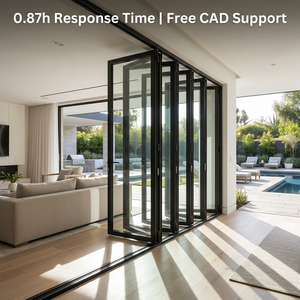
Engineered Aluminum Storm & Entry Systems
Tested to stringent structural and aerodynamic benchmarks, our door portfolios integrate impact resistance, thermal insulation, and advanced perimeter security.
Industry Whitepaper: The Evolution of Aluminum Storm Door Engineering
In modern building envelope engineering, aluminum storm doors have transitioned from auxiliary protective barriers to essential structural components that safeguard life safety, enhance thermal envelope efficiency, and protect building assets against extreme climate shocks. As severe weather patterns intensify worldwide—from cyclone-susceptible coastal zones to high-altitude zones with extreme diurnal temperature variations—architects, institutional developers, and procurement directors require envelope systems engineered to precise mechanical benchmarks.
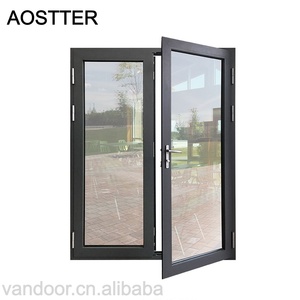
High-performance aluminum storm doors utilize structural 6063-T6 and 6061-T6 architectural aluminum alloys, engineered with multi-chamber profiles and integrated polyamide (PA66) thermal breaks. This mechanical profile architecture mitigates thermal conduction while delivering resistance to positive and negative cyclic wind loads exceeding 5000 Pa. By pairing structural framing with laminated impact glazing featuring thick PVB or SentryGlas (SGP) interlayers, modern storm doors prevent structural breaches caused by high-velocity windborne debris.
Structural Aerodynamic Resilience
Modern coastal developments demand compliance with strict global standards, including ASTM E1886/E1996, Florida Building Code (HVHZ), and AS2047 cyclic fatigue benchmarks.
Multi-Point Security Integration
Shifting from perimeter latches to synchronized multi-point locking systems constructed with 304/316 stainless steel deadbolts, delivering both forced-entry security and uniform gasket compression.
Surface Treatment Longevity
Coastal and industrial zones rely on architectural PVDF fluorocarbon coatings (AAMA 2605) and advanced anodic coatings exceeding 25 microns to counter salt-spray corrosion and high UV exposure.
Global Procurement Dynamics: Market Trajectory & Sourcing Trends
Procurement paradigms for architectural storm doors and commercial entrance enclosures are evolving rapidly. General contractors, international real estate consortiums, and national distributors are refining their procurement models to prioritize factory directness, certified material provenance, and integrated design customization.
Consolidated Envelope Schedules
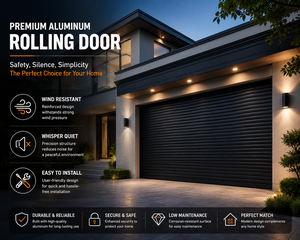
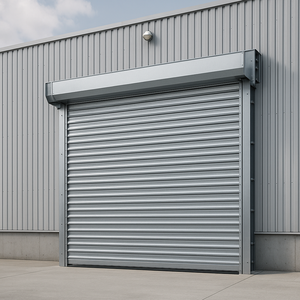
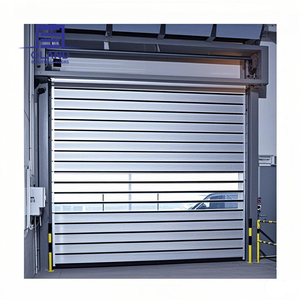
Developers are moving away from multi-vendor models toward full-package procurement: sourcing exterior storm doors, thermal pivot systems, and automated roller barriers from a single qualified manufacturer to minimize logistical overhead.
Stringent Regional Compliance
Global buyers now require verified pre-shipment documentation—including CE certificates, AS2047 test records, SONCAP, KEBS PVoC, and NRCS standards—ensuring seamless customs clearance and building code approvals.
CAD/BIM Collaborative Engineering
Modern supply chains integrate engineering early: suppliers deliver preliminary shop drawings, thermal modeling simulations, and customized structural anchor details during the design phase to prevent field rework.
Industrial Capacity & Manufacturing Excellence
Operating as a cornerstone of China's premium architectural fenestration sector, our Foshan-based manufacturing infrastructure powers large-scale residential and commercial infrastructure developments worldwide.
180,000㎡ Intelligent Infrastructure
Our centralized production complex in Foshan, Guangdong utilizes automated precision extrusion saws, CNC milling systems, and robotic thermal-break crimping machines, ensuring micrometer-level manufacturing accuracy across large-scale commercial contracts.
Certified Quality Control (AS2047, CE, UL)
Every system undergoes rigorous performance audits. Our internal testing laboratory is equipped to verify air permeability, structural wind load (rated up to AS2047 N6), water tightness, and fire endurance across our architectural series.
Custom CAD & Engineering Support
Our in-house design engineering department translates complex project elevations into executable 2D/3D CAD shop drawings. We tailor swing profiles, hinge placements, glazing configurations, and hardware integrations to your project specifications before initiating production.
Extreme Environmental Resistance
Our systems are engineered for diverse environments, from corrosive coastal salt-fog zones in West Africa and the Gulf Coast to high-UV mountain plateaus. We apply marine-grade coatings, heavy-duty fluorocarbon treatments, and multi-layered EPDM weathering gaskets.
Turnkey Global Export Packaging
International shipments are protected with reinforced wood-crate packing, corner buffers, and moisture-barrier shrink wraps. We calculate optimal container stowage plans to maximize sea freight capacity and minimize landed logistics costs.
Direct Engineering Communication
Project teams work directly with our bilingual technical engineering leads. We provide real-time updates from initial submittal review to live pre-installation video consultations, ensuring zero ambiguity during project handover.
Commercial & Technical Procurement FAQs
Detailed insights into custom engineering specifications, manufacturing lead times, import compliance, and international freight logistics.
What alloy compositions and thermal-break configurations are utilized in your storm doors?
We primarily use 6063-T5/T6 structural aluminum alloy profiles with wall thicknesses ranging from 2.0mm to 3.5mm, depending on structural wind load requirements. For projects requiring energy conservation and condensation control, we incorporate multi-chamber PA66 polyamide insulating strips reinforced with 25% glass fiber. This delivers low U-values while maintaining high torsional strength during extreme wind loading.
How do your aluminum storm doors perform against hurricane-grade cyclic wind pressures and projectile impacts?
Our hurricane-rated door lines are designed and tested to withstand high-velocity atmospheric disturbances. The systems feature laminated safety glass with PVB or SentryGlas (SGP) interlayers ranging from 1.52mm to 2.28mm thickness, structurally bonded to the frame using structural silicone. In cyclic pressure tests, our systems achieve performance thresholds equivalent to AS2047 N6 and ASTM E1886/E1996 cyclic fatigue standards.
Can you manufacture bespoke opening dimensions for non-standard villa entrances and oversized pivot entries?
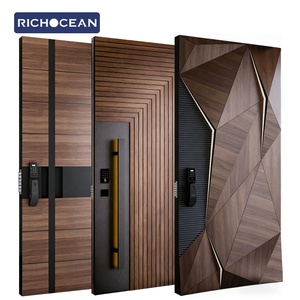
Yes. Every door schedule is manufactured to measure. We routinely manufacture oversized pivot systems up to 2.5 meters in width and 4 meters in height. These assemblies utilize internal steel core reinforcements and heavy-duty concealed German pivot closers engineered to support operating sash weights up to 500 kilograms while maintaining smooth, balanced operation.
What testing reports and export certification documents do you provide for port customs and building authority clearance?
We provide full documentation required for commercial importation and project permitting, including ISO9001 quality audits, CE certificates of conformity, AS2047 acoustic and wind test data, and UL fire-rated documentation. For regional import programs—such as SONCAP in Nigeria, KEBS PVoC in Kenya, and SABS/NRCS requirements in South Africa—we partner with accredited testing agencies to deliver compliant conformity documentation.
What are the standard manufacturing lead times and ocean transport arrangements for bulk orders?
Standard manufacturing turnaround spans 25 to 35 business days following CAD shop drawing sign-off and color submittal approval. Bulk orders and complex customized systems are scheduled to align with construction timelines. We offer flexible trade terms including FOB China, CIF, and CFR delivery to major international ports worldwide, supported by optimized container-packing configurations to ensure zero transit deflection.
How is installation executed remotely, and what technical assistance is available during construction?
Every shipment includes labeled components matching comprehensive installation shop drawings, anchoring guides, and hardware templates. We provide detailed multi-lingual installation manuals and high-definition assembly videos. Additionally, our sales engineers are available via scheduled video conferences to assist site contractors, resolve structural interfacing questions, and ensure proper perimeter anchoring and waterproofing.
