Slimline Coplanar
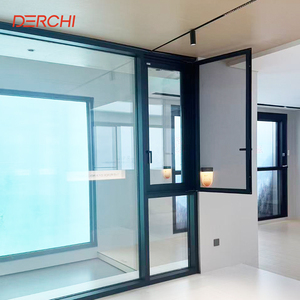
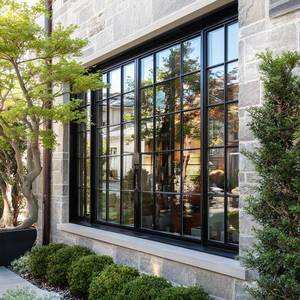
Minimalism Series Ultra Double Glass Slim Profile Flush Casement Window
- 6063-T66 Alloy
- Flush Coplanar Sash
- Double Insulated Glazing
Direct from our 180,000 ㎡ Guangdong smart manufacturing base. Every system integrates multi-chamber polyamide thermal breaks, multi-point perimeter compression locking, and structural coplanar sightlines built to international code compliance (AS2047, CE, AAMA, ISO9001).
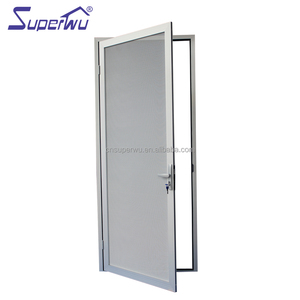
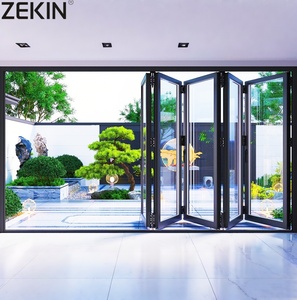
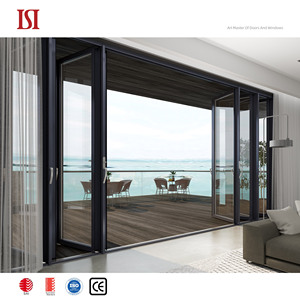
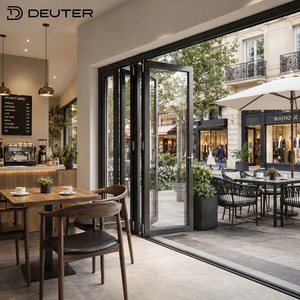
Why modern global architectural specifications are migrating from traditional lipped or stepped casements to coplanar flush aluminium envelope systems.
Traditional casement windows feature an overlapping lip ("stormproof sash") that stands proud of the outer frame by 8 mm to 14 mm. In high-wind, high-precipitation environments, this proud ridge induces localized vortex shedding and pressure differentials, driving driven rainwater toward secondary seals.
Our flush aluminium casement profiles align sash and outer frame into a mathematically planar surface (±0.5 mm tolerance). This laminar boundary reduces wind noise turbulence by up to 5.2 dB(A) and eliminates pressure concentration points.
Aluminum exhibits a high thermal conductivity ($\lambda \approx 160\text{–}200\text{ W/m}\cdot\text{K}$). Without advanced isolation, heat transfers rapidly, resulting in condensation and HVAC inefficiency. We integrate continuous 24 mm to 34 mm PA66-GF25 (polyamide reinforced with 25% glass fiber) thermal breaks.
By filling hollow internal chambers with low-density expanded polyolefin foams, heat convection across cavities is suppressed, delivering system thermal transmittances down to Uw ≤ 1.1 W/(m²·K) for triple-glazed units.
A window's long-term resistance to air infiltration and water intrusion depends strictly on gasket material science and closure compression kinematics. We deploy vulcanized continuous cellular EPDM gaskets arranged in a three-tier defense hierarchy.
Our center fin gasket creates a dedicated de-pressurized drainage isobar chamber. Any water driven through the outer deflection lip is relieved of hydrostatic pressure and drained gravitationally via concealed weep slots before touching internal acoustic air-seals.
When wind hits an architectural facade, an intense exterior high-pressure zone ($P_1$) develops. If the internal chamber between frame and sash is closed without equalization, a pressure gradient ($\Delta P = P_1 - P_2$) forces water across every micro-capillary crack. DERCHI flush casement systems utilize engineered exterior equalization vents that equalize internal chamber pressure to atmospheric conditions ($\Delta P \to 0$). Water has no kinetic pressure gradient driving it inward, preventing penetration even under 700 Pa dynamic hurricane testing.
Global developers, commercial general contractors, and structural engineers are recalibrating their window procurement matrices around four macro-shifts.
Governments across Europe, North America, and Australia are instituting Carbon Border Adjustment Mechanisms (CBAM) and strict Whole-Life Carbon assessments. Standard primary aluminium production generates up to 16 kg of CO₂ per 1 kg of metal when powered by coal electricity.
Future tenders mandate certified hydro-powered or secondary recycled billet with an embodied carbon footprint ≤ 4.0 kg CO₂e/kg Al. Factories lacking supply chain transparency will be disqualified from international LEED Platinum and BREEAM Outstanding projects.
Procurement teams are shifting away from fragmented static 2D DWG submittals. Modern contracts demand parametric Autodesk Revit / IFC families embedded with validated acoustic transmission loss curves, thermal U-values, center-of-glass solar heat gain coefficients (SHGC), and glass deflection models.
Our engineering bureau develops fully clash-detected digital shop drawings directly within your project's coordinate matrix, reducing field modification work orders by over 92% during construction.
Jobsite labor costs in North America, Western Europe, and Australasia now account for 45% to 60% of total installed fenestration expenditure. Sourcing knocked-down (KD) windows for site assembly is becoming unviable due to high regional labor rates and inconsistent installation sealing.
The clear sourcing trend is toward pre-glazed, factory-torqued, pressurized-chamber casement units delivered in custom steel-palletized sea containers ready for direct crane hoisting into structural rough openings.
Climate disruption has elevated coastal wind velocity profiles, storm surge frequencies, and UV radiation degradation rates. Traditional architectural powder coatings degrade within 5 to 7 years in C4 and C5 coastal marine belts (e.g., Lagos, Durban, Miami, Caribbean coastal corridors).
Procurement specifications now explicitly demand AAMA 2605 / Qualicoat Class 3 fluorocarbon (PVDF) 70% Kynar resin systems or Class 1 (25 μm) architectural anodization offering 30-year resistance to salt-fog pitting.
Data-driven technical analysis for façade consultants, structural engineers, and estimating directors.
| Performance Parameter | Aluminium Flush Casement | Traditional Stepped Casement | Tilt-and-Turn Systems | Sliding Window Systems |
|---|---|---|---|---|
| Aesthetic Alignment | 100% Seamless Coplanar (Zero reveal) | Stepped lip (8–14mm overhang) | Flush internal, stepped external | Overlapping staggered profiles |
| Thermal Transmittance ($U_w$) | 0.95 – 1.4 W/(m²·K) (PA66 Breaks) | 1.4 – 2.2 W/(m²·K) | 1.1 – 1.6 W/(m²·K) | 2.0 – 3.2 W/(m²·K) |
| Airtightness (EN 12207 / AS2047) | Class 4 (Highest rating, ≤0.5 m³/h·m) | Class 3 | Class 4 | Class 2 – 3 (Brush seal leakage) |
| Water Tightness (EN 12208) | Class E1050 (1050 Pa static pressure) | Class 7A – 9A (300–600 Pa) | Class 9A – E750 | Class 4A – 6A (Track water overflow) |
| Acoustic Attenuation ($R_w + C_{tr}$) | Up to 44 dB (With acoustic laminate) | 35 – 38 dB | 38 – 42 dB | 28 – 32 dB |
| Structural Wind Load (EN 12210) | Class C5 (±3000 Pa deflection L/300) | Class C3 – C4 | Class C4 | Class B3 – C3 |
| Hardware Concealment | 100% Concealed hinges & shootbolts | Exposed butt or surface hinges | Semi-concealed or visible gearing | Visible roller track and latch |
Recognized among the Top 10 fenestration and door brands in China. Spanning over 25 years of engineering mastery, DERCHI operates an integrated 180,000 ㎡ high-precision intelligent production hub in Foshan, Guangdong. Equipped with German 5-axis Elumatec profile machining centers, automated corner-crimping robots, and in-house laboratory facilities certified for CE, ISO9001, Australian AS2047 N6 cyclonic testing, and UL fire standards.
International exports fail most commonly at the intersections of profile coating thickness, glass desiccant saturation, hardware calibration, and container ocean moisture control. Here is how DERCHI eliminates export risk.
Every flush frame and sash joint is cut on dual-head high-speed CNC saws with ±0.1 mm dimensional and ±0.1° angular tolerance. Corners receive heavy-duty extruded aluminum corner cleats, stainless alignment chevrons, and automated two-part polyurethane structural joint adhesive injection.
This creates a monolithically fused frame that will not rack, sag, or compromise coplanar alignment over decades of heavy cycling.
Glass failure manifests as milky fogging inside the airspace. We construct all double- and triple-glazed units using warm-edge composite spacers (lowering edge-seal linear thermal bridge $\psi$ by 0.04 W/mK) filled with 95%+ pure Argon gas.
The primary seal utilizes continuous polyisobutylene (PIB), while the secondary structural seal employs two-component neutral structural silicone, ensuring helium-tested hermetic isolation against moisture vapor ingress.
Standard wooden pallets buckle under 30-day ocean transit vibration and rough port handling in Lagos, Tema, Durban, or Long Beach. DERCHI packs windows in custom heavy-duty, fumigated IPPC-stamped marine plywood crates backed with internal galvanized steel framing.
Each unit is individually protected with PE surface peel-film, corner buffers, vacuum-desiccant packs, and foam interlayers to ensure flawless delivery ready for direct crane hoisting.
Authoritative technical responses covering engineering, compliance documents, custom finishes, and delivery logistics.
Submit your rough openings, architectural door and window schedules, or tender drawings. Our fluent English-speaking engineering team will furnish complimentary CAD shop drawings, wind-load calculation summaries, and direct factory-gate quotations within 24 hours.