Engineered System Portfolios: Precision Glazing Solutions
Select industrial-grade configurations verified for heavy commercial usage, severe weather resistance, and architectural villa fenestration.
180,000㎡
Smart Manufacturing Base
25+
Years of Engineering Precision
AS2047 N6
Highest Structural Hurricane Rating
100+
Patents & Global Certifications
Comprehensive Engineering Assessment: Selecting Industrial-Grade Aluminium Sliding Folding Doors
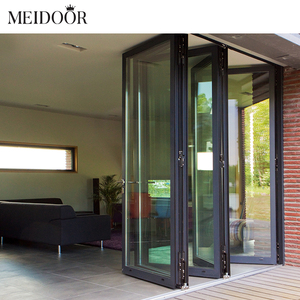
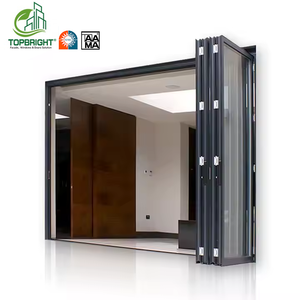
In contemporary architectural design, the integration of extensive structural openings without sacrificing thermal containment, wind load stability, or physical security is paramount. Known alternately as bi-fold doors, folding sliding glass walls, or concertina patio systems, modern aluminium sliding folding doors represent a zenith of kinetic structural engineering. Unlike conventional inline sliders or side-hung French casements, bi-fold systems carry massive cantilevered loads that concentrate significant tension and torque on rolling assemblies, top-hung tracks, and interlocking profile mullions.
As leading Chinese manufacturers operating out of Foshan's high-precision industrial cluster, Guangdong Dejiyoupin Doors and Windows Co., Ltd. (DERCHI) engineers fenestration systems constructed from primary architectural 6063-T5 and 6063-T6 aluminum alloys. These structural profiles maintain wall thicknesses between 2.0mm and 3.0mm, far exceeding generic commercial iterations. Engineered profile chambers accommodate polyamide 6.6 structural thermal barrier strips reinforced with 25% glass fiber (PA66-GF25), effectively breaking the thermal bridge across extreme climatic gradients, driving whole-window thermal transmittance (U-factors) below 1.6 W/(m²·K).
Advanced Mechanical Kinematics and Weather-Tight Gasketing
The operating lifespan of an aluminum folding door is dictated by the structural integrity of its carriage bearings and pivot hinges. Conventional low-tier units frequently succumb to sagging, profile misalignment, and seal failure within 24 months of heavy cycling. High-performance manufacturing mitigates this through bottom-weighted stainless steel quad-roller carriages paired with continuous upper directional guides. Each load-bearing carriage utilizes four precision-machined, sealed 304 or 316 stainless steel bearings capable of supporting panel weights exceeding 250 kilograms smoothly and silently.
Isothermal Thermal Breaks
Multi-cavity polyamide insulating struts limit conductive heat gain in tropical climates and prevent interior condensation during frigid continental winters.
Co-Extruded EPDM Gaskets
Continuous vulcanized EPDM gasketing ensures airtightness up to Class 4 (EN 12207) and watertight integrity under dynamic pressures up to 900 Pa.
Multi-Point Interlocking Security
Concealed shoot-bolt hardware locks top and bottom tracks simultaneously at every hinge intersection, meeting rigorous RC2/RC3 forced-entry standards.
For coastal and marine installations subject to atmospheric salinity, profile surfaces are treated with fluorocarbon PVDF coatings (exceeding AAMA 2605 criteria) or marine-grade Qualicoat Class 2 powder finishes. This chem-film and finishing architecture prevents blistering, galvanic oxidation, and micro-cracking across decades of direct ultraviolet radiation and high-humidity salt fog.
Strategic Sourcing Outlook: Future Trends in Aluminum Folding Door Procurement
International building procurement is experiencing a structural pivot. Project developers, architects, and quantity surveyors are replacing multi-tiered regional distribution with factory-direct procurement models from certified Chinese manufacturing leaders. Key trends governing cross-border fenestration procurement include:
BIM Integration & Parametric CAD
Procurement teams demand certified BIM/Revit libraries and precise CAD shop drawings prior to extrusion, streamlining MEP coordination and lowering site rework risks.
Narrow Sightlines & Oversized Spans
Rising demand for ultra-slim interlocking stiles (under 50mm visible width) capable of accommodating single panel heights beyond 3.5 meters for expansive panoramic viewing.
Consolidated Whole-House Shipments
Developers increasingly consolidate high-end entry pivot systems, motorized garage doors, and bi-fold systems within shared 40HQ containers, slashing landed freight expenditure.
Furthermore, regulatory compliance frameworks such as CE marking (EN 14351-1), Australian Standards AS2047, and North American NFRC testing are non-negotiable prerequisites. Sourcing directly from certified facilities ensures verifiable documentation trails for municipal construction approvals.
Technological Horizons: Smart Microclimates & Barrier-Free Architecture
The engineering paradigm of the folding door is actively shifting from passive barriers to intelligent kinetic facades. Cutting-edge developments in production include concealed concealed motorized drive systems with brushless DC motors, allowing smartphone or building management system (BMS) synchronization with obstacle detection sensors.
Threshold design has similarly evolved. Modern architectural projects increasingly mandate seamless indoor-outdoor transitions. Utilizing sunken flush sill tracks equipped with integrated sub-drainage channels, water evacuation is maintained without introducing raised vertical obstructions, fulfilling ADA universal accessibility requirements while sustaining high water penetration resistance. Glass configurations have modernized to include triple-glazed Low-E units charged with 90% Argon gas, thermal warm-edge spacers, and acoustic PVB interlayers capable of achieving Sound Transmission Class (STC) ratings above 42 dB.
Enterprise Capabilities: Guangdong Dejiyoupin Doors and Windows Co., Ltd.
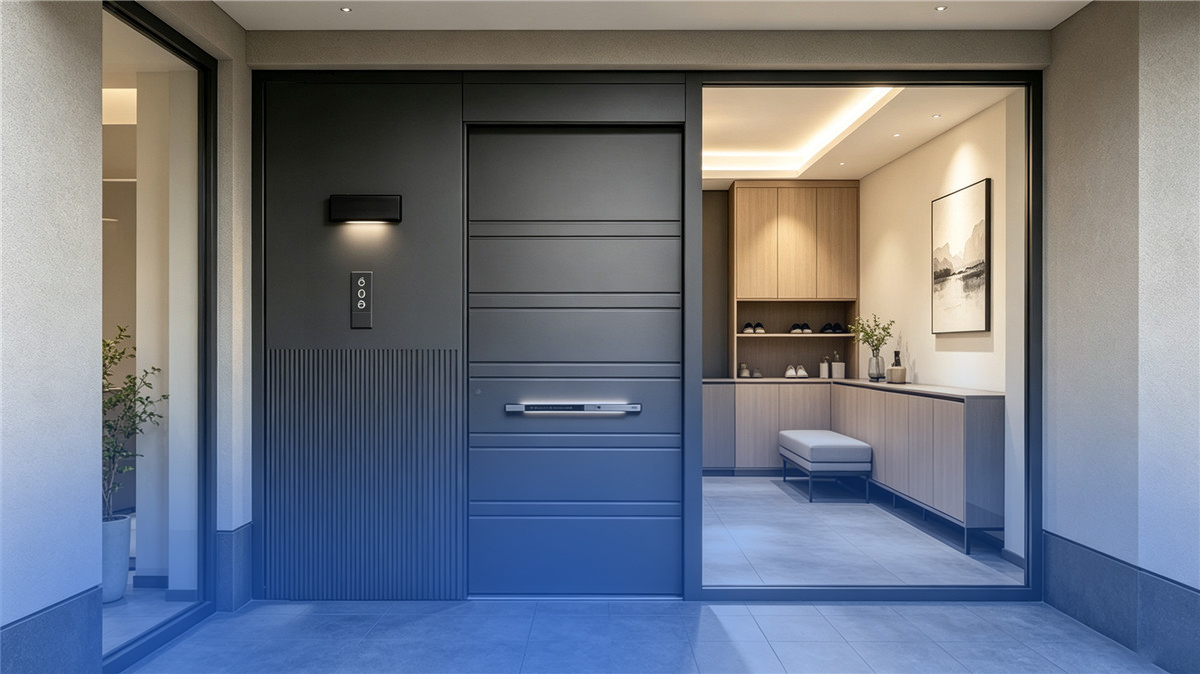
Recognized consistently among the Top 10 premium door and window brands in China, DERCHI operates out of a modernized 180,000 square meter intelligent manufacturing base in Foshan, Guangdong. Backed by an engineering and technical workforce exceeding 600 specialists, we provide end-to-end bespoke solutions spanning custom aluminum folding doors, high-security stainless steel entrance systems, solid cast aluminum villa gates, and oversized commercial pivot assemblies.
AS2047 N6 Accredited
Tested to the most stringent cyclical wind and storm criteria, withstanding extreme cyclonic pressures without structural deflection or structural failure.
100% Free Shop Drawings
Dedicated structural engineers produce precise CAD and cross-sectional schedules matching opening tolerances before material cutting starts.
Export Sea-Crating
Multi-layer protective packaging combining scratch-resistant PVC wrap, corner reinforcement, shock-absorbing EPE foam, and sealed plywood crating.
Global Port Delivery
Full logistical clearance and documentation support (FOB/CIF) to major ports across Africa, North America, Southeast Asia, Australia, and the Middle East.
Frequently Asked Questions: Global Sourcing Directives
Direct commercial, technical, and regulatory clarity for foreign developers, architects, and procurement managers.
Q1 What profile wall thickness is recommended for large bi-fold spans?
For panels reaching over 2.4 meters in height or systems exposed to external perimeter wind loads, we specify heavy-duty 2.0mm to 3.0mm primary wall profiles in 6063-T5/T6 alloy. Thinner commercial extrusions (e.g., 1.4mm) are restricted to interior room partitions to prevent frame racking and premature track failure.
Q2 Top-hung vs. bottom-rolling: Which configuration is superior?
Top-hung systems deliver silky-smooth glide dynamics but transfer the entire structural dead load to the upper lintel beam, requiring heavy structural steel support. Bottom-rolling mechanisms bear the system's weight directly on the finished floor substrate, making them the superior choice for retrofit renovations or wider spans where structural overhead deflection is a concern.
Q3 How does your manufacturing maintain weather-tightness against driving rain?
We deploy continuous dual-perimeter EPDM gasketing coupled with stepped or drained sill channels. In combination with multi-point perimeter compression locking handles, the leaf panels are pulled tightly against the rubber bulb seals, achieving certified water tightness up to 600-900 Pa under testing conditions.
Q4 Can you assist with compliance certificates for clearing agents?
Yes. Our systems are backed by authentic CE certificates, ISO 9001 quality factory control, AS2047 structural testing reports, and UL safety documents. We provide complete commercial documentation, including packing lists, fumigation certifications, and test reports needed for import inspections such as SONCAP, KEBS PVoC, or SASO.
Q5 What surface treatment guarantees zero corrosion in coastal settings?
For coastal environments within 5 km of the sea (such as coastal cities in Africa, the Mediterranean, or Florida), we apply high-durability fluorocarbon (PVDF) 3-coat finishes or Class 2 marine-grade powder coating (60-80 microns). All moving hardware, screws, pivot pins, and tracks are strictly upgraded to 304 or marine-grade 316 stainless steel.
Q6 How are custom opening dimensions handled from initial inquiry to production?
Every order is manufactured entirely to measure. Following initial dimensional consultation, our engineering department produces detailed bilingual CAD shop drawings outlining exact rough opening dimensions, reveal clearances, sill thresholds, drainage points, and glazing schedules. Extrusion and machining begin only upon your signed authorization.
Initiate Your Architectural Fenestration Specification
Submit your door schedules, project blueprints, or custom sizing requirements directly to our senior facade engineers for comprehensive technical review, CAD drafting, and direct factory pricing.
Send an Inquiry