Precision Aluminium Door & Window Series
Explore our certified exterior entryway systems, side-lite assemblies, and heavy-duty structural sliders fabricated with high-tensile 6063-T6 architectural alloy for international residential and commercial developments.
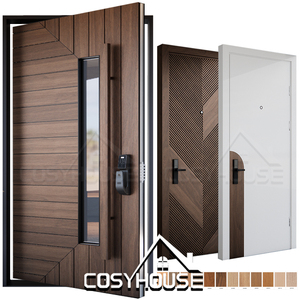 CE Certified
Custom Modern Aluminum Exterior Luxury Pivot Door
- Heavy Pivot Axle
- Thermal Break
- Custom Side Window
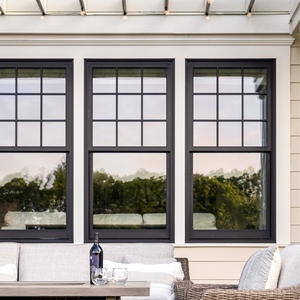 NFRC / CE Tested
AMJ Colonial Aluminum Double Hung Windows with Grilles
- Vertical Slider
- Colonial Grilles
- Villa Matching
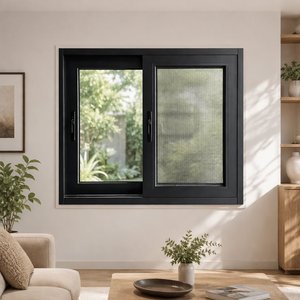 1.8mm Profile
Hurricane Proof Soundproof Aluminum Sliding Windows
- Impact Resistant
- Acoustic Glazing
- High Wind-Load
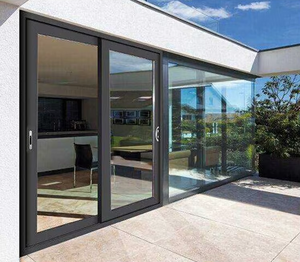 RG93.6 Series
RG93.6 Thermal Insulation Energy-Saving Sliding Doors
- PA66 Thermal Strip
- Low-E Double Glass
- Heavy Roller Track
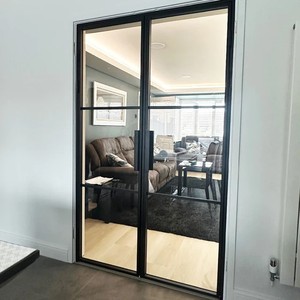 Fire Rated
Certified Commercial Aluminum Glass Fire Doors
- Integrity & Insul.
- Hospital/Hotel
- Panic Hardware
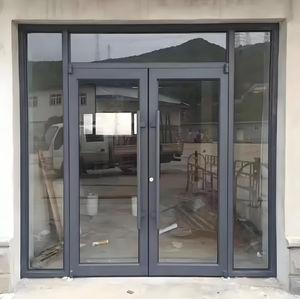 Smart Glass
Commercial Hurricane Impact Smart Storefront Door
- Switchable PDLC
- Hurricane Rated
- Access Control
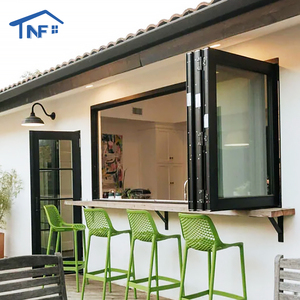 Bi-Fold System
Modern Double Glazed Aluminum Bi-Fold Windows
- Smooth Gliding
- Flush Sill Option
- Air/Water Tight
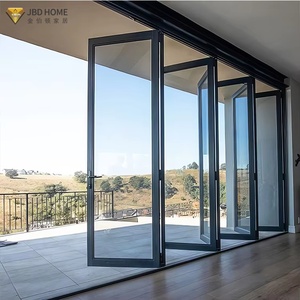 Thermal Break
Modern Double Glass Aluminum Bi-Fold Patio Doors
- NFRC Standard
- Windproof Sealing
- Multi-Leaf Layout
White Paper: Engineering Standards for CE Certified Aluminium Doors with Side Windows
Modern architectural entry assemblies that combine an operable aluminium entrance leaf with stationary side windows (sidelights or side transoms) present complex structural, thermal, and weatherproofing challenges. Under the European Construction Products Regulation (CPR 305/2011) and the harmonized standard EN 14351-1:2006+A2:2016, an exterior doorset with sidelights is evaluated as a single integrated structural unit. This requires rigorous testing for air permeability, water tightness, resistance to wind loads, thermal transmittance, and acoustic performance.
1. Mullion Coupling & Structural Wind-Load Performance
The primary engineering vulnerability in an aluminium door with a side window is the vertical mullion junction separating the heavy moving door panel from the fixed glazing unit. Under cyclic wind buffeting (tested under EN 12211 / EN 12210 up to Class C5), standard aluminium profiles can exhibit differential deflection. If deflection exceeds 1/300th of the span length, perimeter EPDM gaskets can unseat, resulting in catastrophic water ingress and air infiltration.
As a specialized factory and exporter, our engineering department incorporates reinforced structural mullion profiles using virgin 6063-T6 or 6061-T6 aluminium alloy. These profiles feature an internal moment of inertia (Ix) ranging from 45 cm⁴ to over 120 cm⁴ depending on the entryway height, which can extend up to 3.5 meters in luxury villa applications. Our structural mullions feature internal steel or heavy-gauge aluminium box splines that mechanically link the door frame and the side window without visible exterior screws, preserving clean sightlines while guaranteeing deflection resistance under hurricane-grade dynamic pressure.
| Performance Parameter | Test Standard | Factory Benchmark (DERCHI Engineering) | Architectural Application Relevance |
|---|---|---|---|
| Air Permeability | EN 12207 | Class 4 (up to 600 Pa test pressure) | Eliminates convective drafts; complies with Passive House & near-zero energy building codes. |
| Water Tightness | EN 12208 | Class E900 / E1050 (Exceeding 900 Pa) | Prevents moisture penetration during torrential coastal storms with zero leakage at the sill. |
| Wind Load Resistance | EN 12210 | Class C4 / C5 (Frontal load up to 2000–2500 Pa) | Maintains frame squareness and avoids seal failure across high-rise or exposed villa elevations. |
| Thermal Transmittance (Ud) | EN ISO 10077-1/2 | 0.85 – 1.4 W/(m²·K) (Configuration dependent) | Multi-chamber PA66 GF25 thermal breaks stop thermal bridging and internal condensation. |
| Acoustic Attenuation (Rw) | EN ISO 717-1 | Rw = 36 dB to 44 dB | Dampens urban street traffic noise via asymmetrical laminated acoustic PVB glass makeups. |
| Burglar Resistance | EN 1627 to EN 1630 | RC2 to RC3 Rated Hardware Systems | Multi-point mechanical hook locks, anti-drill cylinders, and laminated safety glass. |
2. Thermal Break Polyamide Technology & Differential Expansion
Exterior aluminium door leaves exposed to direct solar radiation frequently experience surface temperatures exceeding 75°C, while interior air-conditioned spaces remain at 22°C. This extreme temperature gradient generates thermal bowing, or the "bimetallic effect", causing the outer aluminium profile to expand while the inner skin remains dimensionally stable. For an entrance door integrated with a fixed side window, this differential movement can induce torquing along the shared vertical mullion, causing the door latch to bind or weatherstrips to gap.
Our CE-certified manufacturing process solves this engineering challenge through the deployment of anti-bi-metal polyamide strips (PA66 GF25 with 25% glass fiber reinforcement). These specialized thermal breaks incorporate a mechanical sliding core that allows controlled micro-movement between the inner and outer extrusion shells without compromising structural rigidity or airtightness. Combined with triple-barrier EPDM vulcanized corner-molded continuous gaskets, our doorsets maintain smooth latching operation in every climate, from sub-zero Northern European winters to tropical African coastal heat.
Architectural & Procurement Trends Shaping the Aluminium Fenestration Market
The global market for architectural doors and windows is undergoing a profound transformation driven by strict energy performance mandates, modern architectural preferences for expansive glass surfaces, and intelligent smart-building infrastructure. B2B importers, developers, and commercial contractors must align their door procurement strategies with these emerging technological and market trends.
1. Ultra-Slim Sightlines & Structural Sidelights
Architects are increasingly specifying entrance doors with "frameless appearance" sidelights, where the glass pane of the side window is structurally silicone-bonded to the exterior rebate without a visible aluminium face cap. This creates continuous glass facades that maximize natural light transmittance while maintaining high shear and wind-load resistance.
2. Integrated Smart Automation & Biometrics
The convergence of architectural metalwork and access control has transformed the humble entrance door. High-end residential and hotel projects now demand integrated motorized multipoint locks, concealed cable hinges, biometric fingerprint scanners, facial recognition cameras, and switchable PDLC smart glass that alters sidelight opacity via home automation protocols.
3. Circular Aluminium & Low-Carbon Manufacturing
Under the EU Green Deal and global ESG procurement mandates, tier-1 developers require Environmental Product Declarations (EPD). Modern fenestration factories are transitioning to secondary recycled billets and clean-energy extruded aluminium with carbon footprints below 4.0 kg CO₂ per kg of aluminium, paired with toxic-free, chrome-free powder coating and anodizing.
Global Sourcing & B2B Procurement Dynamics
Procuring custom architectural entry doors with integrated sidelights directly from an established Chinese manufacturer provides international developers and trading companies with major cost advantages, typically yielding 35% to 50% savings compared to European or North American domestic fabrication. However, direct sourcing requires strict technical due diligence. Successful global procurement depends on:
- Complete CAD/BIM Shop Drawing Verification: Ensuring that wall construction details, sub-sill flashing, anchorage clip spacing, and finish floor levels (FFL) are coordinated before extrusion cutting.
- Modular vs. Assembled Shipment Logistics: Deciding whether large entryways with transoms and side windows should ship fully glazed and factory-assembled (maximizing factory quality control) or knocked down (KD) into coupled sub-frames to maximize sea container cube utilization.
- Third-Party Conformity Audits: Reviewing genuine CE Notified Body test reports (such as IFT Rosenheim, TÜV, or Intertek) rather than self-declared certificates of conformity.
Why Partner with Guangdong Dejiyoupin (DERCHI) as Your Dedicated OEM/ODM Exporter
Guangdong Dejiyoupin Doors and Windows Co., Ltd. (DERCHI) stands at the forefront of China's premium architectural fenestration industry. Recognized as one of the Top 10 High-End Door and Window Manufacturers in China, our corporate group has dedicated more than 25 years to structural door engineering, precision extrusion fabrication, and global project execution.
180,000 ㎡ Intelligent Production Hub
Located in Shishan Town, Foshan—the world's capital of aluminium profile engineering—our facility operates high-precision CNC 4-axis profile machining centers, automated corner-crimping machines, and computerized double-head miter saws ensuring ±0.2mm frame squareness tolerances.
Multi-Jurisdiction Certification
Our product systems hold formal test certifications across major global standards: CE (EN 14351-1) for the European Union, AS2047 / AS1288 for Australia and New Zealand, NFRC / AAMA for the Americas, and UL Fire-Rated listings for commercial applications.
Dedicated Global Engineering Desk
With an engineering staff of over 600 professionals, our technical sales department provides direct B2B project coordination in English, offering 3D CAD shop drawings, structural calculation reviews, and specialized maritime crating in fumigated plywood cases tailored for sea transport.
Whether sourcing for luxury residential villas, hotel resorts, or multi-family commercial developments, DERCHI delivers factory-direct dependability with verifiable testing.
Comprehensive B2B Procurement FAQ: CE Certified Aluminium Doors with Sidelights
Essential answers for architects, project engineers, fenestration importers, and procurement officers navigating technical requirements, custom dimensioning, and international logistics.
What specific test criteria must an aluminium door with a side window fulfill to achieve CE marking? +
How is the joint between the main door frame and the side window sealed to avoid moisture penetration? +
Can the side window be designed with operable sash ventilation alongside the fixed glazed pane? +
What glass specifications are recommended for large sidelights to maintain security and energy codes? +
How are thermal expansion issues addressed in high-exposure South/West facing villa entrances? +
What are the shipping volume optimizations for international 20GP and 40HQ container shipments? +
Does the factory support custom door dimensions, asymmetric sidelight widths, and custom finishes? +
What is the standard production lead time and minimum order quantity (MOQ) for overseas projects? +
Ready to Engineer Your Next Fenestration Project?
Connect with our English-speaking fenestration engineers for factory-direct quotes, complimentary CAD shop drawings, and comprehensive structural performance calculations tailored to your building schedule.
