Factory Engineered Solutions
High-Performance Aluminum Hurricane & Thermal Glazing Systems
Tested against extreme lateral wind loads, thermal bridging, and heavy cyclical pressure. Sourced by elite contractors and developers throughout the Russian Federation.
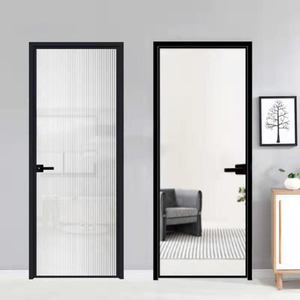
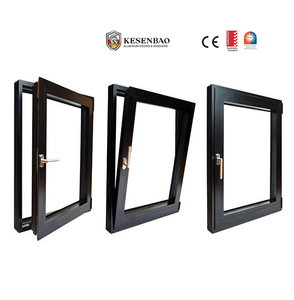
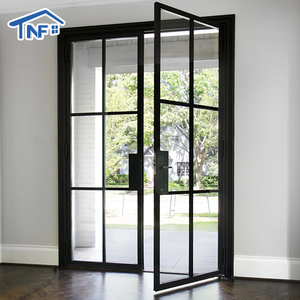
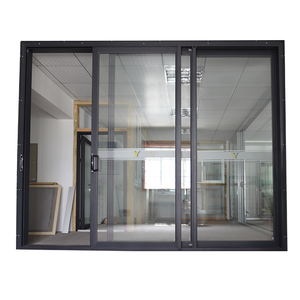
180,000㎡
Industrial Campus
Foshan Mega-Factory Infrastructure
6,500Pa
Wind Load Resistance
Highest AS2047 N6 & GOST Class A
≤0.79
Thermal Value (W/m²·K)
Extreme Cold Insulation Efficiency
25+ Years
Engineering Pedigree
Global Fenestration Manufacturing
Engineering Whitepaper
Technical Mandate: Re-Engineering Hurricane Systems for Russian Geoclimatic Realities
In international trade, the classification "Hurricane Impact Window" denotes structural systems engineered to withstand intense dynamic wind pressures exceeding 4,500 Pa to 6,500 Pa, combined with large missile impact resistance (ASTM E1886/E1996, Florida Building Code HVHZ protocols). However, directly importing a tropical hurricane window into the Russian market without comprehensive re-engineering leads to premature mechanical and thermal breakdown.
In Russia, fenestration faces the dual threat of severe cyclical wind loading (especially in maritime zones such as Primorsky Krai, Sakhalin, and the Baltic shores of Kaliningrad and St. Petersburg) coupled with deep negative temperature differentials reaching down to -50°C. Standard tropical hurricane profiles rely on dense solid aluminum substructures that create massive thermal bridges, resulting in internal condensation, frame frost penetration, and mechanical seal contraction. Guangdong Dejiyoupin Doors and Windows Co., Ltd. (DERCHI) resolves this engineering paradox through multi-chambered structural profiles reinforced with customized polyamide PA66GF25 thermal breaks and cryogenic EPDM gaskets that retain elastomeric flexibility across a -50°C to +80°C threshold.
| Engineering Property | Standard Tropical Hurricane System | DERCHI Russia-Spec Structural System | Regulatory Compliance / Standard |
|---|---|---|---|
| Alloy & Tempering | 6063-T5 (Standard Extrusion) | Primary 6063-T6 / High-tensile 6061-T6 corners | GOST 22233-2018 / EN 755-2 |
| Thermal Insulation (Uw) | 2.8 – 4.2 W/m²·K (High heat loss) | 0.75 – 1.10 W/m²·K (Passive-house capable) | GOST 30674-99 / SNiP 23-02-2003 |
| Cyclic Wind Load Rating | ±4500 Pa (Static test) | ±6500 Pa (Dynamic deflection test) | AS2047 Class N6 / GOST 23166 Class A |
| Glazing Architecture | 12mm Laminated or Double IGU | Triple Laminated IGU (8mm Low-E + 16Ar + 6mm + 16Ar + 4.4.2 PVB) | GOST 24866 / EN 1279 Gas Retention |
| Gasket Durability | Standard Santoprene / Vulcanized Rubber | Peroxide-cured Cellular Micro-porous EPDM | ISO 3934 (Zero elasticity loss at -45°C) |
Every fenestration unit exported to Russian infrastructure projects undergoes stress analysis using finite element methods (FEA) to ensure that sashes under sustained positive pressure transfer loads seamlessly into primary building envelopes without mullion bowing or air permeability leakage.
Russian Field Deployments
Engineered for Harsh Microclimates from the Baltic to the Pacific Rim
The vast territory of the Russian Federation demands microclimate-specific glass thickness, alloy choices, and opening mechanisms. Explore how DERCHI configurations operate in regional applications.
Pacific Maritime & Sakhalin
Vladivostok · Yuzhno-Sakhalinsk · Kamchatka
Exposed to severe oceanic typhoons, high-velocity Pacific cyclonic fronts, dense sea fog, and coastal salt spray. Regular windows suffer mechanical frame buckling and saltwater oxidation.
- Fluorocarbon (PVDF) surface coating exceeds 80 microns
- Multi-point hardware locks with marine-grade 316 stainless bolts
- High-velocity hurricane impact glazing resisting sea debris
Baltic Littoral Zone
St. Petersburg · Kaliningrad · Vyborg
Characterized by sustained high-frequency winds off the Gulf of Finland, perpetual relative humidity, damp autumn storms, and relentless freezing-thawing cycles.
- Pressure-equalized drainage slots prevent water backflow
- Double-chamber warm-edge thermal spacers stop condensation
- Class 4 Air Permeability under EN 12207 structural ratings
Continental & Siberian Heartlands
Moscow · Novosibirsk · Krasnoyarsk · Ekaterinburg
Winter conditions plunge below -40°C accompanied by high-rise wind turbulence. Building codes enforce rigorous energy conservation coefficients and heavy draft-proofing.
- Triple-glazed structural glass units with 95% Argon fill
- 34mm width Polyamide PA66 thermal barrier integration
- Ultra-low U-values matching the latest SP 50.13330 thermal codes
Black Sea Coast & High-Altitude Sochi
Sochi · Novorossiysk · Krasnodar Krai
Subject to the notorious Bora winds—catabatic wind gusts exceeding 40-50 m/s sweeping down coastal mountain passes—paired with high UV solar exposure during summer seasons. DERCHI delivers oversized panoramic lift-and-slide doors equipped with solar-reflective Low-E configurations that preserve architectural integrity against violent localized wind squalls.
- Structural deflection tolerance engineered for expansive 3-meter glass spans
- Solar Heat Gain Coefficient (SHGC) tuned to 0.32 to control summer thermal load
- Anti-lift locking pins prevent forced door disengagement during localized pressure waves
Strategic Market Intelligence
Emerging Trends Shaping Russian Architectural Fenestration
Accelerating economic realignments and technological developments have fundamentally transformed procurement channels across Russian commercial and residential development sectors.
1. Pivot to Direct Chinese Tier-1 Manufacturing
Due to the departure or severe pricing escalation of European legacy brands (Schüco, Reynaers), top Russian developers are bypassing intermediaries to contract directly with fully integrated Chinese manufacturers capable of supplying audited, certified structural envelope systems.
2. Surge in Panoramic Minimalist Architecture
Modern luxury suburban estates in Moscow's Rublyovka and Novaya Riga demand floor-to-ceiling glass expanses. This trend requires heavy structural aluminum profiles with slim sightlines capable of bearing 500kg triple-glazed cassettes without sagging.
3. Rigorous Energy Efficiency Codes (GOST/SNiP)
Russian federal building codes (SP 50.13330.2012) mandate stricter thermal resistance indices (R0 > 0.8 to 1.0 m²·°C/W). Fenestration must now prevent thermal bridging at fixing brackets, mullion joints, and perimeter flashing interfaces.
4. Direct Cross-Border Logistics Integration
Logistical routes have transitioned decisively toward direct rail corridors (via Manzhouli/Zabaikalsk) and sea-freight routes into Vladivostok and St. Petersburg, making bulk containerized delivery of made-to-measure doors and windows faster and more economical.
5. Aluminum-Clad Structural Hybrid Systems
Russian buyers retain a deep cultural preference for natural wood interiors. The market for exterior high-grade aluminum weather armor bonded to fine-grain interior engineered timber has expanded rapidly across high-end residential sectors.
6. High-Frequency Seismic & Storm Hardening
In regions like the North Caucasus and Kamchatka, new municipal mandates call for hurricane-grade impact glazing combined with elastomeric structural silicone bonding to mitigate glass fall-out risks during tremors and hurricane-force storms.
Manufacturing Leadership
Guangdong Dejiyoupin Doors and Windows Co., Ltd. (DERCHI)
With an expansive 180,000 square meter industrial manufacturing base located in Foshan, Guangdong—the aluminum capital of the world—DERCHI employs over 600 skilled fabricators, mechanical technicians, and structural engineers. We stand as one of China's Top 10 leading luxury door and window manufacturers.
For more than 25 continuous years, our engineering groups have concentrated exclusively on the research, structural development, and global delivery of hurricane-rated aluminum windows, lift-and-slide doors, solid cast aluminum gates, fire-rated pivot systems, and energy-conserving architectural envelopes.
Russian engineering firms and general contractors benefit from comprehensive end-to-end design verification: we provide free detailed CAD shop drawings, finite-element wind load calculations, and tailor-made assembly solutions that align with local opening dimensions and regional GOST guidelines.

Certified Global Benchmarks
Our products possess CE, ISO9001, AS2047, and UL fire-rated certifications. Verified testing parameters facilitate streamlined submission to Russian municipal building inspectorates.
Custom CAD Shop Drawings
No window is fabricated blindly. Our engineering studio drafts detailed CAD drawings for every unique structural opening, confirming sash clearances, drainage channels, and fixing anchors.
Turnkey Export Crate Packing
Every fenestration assembly is individually encased in heavy fumigated timber crates with moisture-absorbent desiccants, shock absorbers, and corner corner guards for railway or sea transport.
Multi-Disciplinary Consolidations
Consolidate your entire exterior project—from hurricane impact balcony doors and entrance pivot systems to interior acoustic partitions—within unified 40HQ shipping containers.
Procurement Clarity
Frequently Asked Questions from Russian Importers & Developers
In-depth responses covering technical compliance, customs clearance documentation, logistics, and localized thermal capabilities.
How do DERCHI aluminum hurricane windows perform in -40°C Siberian winters without condensation? +
Our systems engineered for the Russian Federation feature wide 34mm multi-cavity Polyamide PA66GF25 thermal breaks that effectively isolate the external cold alloy from the interior living space. We utilize triple-glazed insulated units filled with 90-95% pure Argon gas, warm-edge composite spacers (such as Technoform), and dual or triple soft-coat Low-E layers. This reduces internal surface thermal transfer, shifting the dew point and preventing condensation, frost formation, and radiant cold transfer even when outdoor ambient temperatures reach -40°C to -50°C.
Can DERCHI systems satisfy Russian GOST building codes and technical standards? +
Yes. Our structural aluminum alloys match or exceed the mechanical strength criteria of GOST 22233-2018 (Aluminum Profile Systems for Building Enclosures), while our completed window assemblies align with GOST 23166-99 (Window Units: General Technical Specifications) and GOST 30674. We provide all requisite material mill certificates, raw alloy test analyses, sound insulation reports, and thermal transmittance parameters necessary for your certified customs broker and project design engineers to generate the Declarations of Conformity (EAC mark).
What logistics routes and ports do you support for shipments bound for Russia? +
We offer versatile multimodal logistical pathways tailored to project timelines and geographical destinations:
1. Direct Sea Freight: From Shenzhen/Guangzhou ports to Vladivostok Commercial Seaport (covering the Russian Far East) or to St. Petersburg / Novorossiysk.
2. Rail Container Transport: Trans-Siberian multimodal rail routes exiting via Manzhouli/Zabaikalsk directly into Moscow hubs (e.g., Vorsino, Bely Rast) or Novosibirsk within 18–25 days transit time.
We execute export orders under FOB China, CIF Russian Port, or CIP inland rail destination terms.
How does your factory protect delicate hurricane glass and profiles during lengthy transit? +
Cross-border transit through diverse climate conditions requires specialized export packaging. Profiles receive a peelable anti-abrasion protective film, followed by multi-layer closed-cell polyethylene foam. The assemblies are then housed in fully enclosed, fumigated solid plywood crates with structural corner reinforcements. Glass surfaces are decoupled with rubber impact shock pads, and humidity-buffering silica desiccant bags are sealed within moisture-barrier sheeting to eliminate condensation damage during winter transit across subarctic regions.
Can DERCHI manufacture custom dimensions, structural corner configurations, and oversized panoramic panels? +
Every product is custom-manufactured to the architectural door and window schedule. Our heavy-duty lift-and-slide doors can support individual sash weights up to 400kg–500kg, enabling seamless panoramic glass panes exceeding 3 meters in height. Furthermore, our engineering division prepares detailed 2D CAD production drawings and 3D structural connection schematics for contractor approval prior to tooling, cutting, or glass tempering.
What documentation and technical information should we provide to initiate a formal tender quote? +
To provide an accurate commercial and technical proposal, please supply your architectural door/window schedule (or opening dimensions: Width × Height in millimeters), profile type (pure aluminum or aluminum-clad wood), thermal barrier preferences, glass configuration (e.g., double impact or triple Low-E), project city location, and target delivery terms. If specialized wind-load specifications or local GOST requirements apply, sharing these details allows our engineering group to provide verified static calculations alongside your quotation.
Request an Engineered Fenestration Proposal
Partner directly with one of China's premier structural door and window manufacturers. Submit your project requirements to access technical drawings, certified performance data, and direct factory-tier pricing for your Russian development.
Get a Quote