Engineering Slimline Aluminium Fenestration for the Czech Republic
A comprehensive examination of structural mechanics, thermal transmission benchmarks, and regulatory compliance under EN 14351-1 and Czech national building codes.
The contemporary architectural movement across the Czech Republic—from upscale urban redevelopments in Prague (such as Karlín and Smíchov) to low-energy villa residences in Central Bohemia and Moravia—has driven exceptional demand for ultra-narrow sightline aluminium fenestration. However, designing slimline profiles for the Czech market is not merely an aesthetic endeavor. It demands a rigorous balance between radical visual minimalism and severe structural performance under Central Europe’s continental climate cycles.
As an OEM/ODM manufacturing facility equipped with advanced CNC profile extrusion centers and a verified testing infrastructure, our factory bridges the gap between sleek European minimalist design and rigorous structural integrity. In this technical review, we detail the localized engineering parameters, regulatory standards, and manufacturing technologies that define high-yield fenestration sourcing for Czech developers, general contractors, and trade fabricators.
1. Regulatory Compliance: The Intersection of CE Marking & ČSN 73 0540-2
Under the European Construction Products Regulation (CPR 305/2011), all aluminium window and door systems imported into and installed within the Czech Republic must bear the CE mark adhering to EN 14351-1:2006+A2:2016. This mandate enforces stringent testing for air permeability, water tightness, wind load resistance, and overall thermal transmittance (Uw). Furthermore, the Czech national thermal standard ČSN 73 0540-2 (Thermal Protection of Buildings) dictates rigorous baseline requirements:
| Performance Parameter | Standard Ref. | Czech Standard (ČSN) Requirement | Our Factory Production Benchmark |
|---|---|---|---|
| Thermal Transmittance (Uw) | EN ISO 10077-1 | Standard: ≤ 1.2 W/m²K | Passive: ≤ 0.8 W/m²K | Uw = 0.76 – 0.82 W/m²K (Triple Glazed with Warm-Edge Spacers) |
| Air Permeability | EN 12207 | Class 3 minimum required | Class 4 (Exceeds 600 Pa test pressure with minimal leakage) |
| Watertightness | EN 12208 | Class 7A or higher | Class 9A / E1050 (Continuous water spray under extreme pressure) |
| Wind Load Resistance | EN 12210 | Class C2 – C3 depending on building height | Class C5 / B5 (High-rise and mountain elevation rated) |
| Acoustic Attenuation (Rw) | EN ISO 717-1 | Urban residential: Rw ≥ 35 dB | Rw = 38 dB – 44 dB (Acoustic PVB laminate interlayers) |
Achieving a Uw of less than 0.8 W/m²K within an ultra-slim profile presents an engineering challenge: narrow aluminium profile depths naturally reduce internal air cavities. To resolve this, our slimline profiles integrate multi-chambered, glass-fiber-reinforced polyamide (PA66 GF25) thermal break strips spanning up to 40mm, combined with customized aerogel insulating cores and specialized foamed EPDM perimeter gaskets. This technical configuration eliminates internal thermal bridging and prevents condensation risks under -20°C winter conditions typical of Vysočina or the Krkonoše mountain foothills.
2. Architectural Application Scenarios in Czech Regional Contexts
Localization requires matching system specifications to geographical microclimates and regional architectural typology across the Czech Republic:
Prague Historical Retrofits & Urban Lofts
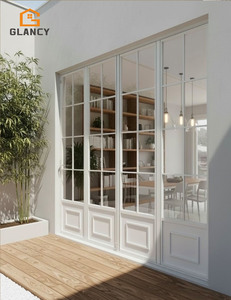
Strict preservation authorities (NPÚ - Národní památkový ústav) often require slim architectural sightlines that mimic traditional heritage steel framing while delivering modern energy performance. Our slimline systems offer profiled bevel beads, ultra-thin central mullions (less than 50mm visible width), and matte Qualicoat-certified anthracite finishes that satisfy heritage aesthetic requirements while upgrading living comfort.
Suburban Low-Energy & Passive Villas
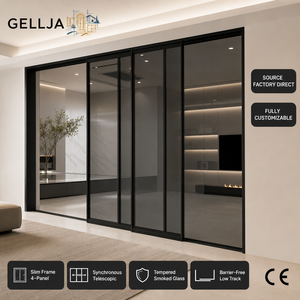
In high-end residential communities outside Brno, Pilsen, and Prague-West, demand centers on floor-to-ceiling glass envelopes. Our structural slimline sliding systems support glass panel weights up to 400kg on heavy-duty stainless steel carriage rollers, allowing 3-meter tall sash units that glide effortlessly while meeting the highest thermal brackets required for national eco-subsidies.
Commercial Administrative & Civic Centers
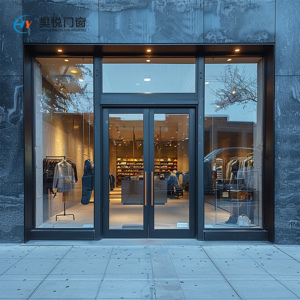
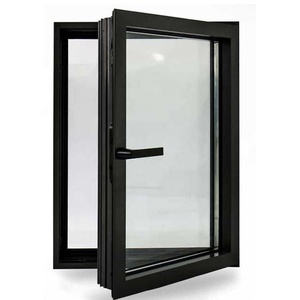
Modern office complexes and retail storefronts across Ostrava and Liberec demand durable high-traffic fenestration. By utilizing high-tensile 6063-T6 virgin aluminium alloys with profile wall thicknesses up to 2.2mm, our integrated commercial storefront and slim casement lines withstand intense operational wear and seismic/vibrational loads without structural fatigue.
3. Emerging Market Trends in the Czech Building Sector
The Czech fenestration sector is experiencing significant shifts driven by green building criteria and macroeconomic parameters:
Decarbonization and the 'Nová zelená úsporám' Impact: The Czech government's long-running subsidy program financially incentivizes homeowners and developers who drastically lower residential energy footprints. Aluminium slimline windows engineered with triple glazing (argon or krypton gas fill, Low-E coatings, warm edge swisspacers) have transformed from luxury status symbols into essential investments that maximize thermal subsidies.
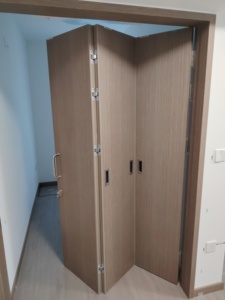
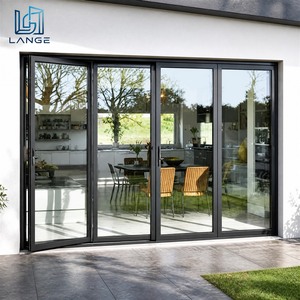
Transition from Heavy PVC to Architectural Aluminium: While PVC historically dominated budget-conscious multi-family housing in Czechia, modern architectural aesthetics prioritizing large glazed spans, corner-opening bifold doors, and motorized sliding units make PVC structurally unviable. Aluminium provides superior dimensional stability across extreme thermal swings (+35°C in summer to -25°C in winter), eliminating the sash sagging and jamming issues common to oversized PVC profiles.
Integration of Concealed Automation & Smart Building Protocols: Czech architectural briefs increasingly require automated concealed drive systems. Our slimline profiles can house hidden chain actuators, concealed multi-point lock actuators, and magnetic contact sensors compatible with KNX and Loxone smart home protocols without compromising the slender structural envelope.

