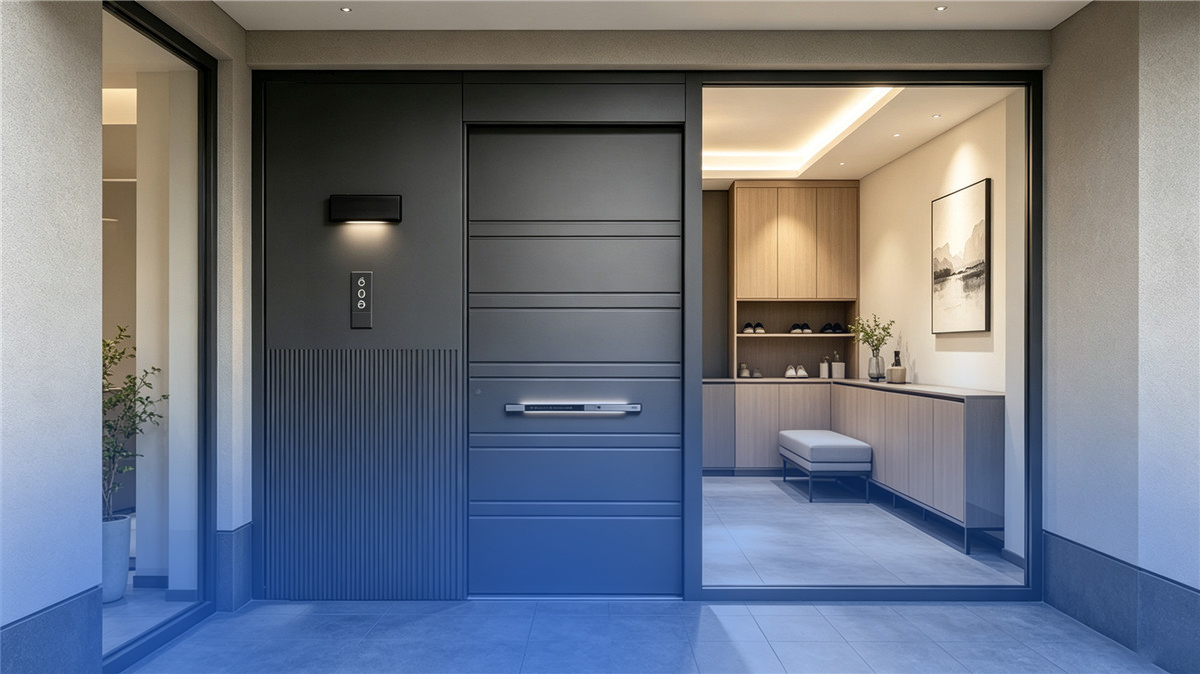
 Overhead System
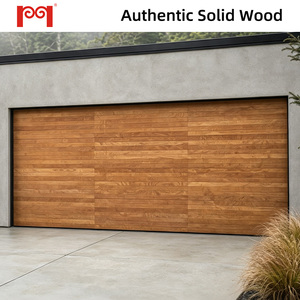
Architectural Grade Real Wood-Clad Insulated Aluminum Panel Garage Doors
Natural Timber Veneer
Polyurethane Core
Acoustic Damping
Explore eight core exterior systems manufactured to precision tolerances, integrating structural thermal breaks, anti-corrosion marine alloys, multi-point locking kinetics, and storm-rated glazing profiles.
Overhead System
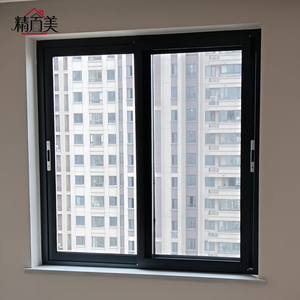 Fenestration
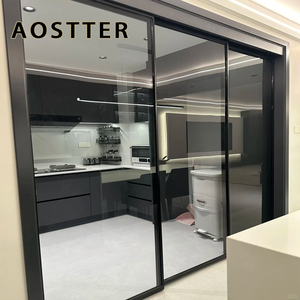 Slim-Frame Partition
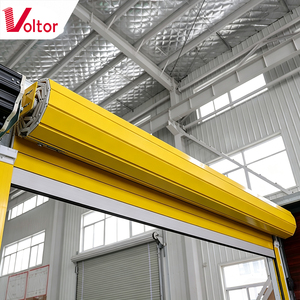 Physical Security
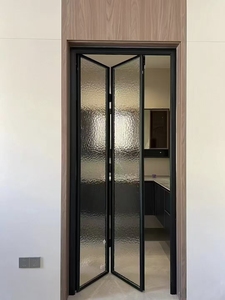 Folding System
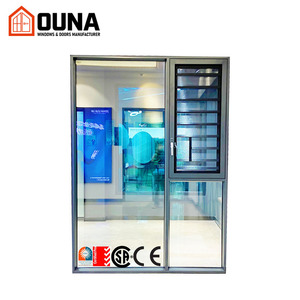 Extreme Weather
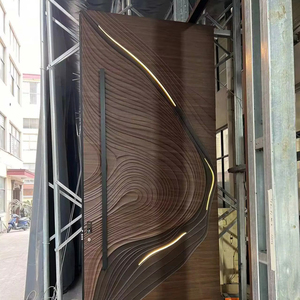 Commercial Grade
 Exterior Flush
In contemporary commercial and high-end residential building envelopes, external door assemblies are no longer treated as simple egress components. Under stringent international green building ratings (such as LEED v4.4, BREEAM, and Estidama) alongside heightened physical security mandates, an aluminum outdoor door acts as a critical kinetic barrier. It must simultaneously provide structural resistance against cyclic wind loads, eliminate thermal bridging across dramatic indoor-outdoor climate gradients, mitigate acoustic pollution, and maintain effortless mechanical operation across thousands of duty cycles.
Architects, general contractors, and tier-one importers seeking trusted outdoor door factories face a volatile international market marked by raw material fluctuations and greenwashing. Identifying an exporter with authentic primary aluminum smelting and extrusion control—rather than secondary scrap remelting—is paramount. Premium export-grade exterior doors require primary AL6063-T6 or AL6060-T66 metallurgical alloys, featuring balanced silicon and magnesium ratios to guarantee minimum tensile yield strengths of ≥160 MPa. Factories relying on uncontrolled recycled billets compromise weld integrity, promote galvanic pitting in coastal atmospheres, and exhibit profile bowing under severe midday thermal shocks.
The difference between standard utility-grade doors and engineered architectural systems lies in three core technical interfaces:

Strategic shifts shaping cross-border exterior door supply chains through 2030. Sourcing directors must align technical tenders with these industrial progressions.
Global procurement teams are bypassing regional distributors to eliminate 30–45% in margin markups. Sourcing directly from verified Chinese manufacturers provides turnkey project scheduling, custom packaging, and synchronized port releases.
Municipal codes across the EU, Australia, and North America increasingly demand verified Environmental Product Declarations (EPD). Exporters operating low-carbon hydroelectric smelting profiles gain decisive preference in municipal and commercial tenders.
Risk mitigation is shifting from post-delivery warranty claims to upstream virtual reality verification. Top exporters provide complete 3D VR factory walkthroughs, digital twin inspections, and real-time hydrostatic chamber test streams before customs release.
Emerging structural, mechanical, and smart features defining modern export-grade aluminum exterior entrances.
Architectural demand has transitioned toward grand pivot doors reaching heights of 4.5 meters. These require floor-recessed hydraulic dampers supporting panel loads up to 500 kg with micro-adjustable magnetic soft-close seals.
Coastal and desert projects require surface coatings that withstand 4,000+ hours of continuous neutral salt spray (ASTM B117). Premium factories deploy Qualicoat Class 3 and AAMA 2605 certified fluorocarbon (PVDF) polymer formulations.
Modern luxury villas and commercial complexes demand seamless kinetic integration. Next-gen exterior doors embed motorized multi-point locks, biometric readers, and dry-contact inputs compatible with KNX, Crestron, and Control4 systems.
Use this engineering comparison to align structural profile dimensions, thermal values, and certifications with your specific geographical zone and wind classification.
| System Classification | Alloy & Wall Spec | Thermal U-Factor | Wind Load Resistance | Ideal Application Context |
|---|---|---|---|---|
| Thermal-Break Bi-Fold | 6063-T6 / 2.0–2.5mm | 1.3–1.6 W/(m²·K) | Class C4 / 2000 Pa | Patio expanses, resort restaurants, luxury villa balconies |
| Hurricane Casement/Pivot | 6060-T66 / 2.5–3.2mm | 1.1–1.4 W/(m²·K) | AS2047 N6 (>3500 Pa) | Coastal cyclone zones, high-rise luxury towers, exposed facades |
| Cast Aluminum Villa Gate | Cast Al Alloy / 8.0–12.0mm | N/A (Solid Barrier) | Exceeds High Impact Testing | Grand estate main entrances, fortified residential compounds |
| Heavy Duty Sliding Patio | 6063-T6 / 2.0–3.0mm | 1.4–1.8 W/(m²·K) | Class C5 / 2500 Pa | High-traffic urban apartments, garden entries, terrace exits |
| Security Roller Shutter | Extruded Al / 1.2–1.8mm | Acoustic Damped Core | Class 3 Wind Resistance | Commercial shopfronts, bank teller zones, hurricane storm shielding |
Operating under the premier DERCHI brand, our manufacturing group delivers integrated structural engineering, bespoke shop fabrication, and dependable international export execution.
Our centralized production campus in Foshan, Guangdong houses automated Italian CNC cutting centers, computerized dual-corner crimpers, and clean-room assembly bays.
Every product series is pre-certified and tested for CE conformity, ISO9001 systems, AS2047 Australian window/door standards, and UL fire-rated door listings.
Heavy-duty fumigated solid timber crates, cellular foam buffers, and desiccants safeguard against sea container humidity, rough transshipment, and port handling.
Our bilingual structural engineers convert your door schedules into millimeter-precise CAD shop drawings, elevation models, and anchor layout details prior to fabrication.

Clearing customs and passing on-site structural inspections requires indisputable documentary backing. DERCHI provides comprehensive test documentation tailored to your jurisdiction:

Direct technical answers regarding quality control, shipping logistics, payment terms, and custom fabrication.
We mandate marine-grade A4 (AISI 316) stainless steel screws, fasteners, and corner brackets. All bi-metal contact interfaces between aluminum profiles and steel anchors receive isolating polyamide or nylon shims to eliminate electrochemical potential differences.
Standard architectural profiles with stock anodized or powder-coated finishes require 25 to 30 calendar days following CAD drawing sign-off. Bespoke dies, custom colors, or complex bullet-resistant laminate glass packages run on a 35 to 45-day production cycle.
Yes. Our in-house structural engineering department analyzes project elevation, terrain roughness categories, and peak gust velocity to calculate profile moment of inertia (Ix and Iy values), ensuring mullion deflection remains within L/175 or L/250 tolerances.
Each door sash is individually sealed in moisture-barrier film, cushioned with dense high-recovery EPE foam, and encased within a reinforced, fully enclosed OSB/plywood crate with integrated steel lifting straps. Container loading is engineered to prevent dynamic transit shifting.
While most overseas developers work with standard FOB Shenzhen/Guangzhou or CIF destination port terms, we also offer complete DDU and DDP solutions for select regions, managing port clearance, terminal handling charges, and direct site delivery.
We source architectural powder coatings exclusively from AkzoNobel, Tiger, and PPG. Batch consistency is measured using digital spectrophotometers to maintain delta E values (ΔE) below 0.5, ensuring uniform appearance across phased project handovers.
Submit your architectural CAD elevations, project door schedules, or performance specifications. Our technical engineering desk will analyze your tender requirements and return fully budgeted proposals within 24 hours.
Get a Quote