Thermal Break
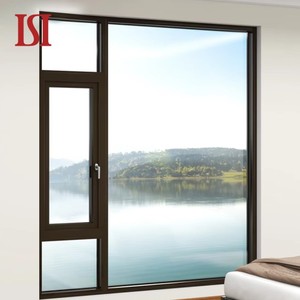
Tengying Dresdner Modern Thermal Break Double Glass Casement Window
6063-T6 Extrusion
Double Glazed
Multi-Point Lock
Explore our export-certified aluminum fenestration and automated roll-up shutter systems, engineered to endure severe cyclone wind loads, high seismic dynamics, and intense thermal extremes.
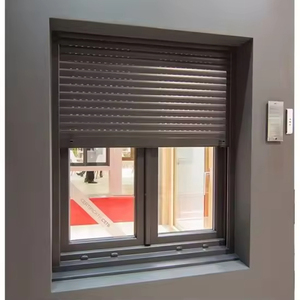
A technical examination of architectural aluminum roller shutter systems, balancing cyclic fatigue life, structural modulus, and thermodynamic envelope performance.
Industrial roll-up curtains demand high yield strength without brittle fracture risks during deflecting gusts. Leading manufacturers employ architectural-grade 6063-T5/T6 primary billet aluminum rather than secondary recycled scrap, ensuring ultimate tensile strengths exceeding 205 MPa and elongation capacities above 8%. For coastal or high-wind environments, heavier 6082-T6 alloys provide the flexural rigidity required to prevent slat disengagement under sustained negative wind pressures.
Depending on building usage, specifiers must determine between roll-formed double-walled aluminum insulated with high-density CFC-free polyurethane (PU) foam (45–55 kg/m³) and heavy-gauge monobloc extruded profiles. While PU-injected slats offer exceptional thermal acoustic isolation (attenuating up to 18 dB and providing U-values below 2.8 W/m²K), solid extruded profiles with internal stiffening ribs deliver maximum forced-entry deterrence meeting EN 1627 RC3/RC4 security standards.
Curtain blow-out during severe typhoons or hurricane events occurs when slats flex, causing the edges to strip out of the vertical guide channels. Direct factory engineering solves this through cast ductile-iron or hardened structural alloy wind end-locks riveted to alternating slat ends. Combined with deep-pocket side guide rails lined with heavy-duty EPDM weather seals, these assemblies endure test pressures conforming to AS/NZS 1170.2 and Florida Building Code TAS 202/203.
While galvanized steel has historically dominated heavy industrial warehouses, premium commercial projects and coastal industrial facilities are migrating to precision aluminum alloys. Extruded aluminum eliminates galvanic rust creep, reduces deadweight overhead load on structural lintels by 42%, and lowers motorized drive wear by 35%, significantly extending torsion spring and gear motor lifespan over 150,000 continuous operation cycles.
| Performance Parameter | Dual-Wall Extruded 6063-T6 Aluminum | PU Foam-Insulated Aluminum Slat | Galvanized Commercial Steel (0.8-1.2mm) |
|---|---|---|---|
| Corrosion Resistance (Salt Spray ASTM B117) | Exceeds 3,000 Hours (Fluorocarbon/Anodized) | 2,000 Hours (Polyester Powder Coated) | 400–800 Hours (Zinc Flaking Hazard) |
| Acoustic Damping (ISO 10140-2) | Rw = 24 dB (With Brush/Rubber Guiding) | Rw = 28 dB (High-Density Core) | Rw = 17 dB (Hollow Metal Resonance) |
| Thermal Transmittance (U-Value) | Approx. 4.2 W/(m²·K) | 2.1 – 2.8 W/(m²·K) | 5.8 W/(m²·K) (Significant Thermal Bridge) |
| Curtain Weight per m² | 8.5 – 12.0 kg/m² | 5.0 – 7.2 kg/m² | 14.0 – 19.5 kg/m² |
| Wind Pressure Resistance (EN 12424) | Class 4 to Class 5 (> 1,500 Pa) | Class 2 to Class 3 (Up to 1,000 Pa) | Class 3 to Class 4 (Dependent on Gauge) |
Leveraging 25+ years of fenestration engineering heritage from our centralized Foshan smart manufacturing hub.
Our expansive 180,000 square meter Foshan manufacturing base integrates automated profile extrusion, continuous automated PU injection lines, and high-speed CNC robotic punching. Every roll-up door is dry-assembled, tested on calibrated vertical test towers, and verified for counterbalance equilibrium, noise emission tolerances, and optical safety sensor cutoff before seaworthy crating.
International infrastructure developers and commercial contractors require verifiable compliance. Our comprehensive door systems hold European CE certifications, ISO 9001 quality management verification, Australian AS2047 cyclical load accreditation, and UL fire-rated approvals for specialized models. We provide third-party laboratory test sheets, mill test certificates, and full documentation to streamline local building authority sign-offs.
Strategic insights for procurement directors, quantity surveyors, and general contractors managing multi-unit developments and infrastructure hubs.
Global logistics volatility has rendered single-product freight contracts economically inefficient. Tier-1 real estate developers increasingly consolidate entire fenestration packages into high-cube 40HQ containers direct from one audited OEM manufacturer. By bundling architectural aluminum entry doors, hurricane bi-folds, cast villa gates, and perimeter roll-up doors, procurement teams cut maritime freight charges by up to 38% and mitigate transit coordinate discrepancies.
The standard procurement timeline is shortening. Developers bypass intermediary trading entities in favor of direct engineering collaboration. In-house factory drafting units generate precise 2D AutoCAD section details and 3D Revit BIM models within 48 hours of rough-opening confirmation, detailing threshold drainage, structural head-box lintel clearances, and electrical conduits prior to raw metal casting.
Modern building rating systems like LEED v4.1 and BREEAM mandate stringent Environmental Product Declarations (EPDs). Procuring organizations require aluminum roll-up door extruders to employ closed-loop hydro-powered primary smelting where feasible, coupled with zero-VOC fluorocarbon PVDF (AAMA 2605 compliant) or marine-grade anodizing (Class 1, 25-micron minimum) capable of resisting coastal tropical weathering for 25+ years without chalking or delamination.
The convergence of building automation, smart mechatronics, and advanced passive safety systems.
Traditional induction motors suffer from overheating during rapid duty cycles. Modern installations utilize variable frequency drive (VFD) three-phase or brushless DC side-mount operators. These motors enable programmable soft-start and soft-stop velocity curves, lowering mechanical shock on curtain slats by 60%, maintaining quiet operation (< 55 dBA), and facilitating opening speeds up to 1.5 m/s in cleanroom or logistics environments.
Rigid trailing edges represent substantial impact risks. Cutting-edge assemblies ditch outdated pneumatic contact switches for continuous optoelectronic infrared light grids integrated directly into the side tracks. These sensor curtains form a virtual barrier up to 2,500mm in height, reversing motion without contact if pedestrians, vehicles, or obstructions enter the closing perimeter, fulfilling EN 12453 PL-d requirements.
Facility managers require centralized telemetry. Modern commercial roll-up door motors now natively integrate RS485 Modbus, BACnet, or secure Wi-Fi gateways. Building management systems track motor duty cycle telemetry, brake wear predictions, and ambient temperature deviations in real time. Integrated continuous-float uninterrupted power supply (UPS) batteries ensure 100% emergency egress operation during complete power grid failure.
Addressing engineering specifications, manufacturing lead times, import clearances, and site installation protocols.
Our engineering division models slat deflection using finite element structural analysis (FEA) compliant with ASTM E330 and EN 12424. Permissible deflection is generally capped at L/50 to L/100 of clear opening span. For expansive spans up to 10 meters, we implement internal dual-wall structural ribs and alternating steel wind-locks that anchor into reinforced 3mm-thick aluminum guide tracks to completely prevent blow-out under extreme storm events.
For coastal installations within 5 kilometers of open sea (such as Lagos, Mombasa, Durban, or Caribbean resort regions), standard architectural powder coatings are insufficient. We recommend either electro-deposited Anodizing (minimum 25-micron coating thickness, Class 1) or 3-coat Fluorocarbon PVDF resin coatings compliant with AAMA 2605. These finishes successfully withstand 3,000+ hours of continuous neutral salt spray (ASTM B117) without micro-blistering or corrosion.
Tubular motors are housed entirely within the rolling axle barrel, making them ideal for compact residential garages, retail storefronts, and interior partitions where aesthetic concealment and tight lintel clearances are critical (low cycle duty: ~15-20 cycles/day). For high-frequency commercial logistics bays or heavy industrial doors exceeding 25 m² curtain area, external side-mount chain or gear drives are mandatory, providing continuous duty ratings, integrated parachute anti-drop brakes, and easy mechanical servicing.
Yes. Custom curtains can be engineered with punched micro-perforated slats (30% to 45% open ventilation area) to maintain natural passive airflow while excluding pests. Alternatively, heavy-gauge extruded slats can feature CNC-cut vision cutouts fitted with shatterproof, UV-stabilized dual-layer polycarbonate glazing, ensuring optical clarity for storefronts or commercial security checkpoints without compromising structural curtain stiffness.
Every international order is supported by a comprehensive technical documentation package. This includes factory mill test certificates (MTC) verifying raw 6063 alloy chemical compositions, CE Declarations of Conformity, ISO 9001 quality audits, AS2047 test records, and UL listings where specified. For African destination ports (such as Nigeria, Kenya, Ghana), we prepare SONCAP, KEBS PVoC, or relevant national standard conformity inspection documentation to ensure unimpeded customs clearance.
Roll-up curtains are tightly pre-coiled, protected with non-abrasive PE protective film, and enclosed within heavy cellular bubble cushioning. The assembly is then secured inside fumigated solid-plywood export crates (ISPM 15 certified) reinforced with interior perimeter wood framing. Guide rails, axle barrels, and electric motor crates are segregated with shock-absorbent blocking to eliminate surface scuffing or torsional bending during ocean transit.
Standard custom architectural sizes require a manufacturing lead time of 15 to 25 calendar days following CAD shop drawing approval and color finish sign-off. For large-scale development projects demanding more than 200 motorized units, progressive containerized dispatch schedules can be established, releasing 40-foot containers sequentially aligned with site construction phasing.
We combine high-density polyurethane insulated dual-skin slats with patented perimeter thermal breaks. Side guide channels feature continuous co-extruded dual-durometer EPDM and nylon brush inserts that isolate metal-to-metal thermal conduction. Additionally, the bottom aluminum extrusion incorporates an oversized hollow tubular rubber seal that compresses to uneven floor levels, eliminating air infiltration and thermal convection losses.
Every commercial delivery includes step-by-step shop assembly schematics, electrical terminal wiring diagrams, and high-definition video walkthroughs. Our English-speaking fenestration engineers provide direct remote technical assistance via video conference, guiding contractor electrical teams through motor limit-switch programming, safety sensor calibration, and manual hand-crank override testing.
Send your door schedules, architectural CAD plans, or project specifications directly to our engineering team. We deliver structural feedback, complete Bill of Quantities (BOQ), and factory-direct FOB/CIF pricing within 24 hours.