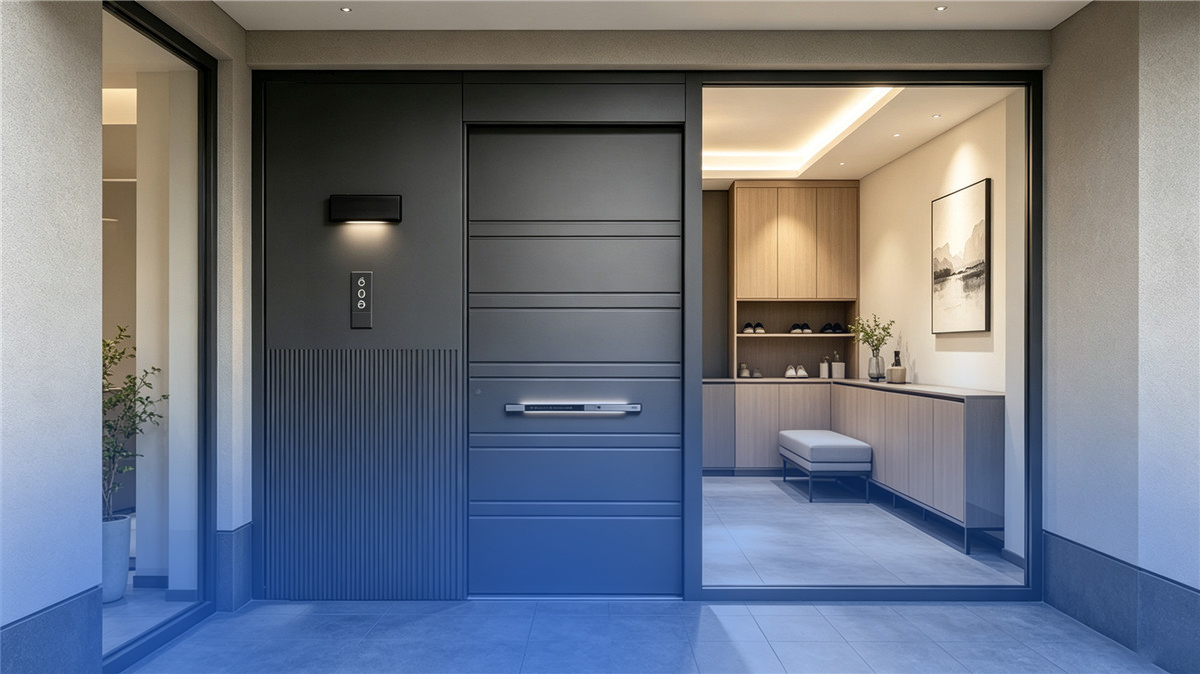
Industrial Grade Aluminum Bathroom Sliding Door Systems
When specifying interior architectural glass for wet-area applications, commercial developers, five-star hospitality operators, and luxury residential builders encounter acute engineering challenges: constant relative humidity, aggressive alkaline cleaning agents, acoustic bleed, spatial constraints, and long-term track degradation. As an international manufacturing and exporting benchmark based in Foshan, Guangdong, our factory engineers solve these failure points through metallurgical precision, custom sealing geometries, and modular component testing.
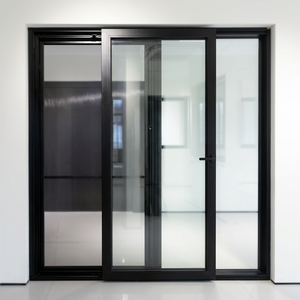
DERCHI Multi Panel Aluminum Sliding Door Security Hurricane Proof Waterproof Interior Bathroom Patio
- Multi-chamber reinforced alloy frame
- Hurricane & high-pressure water tight
- Application: Master ensuites & luxury suites
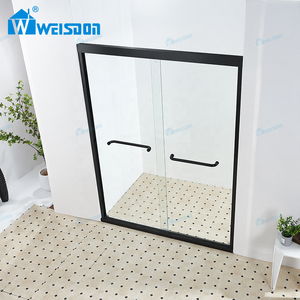
Custom Villa Hotel Bathroom Matte Black 5+5mm Laminated Glass Framed Double Sliding Shower Door
- 5+5mm acoustic PVB laminated glass
- Matte black fluorocarbon anti-stain finish
- Dual-directional soft-close damper
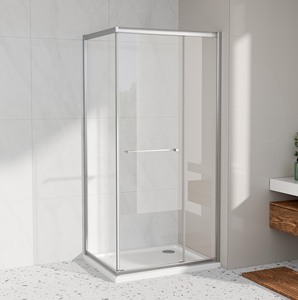
Sliding Shower Enclosure Aluminium Frame Modern Design Tempered Glass Waterproof Bathroom Door
- Self-cleaning nano-coated safety glass
- 304 stainless steel silent roller set
- Magnetic water-stop threshold seal
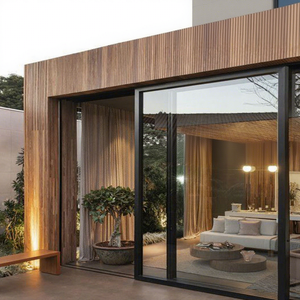
Heavy Duty Oversized Aluminum Alloy Sliding Door Double Glazed Tempered Glass for Bathroom
- Heavy load 350kg capacity track system
- Double glazed thermal & acoustic barrier
- Concealed multi-point interlock latch
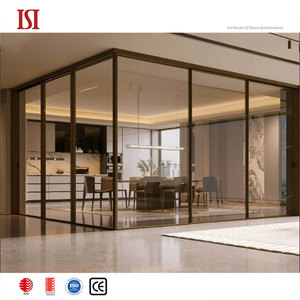
Top Brand 120 Series Modern Aluminum Sliding Glass Door Thermal Insulation for Bathroom
- Polyamide PA66 thermal insulation barrier
- Zero condensation profile engineering
- Flush drainage sub-sill integration
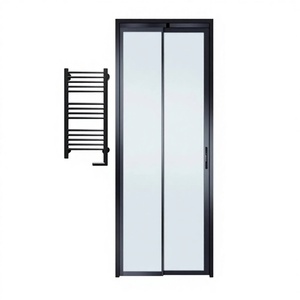
Space Saving Trackless PD Door Aluminum Glass Slide Swing Waterproof for Bathroom Small Spaces
- Hybrid slide + swing 180° full opening
- Trackless floor design (no trip hazard)
- Ideal for compact en-suite renovations
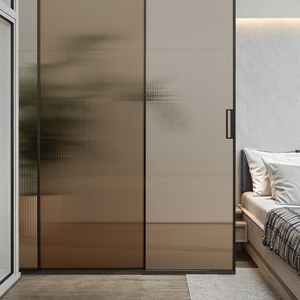
Modern Fire-Resistant Aluminum Slim Profile Glass Slide Swing Door for Bathroom
- 16mm ultra-narrow visible stile face
- Fire-retardant structural composite core
- High torsion resistance T6 temper
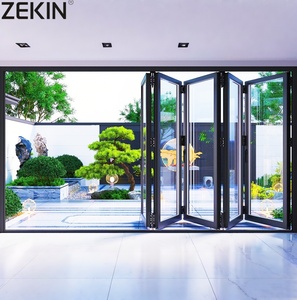
Customized Sliding Folding Doors with Built-In Blinds Double Glass Bi-Fold System
- Hermetically sealed internal magnetic blinds
- Zero dust & moisture intrusion inside glass
- Complete optical privacy on demand
Direct-from-Source Industrial Capacity in Foshan
Ranked among China's Top 10 fenestration and door industrial brands, operating certified production pipelines that bridge strict international building codes with high-throughput manufacturing.
Engineering Trends Reshaping Aluminum Bathroom Doors
The global interior architecture market is shifting rapidly from utilitarian room-dividers toward high-performance envelope systems. Understanding these design and manufacturing shifts enables developers and procurement teams to future-proof their properties and maximize residual asset values.
Barrier-Free Flush Incline Drainage
Traditional 30mm-50mm raised threshold tracks represent a severe trip liability in both aging-in-place residential builds and luxury hotel suites. Modern engineering deploys concealed floor-plane stainless steel trough sills featuring dynamic gravity valves and subterranean slope evacuation. Water is captured at a rate of up to 45 L/min without requiring any step-over lip, achieving seamless accessibility standard compliance (ADA & EN 301 549).
Ghost Stile & Ultra-Narrow Sightlines
Architectural aesthetics demand maximum glass visual fields. By substituting conventional 6063-T5 with cold-aged 6063-T6 or 6061 high-silicon structural extrusions, perimeter visible stiles have contracted down to 16mm or been recessed entirely within ceiling pockets. The mechanical load is redistributed to concealed structural top-hung bogies featuring needle-roller bearings and dual hydraulic dampening.
Switchable PDLC Smart Glass Integration
Rather than static frosted glass or mold-prone fabric drapery, smart bathroom sliding doors incorporate polymer-dispersed liquid crystal (PDLC) interlayer film hermetically laminated between two 5mm low-iron glass panes. Controlled via wall sensor, home automation protocols, or dry-contact occupancy switches, the panel switches from 88% transparent optical clarity to 100% opaque privacy in less than 20 milliseconds.
Multi-Atmospheric Surface Treatments & Salt-Mist Resistance
In high-temperature shower environments, ordinary commercial anodizing often suffers micro-cracking and surfactant staining. Premier exporters employ fluorocarbon PVDF powder coating (exceeding AAMA 2605 requirements) or high-density electrophoretic matte finishes. Tested under continuous ASTM B117 neutral salt spray conditions for over 1,500 hours, these coatings offer absolute resistance against harsh chloramines, lime-scale cleaning acids, and humid tropical coastlines.
Future Procurement Trends: What Major Importers & Developers Must Plan For
International B2B sourcing of architectural aluminum doors is experiencing a structural realignment driven by digital building modelling, stringent ESG standards, and accelerated construction schedules. Importers and tier-one general contractors who understand these supply chain dynamics avoid multi-week site reworks and significant demurrage fees.
| Procurement Metric | Traditional Fragmentation Model | Modern Direct-Factory Integrated Model (DERCHI) |
|---|---|---|
| Specification Integrity | Architectural drawings outsourced to disparate regional profile vendors and local glaziers; high variance in tolerances (±4.0mm). | Direct parametric CAD/BIM shop drawings developed inside the factory; laser-cut extrusion and CNC boring within ±0.5mm precision. |
| Total Cost of Ownership (TCO) | Lower initial purchase price offset by 15-25% site rectification labor, missing hardware replacements, and field waterproofing sealant failures. | Pre-assembled sub-frames with pre-machined mortises, factory-fitted EPDM gaskets, and complete crated hardware packages. Lowest installed net cost. |
| Environmental Compliance | Unverified recycled scrap billets with high carbon trace, secondary toxic solvent-borne paints without environmental product declarations. | Prime primary 6063 A00 ingot billets, chrome-free pretreatment, zero-VOC electrostatic powder, and full compliance with LEED & RoHS criteria. |
| Packaging & Logistics | Corrugated cardboard wrapping prone to moisture saturation, glass corner fracture, and saltwater vapor oxidation in maritime containers. | Individually vapor-sealed PE wrapping, honeycomb corner guards, reinforced steel-strapped fumigated plywood crates with desiccant packs. |
1. Offsite Pod Manufacturing Compatibility: The rapid growth of Prefabricated Modular Bathroom Pods across North America, Europe, and the Middle East demands door assemblies engineered for rapid drop-in installation. Modern factory systems supply door cassettes with plug-and-play jamb anchors, reducing onsite labor by up to 70% compared to traditional field assembly.
2. Consolidation of Whole-Building Fenestration: Rather than dealing with multiple small workshops for entry gates, balcony sliding doors, interior bedroom wooden doors, and bathroom sliding partitions, commercial project directors now demand single-source suppliers capable of managing 20-50 containers per project. Guangdong Dejiyoupin (DERCHI) operates dedicated production zones covering aluminum entry doors, massive pivot gates, hurricane-rated sliding doors, and sanitary enclosures under one roof, slashing cross-vendor coordination friction.
Frequently Asked Questions for Commercial Buyers & Specifiers
In-depth technical answers addressing metallurgy, watertightness testing, acoustic decibels, and shipping protocols for large-scale procurement.
Which aluminum alloy specification is mandatory for high-humidity bathroom sliding doors?
How do modern sliding bathroom doors achieve acoustic isolation without a bottom step track?
1. Concealed Automatic Drop-Down Seals: A mechanical plunger triggered upon complete door closure forces an extruded silicon or EDPM blade firmly against the floor tile, closing the 8-12mm gap without dragging during transit.
2. Continuous EPDM Compression Gaskets: Dual-fin EPDM weatherstripping integrated into the vertical jamb receivers rather than standard brush pile strips, eliminating sound flanking paths.
3. Acoustic Interlayer Laminated Glass: Utilizing 5+0.76PVB+5mm or 6+1.14PVB+6mm acoustic sound-dampening polyvinyl butyral films between tempered glass leaves.
What glass safety certifications are required for export to the US, Europe, and Australia?
• United States & North America: ANSI Z97.1-2015 / CPSC 16 CFR 1201 (Category II) impact testing.
• European Union & UK: EN 12150-1 (Thermally toughened soda lime silicate safety glass) and EN 14449 for laminated security glass, carrying CE marking.
• Australia & New Zealand: AS/NZS 2208 (Safety glazing materials in buildings) compliance, coupled with AS2047 overall window and door mechanical structural certification.
Our factory subjects all safety glass to mandatory fragmentation count tests (minimum 40 particles within a 50×50mm square) and offers optional Heat Soak Testing (HST according to EN 14179) to eliminate the risk of nickel sulfide (NiS) spontaneous glass rupture.
How does a trackless PD (Pivot-Slide) door operate compared to conventional bypass sliders?
Key Engineering Advantage: Unlike conventional bypass sliding doors that permanently obstruct 50% of the wall opening width, a trackless PD door vacates 90% to 95% of the passage area. Because the entire guide mechanism is suspended from a heavy-duty reinforced top track, the floor remains 100% barrier-free, eliminating dirty floor rails that trap hair, soap scum, and moisture.
What is the minimum cycle lifespan for commercial bathroom sliding door hardware?
How does the factory prevent shipping damage, glass breakage, and profile oxidation during sea freight?
1. Surface Film: Profiles are wrapped in 0.08mm electrostatic PE protective film that leaves zero adhesive residue upon peeling.
2. Corner Armor: Rigid polymer corner guards protect every glass perimeter corner against kinetic drop impact.
3. Vapor Barrier: Entire panel packs are vacuum-sealed inside thick moisture-barrier polythene sheeting containing industrial silica-gel desiccant packs.
4. Fumigated Timber Crates: Enclosed heavy-plywood structural crates (ISPM 15 certified) equipped with internal foam stringers that prevent frame-to-frame rub.
5. Container Securing: High-tensile ratcheted cargo straps and cross-braced timber dunnage prevent shifting during severe maritime pitch and roll.
Connect Directly with Factory Structural Engineers
Whether you require comprehensive CAD shop drawings for luxury villa developments, customized hotel bathroom pod cassettes, or container-load OEM/ODM supply, our Foshan engineering team responds within 24 hours.