 Series 01 • Swing
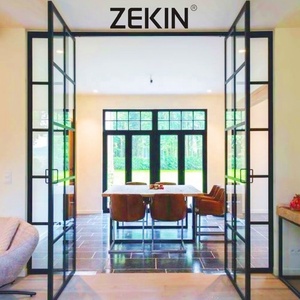
Zekin Black Grill Entrance Swing Doors French Door Aluminum Tempered Glass Casement Entry Door for Interior
Narrow Stile
Tempered SGCC
Acoustic EPDM
Manufactured using virgin 6063-T5/T6 marine-grade aluminium extrusions, multi-point perimeter compression hardware, and multi-chamber polyamide thermal barriers (PA66GF25) tailored for commercial high-rises and private luxury villas.
Series 01 • Swing
 Series 02 • Hurricane
 Series 03 • Security
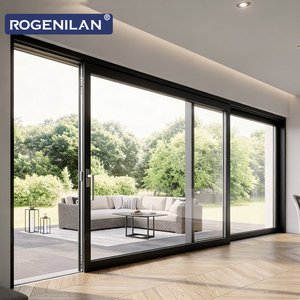 Series 04 • Lift & Slide
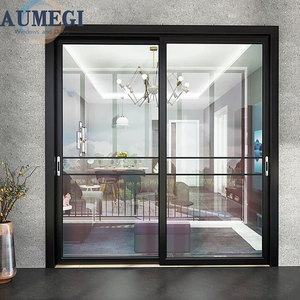 Series 05 • Architectural
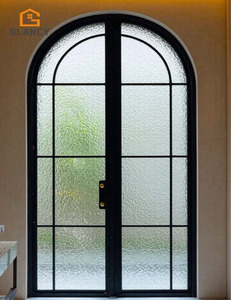 Series 06 • Arch Casement
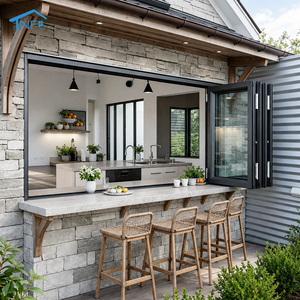 Series 07 • Bi-Folding
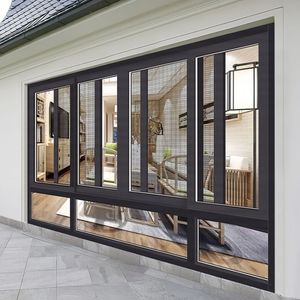 Series 08 • Sash Balcony
The global construction industry is experiencing a profound paradigm shift towards high-performance building envelopes. Within this evolution, aluminium openable door systems—spanning casement entry swing portals, heavy-duty lift-and-slide doors, bi-folding patio partitions, and oversized pivot entrances—occupy a critical nexus between structural safety, passive thermal management, and aesthetic expression. China currently accounts for more than 60% of the world's architectural aluminium extrusion and fenestration output, with the Pearl River Delta industrial ecosystem—centered precisely around Foshan, Guangdong—representing the highest concentration of specialized engineering, automated extrusion lines, thermal break injection technology, and precision testing facilities.
When international procurement directors, facade consultants, and general contractors evaluate top China aluminium openable door factories, the evaluation extends beyond baseline manufacturing capacity. Critical compliance vectors now dictate tender selections: alloy metallurgical purity (strict adherence to primary 6063-T5/T6 billet extrusions with certified zinc/silicon tolerances), extrusion wall thickness compliance (exceeding international structural thresholds with 2.0mm to 3.5mm commercial profiles), thermal barrier integrity using glass fiber reinforced polyamide (PA66GF25), and structural weathering performance verified under extreme static and dynamic pressures.
Engineered for high-traffic entryways and interior luxury zoning. Features dual or triple EPDM perimeter compression gaskets and European multi-point locking pins that achieve an airtight envelope and superior acoustic attenuation up to STC 42dB.
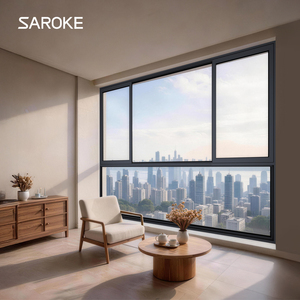
Designed for monumental glass spans up to 3.5 meters in height and 400kg per sash. Utilizes mechanical lever bogie wheel carriages that drop into airtight compression seating when engaged, neutralizing coastal driving rains.
Multi-panel articulating configurations running on top-hung heavy-duty stainless steel bearing guides. Provides 95% unobstructed open aperture for luxury villas, hospitality venues, and commercial event spaces.
Institutional procurement behavior across North America, Europe, Australia, and Africa is responding to tightening building codes and aggressive decarbonization roadmaps. Sourcing managers are no longer viewing aluminium openable doors as static hardware products; rather, they are procured as complex, energy-regulating building envelope components. Below are the definitive market dynamics reshaping OEM/ODM supply agreements over the coming half-decade:
Tier-1 real estate developers increasingly demand Environmental Product Declarations (EPDs). Leading Chinese manufacturers are transitioning from high-carbon coal-fired smelting to green hydro-powered aluminium billets, dropping embodied carbon from 16kg CO2/kg Al to below 4kg CO2/kg Al.
Driven by the EU Energy Performance of Buildings Directive (EPBD) and ASHRAE 90.1 standards, openable door systems are integrating multi-cavity 34mm-54mm polyamide thermal struts with polyurethane foam filling and triple-pane krypton/argon warm-edge glazing.
Specification tenders now routinely bundle concealed motorized actuator drives, electronic drop seals, biometric fingerprint access, and building management system (BMS) interfaces seamlessly concealed inside hollow profile chambers.
The table below provides empirical technical specifications for commercial and architectural-grade aluminium openable doors manufactured according to international structural standards:
| Door System Category | Alloy Profile Spec | Thermal Barrier (Polyamide) | U-Factor (W/m²·K) | Wind Load Resistance | Acoustic Rating (Rw/STC) |
|---|---|---|---|---|---|
| Heavy Duty Pivot Door | 6063-T6 / 3.0mm Wall | PA66GF25 34mm Multibarrier | 1.2 – 1.4 | 5000 Pa (Serviceability) | STC 40 – 43 dB |
| Architectural French Casement | 6063-T5 / 2.0mm Wall | PA66GF25 24mm Double Strip | 1.3 – 1.6 | 4500 Pa (Class C5) | STC 38 – 42 dB |
| Typhoon Lift & Slide | 6063-T6 / 2.5mm Wall | PA66GF25 39mm Foam Core | 1.0 – 1.3 | 9000 Pa (AS2047 N6 Max) | STC 42 – 45 dB |
| Panoramic Bi-Folding Wall | 6063-T5 / 2.2mm Wall | PA66GF25 28mm Chambered | 1.4 – 1.8 | 3500 Pa (Class 4) | STC 36 – 40 dB |
What differentiates a budget local fabricator from a world-class industrial door factory is the mastery of tolerance control, corner joint physics, and surface metallurgy. Chinese tier-one facilities have systematically upgraded manufacturing hardware from manual miter saws to German and Italian CNC 5-axis profile machining centers, robotic corner-crimping cells, and automated sealant application tables.
Replacing mechanical screw-cleats with pneumatic/hydraulic corner crimping machines coupled with injected dual-component polyurethane structural resin, ensuring zero frame racking and 100% capillary water tightness.
Utilizing continuous cellular ethylene propylene diene monomer (EPDM) vulcanized corner keys rather than spliced PVC seals, guaranteeing elastic recovery after 200,000 continuous opening cycles under -30°C to +80°C extremes.
Application of 3-coat/2-bake fluorocarbon (PVDF) or AAMA 2605 / QUALICOAT Class 2 powders yielding 30+ year resistance against severe marine saline mist, solar UV radiation, and environmental discoloration.
Integration of European 3D adjustable concealed hinges with 200kg load ratings per pair, eliminating hinge pin exposure, preventing forced lever entry, and establishing clean architectural sightlines.
Recognized as one of China's top tier-one door and window brands, Guangdong Dejiyoupin Doors and Windows Co., Ltd. (DERCHI) operates an ultra-modern 180,000 ㎡ production matrix located in Shishan Town, Nanhai District, Foshan City—the epicenter of global architectural aluminium engineering. Backed by an elite team of over 600 specialized production personnel and facade design engineers, the company delivers end-to-end bespoke solutions spanning luxury residential villas, international 5-star hospitality complexes, and commercial high-rises.
DERCHI's engineering credibility is verified through comprehensive international performance benchmarks. Our fenestration solutions have achieved the stringent AS2047 N6 rating (the highest cyclonic storm standard in Australia, enduring simulated hurricane wind pressures exceeding 9,000 Pascals), European CE conformity, ISO 9001 quality management verification, and UL fire-resistance certification for high-occupancy commercial portals. Our global export division supplies contractors and wholesale distributors across Nigeria, Kenya, South Africa, Ghana, the Middle East, the United Kingdom, Canada, and the United States with full containerized logistics, CAD shop drawings, and remote video technical installation support.
Expert answers addressing structural performance, containerization logistics, QA factory audits, and project specifications.
Send your architectural CAD drawings, door schedules, or project specifications directly to our engineering team in Foshan. Receive detailed shop drawings, thermal calculations, and factory-direct CIF/FOB quotations within 24 hours.
Inquire Now