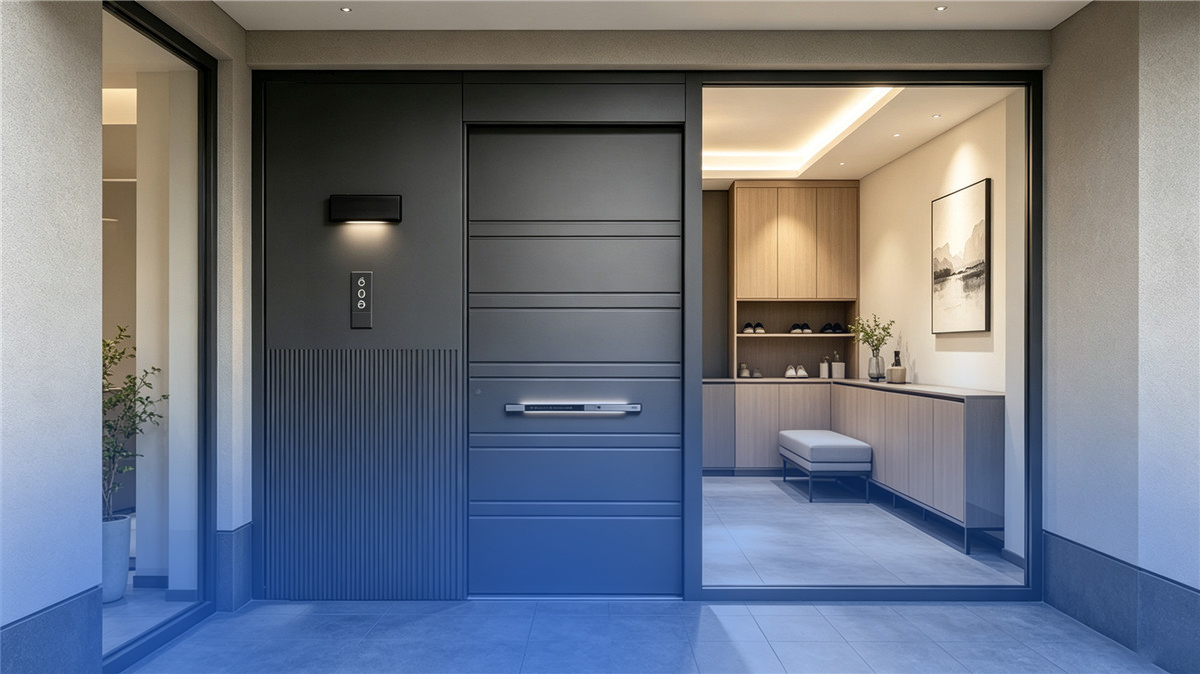
High-Performance Aluminium Glass Systems
Engineered specifically for structural integrity, cyclonic air/water tightness, sound insulation, and thermal efficiency compliance across North America, Europe, Australia, and Africa.
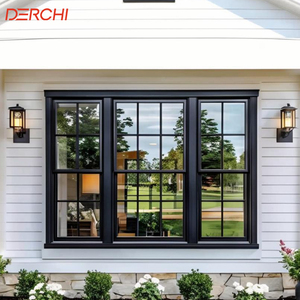 Double-Hung
Insulated Slim Profile Aluminium Double-Hung Window
- PA66GF25 Thermal Insulation Break
- Sleek Sightline for Modern Construction
- Class-Leading Air Infiltration Rating
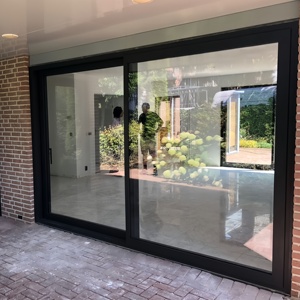 Heavy-Duty
 Soundproof Sliding Aluminium Doors & Windows
- Multi-Panel Industrial Configuration
- Acoustic STC Rating: Up to 42 dB
- Heavy Stainless Steel Roller Track
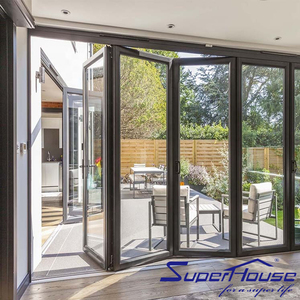 Bi-Fold
Superhouse Fold-Up Aluminium Bi-Fold Glass Windows
- Zero-Threshold Flush Track Solution
- Heavy Stainless Steel Pivot Bearing
- Expansive 95% Clear Opening Ratio
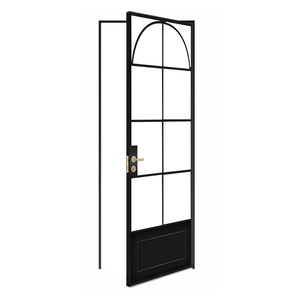 Casement / French
Soundproof Insulated Thermal Break Aluminium Casement Doors
- Multi-Point Compression Perimeter Seal
- Argon Gas Double/Triple Low-E Glass
- European Standard Hardware Groove
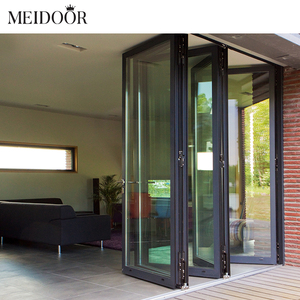 Storm Rated
Exterior Double Glazed Aluminium Bifold Storm Patio Doors
- Typhoon & Hurricane Wind Pressure Rated
- Heavy Wall 2.0mm Extruded 6063-T6
- SGP Interlayer Impact Glass Option
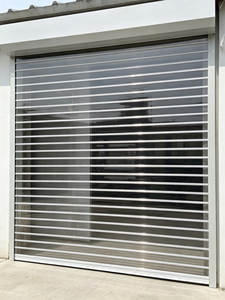 Commercial
Smart Storefront Aluminium Alloy Clear Roller Shutter Doors
- High-Impact Clear Polycarbonate / Glaze
- Smart Tubular Motor Automation
- Anti-Burglar Wind-Lock Track Guides
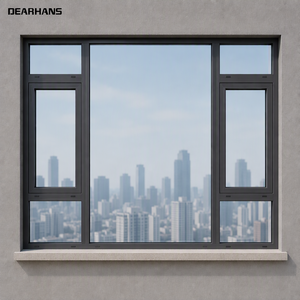 Panoramic
Narrow Frame Panoramic Casement Windows with Integrated Screens
- Ultra-Slim 25mm Visible Sightline
- High-Strength 304 Stainless Mesh Screen
- Concealed Heavy-Load Friction Hinges
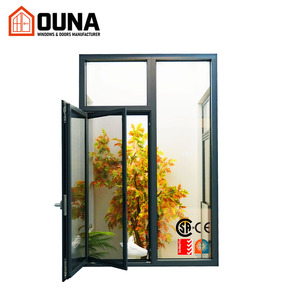 NFRC / CSA
OUNA Energy Saving Thermal Break Casement Window
- NFRC, CSA & CE Certified Performance
- U-Value: Down to 0.18 BTU/hr·ft²·°F (1.0 W/m²K)
- Multi-Chamber EPDM Vulcanized Gaskets
Fenestration Engineering Whitepaper: Precision Structural Extrusions & Thermal Barriers
In modern high-performance architecture, an aluminium window is no longer a passive building component; it is an active mechanical envelope engineered to resist windward micro-distortions, prevent internal condensation, and mitigate acoustic resonant frequencies. China’s fenestration manufacturing ecosystem has evolved from labor-intensive manual profile chopping to fully robotic 5-axis CNC machining centers, automated insulated glass unit (IGU) desiccant filling, and precision polyamide structural insertion lines.
1. Multi-Cavity Polyamide 66 Thermal Isolation Dynamics
Traditional non-thermal break profiles possess high thermal conductivity (K-value roughly 200 W/m·K), leading to extreme interior energy loss and dew condensation. Premier Chinese manufacturers integrate 24mm to 34mm PA66GF25 (polyamide reinforced with 25% chopped glass fiber) structural struts. These struts exhibit a thermal expansion coefficient near-identical to extruded aluminium (2.3 × 10⁻⁵ /K), preventing structural separation during extreme temperature fluctuations between interior HVAC environments and exterior ambient conditions ranging from -40°C to +55°C.
By compartmentalizing the profile interior into multiple isolation chambers and filling the central core with extruded polyethylene aero-foam insulants, modern thermal break profiles achieve frame thermal transmittance values as low as Uf = 1.2 to 1.5 W/m²K, enabling overall assembly values compliant with Passivhaus standards.
| Profile & Glazing Configuration | Frame U-Factor (W/m²K) | Acoustic Attenuation (STC) | Max Wind Pressure (Pa) | Target Climate / Application |
|---|---|---|---|---|
| Standard 6063-T5 Thermal Break (20mm PA66) | 2.1 - 2.5 | 32 - 35 dB | 2500 - 3000 Pa | Moderate Continental / Low-Rise Urban |
| Heavy-Wall 6063-T6 (28mm Multi-Cavity PA66) | 1.4 - 1.8 | 38 - 42 dB | 4500 - 5500 Pa | Coastal Typhoon Zones / Commercial Towers |
| Passivhaus Series (34mm Foam Core + Triple Low-E) | 0.8 - 1.1 | 44 - 48 dB | 5000+ Pa | Sub-Zero Alpine / Ultra-Low Energy Envelopes |
| Narrow-Frame Minimalist Architectural Line | 1.6 - 2.0 | 36 - 40 dB | 3500 - 4500 Pa | Luxury Villas / Panoramic Horizon Living |
2. Glazing Dynamics: Low-E Coatings, Warm-Edge Spacers & Gas Retention
The glass pane represents approximately 75% to 85% of total window surface area. High-performance export specifications necessitate double or triple insulated glass units (IGUs) incorporating Magnetron Sputtered Vacuum Deposition (MSVD) soft-coat Low-E layers. By reflecting long-wave infrared heat while permitting visible light transmission (VLT > 68%), the Solar Heat Gain Coefficient (SHGC) can be tuned from 0.22 for hot desert regions up to 0.55 for solar-passive heating in cold Nordic environments.
Crucially, elite exporters have eliminated conventional hollow aluminium spacer bars—which create severe thermal bridges along the glass perimeter—in favor of structural composite warm-edge spacers (such as Technoform or Swisspacer) coupled with dual-barrier seals: primary polyisobutylene (PIB) for vapor tightness and secondary structural silicone for long-term mechanical bonding. Automated argon gas vacuum replacement ensures an inert gas concentration surpassing 90%, preventing convection heat transfers inside the air spacer.
Future Procurement & Architectural Sourcing Trends (2025–2030)
How Tier-1 procurement heads, facade consultants, and general contractors are adapting supply chain strategies to decarbonization, robotics, and regulatory evolutions.
Embodied Carbon Transparency & EPD Audits
Global architectural bids in North America and the European Union increasingly require Environmental Product Declarations (EPDs). Leading Chinese manufacturers are investing heavily in hydroelectric and solar-powered primary aluminium smelters in Yunnan and Sichuan, drastically reducing profile carbon footprints from 16 kg CO₂/kg aluminium down to under 4.5 kg CO₂/kg.
BIM File Integration & Parametric Customization
Modern B2B fenestration procurement has shifted from 2D shop drawings to full Level 300/350 Building Information Modeling (BIM). Real-time digital twins of window and curtain wall extrusions allow structural engineers to simulate wind deflection, mullion load-bearing limits, and seismic anchor movement before metal cutting commences.
Stringent Multi-Standard Interoperability
Tier-1 exporters design systems capable of cross-compliance: AS2047 (Australia), NFRC / CSA / AAMA (North America), CE EN 14351-1 (Europe), and SONCAP / KEBS / NRCS (Africa). A single verified profile extrusion die can be configured for varying glass pockets from 24mm up to 52mm triple IGUs without structural re-engineering.
Factory Audit Protocols: Separating Tier-1 Manufacturers from Intermediaries
For international buyers, the primary risk in sourcing custom windows from China lies in inconsistent profile metallurgy, sub-standard anodizing/powder coatings, and inadequate factory crating that leads to transit damage. When vetting a Chinese manufacturing partner, institutional procurement teams evaluate five non-negotiable verification gates:
Fluorocarbon & Powder Coating Standards
Ensure surface finishes conform to AAMA 2604 or AAMA 2605 specifications (such as AkzoNobel or PPG fluorocarbon PVDF systems). This guarantees resistance to chalking, gloss loss, and color degradation in high UV or coastal saline environments for a minimum of 15 to 20 years.
Corner Crimp Mechanical Torque Testing
Corner joints must be fabricated using heavy extruded aluminium cast corner cleats injected with German-engineered two-component polyurethane corner adhesives (e.g., Weiss Cosmofen). This prevents diagonal sagging, corner cracking, and hairline water penetration over decades of operational cycles.
Fumigated Solid Plywood Export Crating
Glass windows must never be loosely bundled with cardboard in sea containers. Standard export compliance mandates steel-strapped, fully closed A-frame plywood crates equipped with interior EPE shock-absorbent foam and vacuum desiccant bags to prevent moisture staining during 30 to 45 days of ocean transit.
Frequently Asked Questions for B2B Importers
Clear, technical answers regarding engineering specifications, customs certification, freight logistics, and factory capabilities.
How do you guarantee wind pressure compliance for coastal high-rise structures?
We perform finite element analysis (FEA) on mullion profiles in accordance with ASTM E330 and AS4055. Our heavy-duty systems achieve up to 5500 Pa positive/negative design wind loads (AS2047 N6 rating). Profile wall thicknesses are maintained at 2.0mm to 3.0mm, reinforced with internal structural steel inserts where span dimensions dictate.
What certifications accompany shipments for North American and European building codes?
Every custom production lot can be supplied with corresponding CE Declarations of Performance (EN 14351-1), NFRC thermal simulation certifications, CSA approvals for Canadian construction, and AS2047/AS1288 Australian compliance test certificates issued by NATA-accredited laboratories.
Can we mix windows, sliding doors, entry pivot doors, and roller shutters in one container?
Yes. Operating a 180,000 ㎡ comprehensive fabrication facility allows us to consolidate full architectural fenestration packages into unified 40ft HQ shipping containers. Our CAD engineers provide detailed container 3D loading plans, optimizing cubic capacity utilization and avoiding redundant freight fees.
What hardware brands are integrated, and what is the typical mechanical lifespan?
We integrate both top-tier German hardware (Siegenia, Roto, Hoppe, GU) and elite Chinese precision architectural hardware (CMECH, Kinlong). All multi-point locking gears, concealed hinges, and tandem roller assemblies undergo continuous mechanical cycle testing exceeding 25,000 to 50,000 opening/closing cycles.
How do you prevent glass condensation and seal degradation in high-humidity zones?
Our automated IGU lines utilize molecular sieve 3A desiccants sealed inside high-stability warm-edge composite spacers. Double vulcanized continuous EPDM gasket loops (without cut corner gaps) and strategically routed frame drainage channels ensure that any incidental moisture weeping is expelled outward without compromising the glass edge seal.
What is the typical production lead time and sample verification workflow?
Standard custom production cycles range from 25 to 35 business days following CAD shop drawing sign-off and color chip approval. For multi-unit commercial developments, we can manufacture a 1:1 scale visual and performance mockup unit for site inspection or laboratory acoustic/wind testing prior to full batch production.
Request Complete Architectural Fenestration Catalog & CAD Library
Connect with our technical engineering sales division. Submit your window schedules, architectural elevations, or structural specification sheets for complimentary CAD shop drawings, thermal calculations, and factory-direct export quotations.
Get Catalog