Featured Architectural Aluminum Door & Window Solutions
Explore our precision-machined commercial bi-folds, high-transmission obscured glass configurations, casement envelopes, and certified exterior systems designed for luxury villas and high-traffic commercial developments.
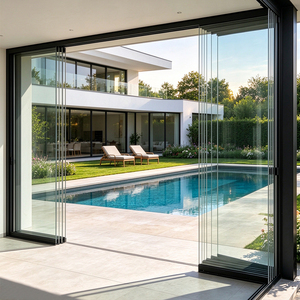
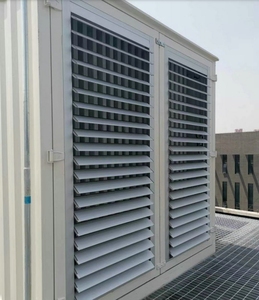
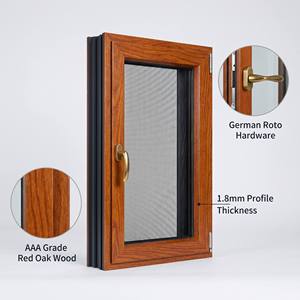
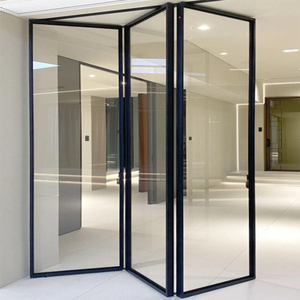
Anatomy of Modern Aluminium Frosted Glass Door Systems
A comprehensive metallurgical, acoustic, and obscuration breakdown for corporate specifiers, commercial contractors, and facade consultants looking to source direct from Chinese tier-1 suppliers.
In modern architectural fenestration, the specification of Aluminium Frosted Glass Doors has transitioned from simple interior partition screens into high-performance structural barrier systems. Today’s commercial complexes, healthcare developments, luxury hospitality resorts, and multi-family residential towers demand a sophisticated balance: guaranteeing total visual privacy while sustaining light transmittance coefficients exceeding 70%, accompanied by dependable structural wind-load resistance and thermal isolation.
To deliver on these dual imperatives, tier-1 Chinese manufacturers utilize primary metallurgical 6063-T5/T6 architectural aluminum alloy extrusions. Featuring web profile wall thicknesses ranging between 1.6mm and 3.0mm, these systems are mechanically reinforced through engineered polyamide thermal barrier strips (PA66GF25 reinforced with 25% chopped fiberglass). This mitigates conductive thermal bridging and prevents structural warping across extreme operational temperature differentials ranging from -35°C to +85°C.
From a glass processing standpoint, architectural obscuration is achieved via two primary industrial chemical and mechanical methods: Hydrofluoric Acid-Etching and Controlled Ceramic Frit Silk-Screen Enameling. While standard sandblasting introduces microscopic micro-fissures that collect airborne particulate matter and grease fingerprints, acid-etched float glass creates a chemically smooth, silky nano-surface that diffuses direct glare into soft ambient luminescence. When integrated into an insulated glass unit (IGU) with Low-E hard coatings and warm-edge silicone spacer technology, the composite door unit satisfies strict international fenestration codes including Australian AS2047/AS1288, North American NFRC/AAMA, and European CE EN 14351-1.
| Performance Parameter | Commercial Grade (Standard) | Architectural High-Spec (DERCHI) | Validation / Testing Standard |
|---|---|---|---|
| Profile Alloy & Temper | Recycled Blend 6063-T5 (1.2–1.4mm) | Virgin 6063-T6 (2.0–3.0mm Structural) | ASTM B221 / GB/T 5237.1 |
| Thermal Transmittance (U-Value) | 3.8 – 4.5 W/(m²·K) (Non-Thermal) | 1.2 – 1.8 W/(m²·K) (Isobaric PA66GF25) | ISO 10077-2 / NFRC 100 |
| Obscuration Surface Process | Pneumatic Sandblast (Porous) | Dip-Immersion Acid Etched + Nano Sealed | EN 12150-1 Chemical Resist |
| Acoustic Performance (STC/Rw) | 28 – 31 dB (Single Monolithic) | 38 – 44 dB (Laminated Acoustic PVB) | ASTM E90 / ISO 717-1 |
| Surface Anodizing / Powder Coat | Industrial 40–50 μm Powder | Qualicoat Class 2 / PVDF 3-Coat Fluropon | AAMA 2605 / ISO 2360 |
| Hardware Cycle Life | 50,000 Action Cycles | 300,000 Heavy-Duty Pivot / Roller Cycles | EN 13126-1 / ANSI/BHMA A156.1 |
Procurement Dynamics: What Global Buyers Are Specifying
An overview of technological evolutions, decarbonization targets, and minimal-frame design trends reshaping architectural procurement strategies worldwide.
Low-Carbon Recycled Aluminium Ingot Spec
Global ESG mandates have accelerated demand for ASI-certified (Aluminium Stewardship Initiative) low-carbon profiles. Sourcing billets refined with hydroelectric power minimizes Scope 3 embodied carbon emissions, ensuring green building certifications such as LEED Platinum and BREEAM compliance.
Ultra-Narrow Sightlines & Concealed Hardware
Architects have pushed frame visibility down to minimal sightlines (16mm–21mm interlocking stiles). Concealed floor pivots, integrated magnetic latch assemblies, and flush-track drainage systems provide clean lines without compromising structural inertia under negative wind loads.
Electrochromic & PDLC Smart Glazing Hybrid
The emergence of Polymer Dispersed Liquid Crystal (PDLC) switchable privacy glass embedded inside double-glazed aluminium frames allows commercial boardrooms, medical examination rooms, and villa master suites to shift from frosted translucency to complete clarity in milliseconds.
Pre-Hung Modular Factory Assembly
High construction site labor costs across North America, Europe, and Australia have made knock-down (KD) shipments less attractive for complex commercial orders. Sourcing pre-hung, factory-tested assemblies with integrated sub-frames reduces on-site contractor installation overhead by up to 60%.
Anti-Bacterial & Easy-Clean Nano Coatings
Post-pandemic procurement standards prioritize titanium dioxide (TiO2) and hydrophobic ceramic coatings applied directly over acid-etched glass surfaces. These treatments actively decompose surface bio-contaminants and prevent fingerprint oil accumulation in high-traffic commercial environments.
Guangdong Dejiyoupin (DERCHI): Foshan's Manufacturing Powerhouse
Over 25 years of specialized door and window engineering. Operating a state-of-the-art 180,000 ㎡ production ecosystem backed by 600+ skilled personnel and Tier-1 international testing credentials.
180,000 ㎡ Intelligent Manufacturing Hub
Located in Shishan Town, Foshan, our sprawling fabrication complex houses automated German Elumatec CNC 5-axis profile machining lines, robotic sealing stations, and high-precision double-mitre saws. This equipment maintains profile cut tolerances within ±0.2mm across continuous multi-container volume runs.
25+ Years of Proven Industry Leadership
Recognized consistently among China's Top 10 premium architectural fenestration brands. Our 600+ person workforce integrates senior facade engineers, CAD/BIM detailing specialists, and bilingual technical project coordinators who ensure complete project accountability from structural calculation to handover.
Exhaustive International Certifications
Fully accredited with Australian AS2047 (N6 cyclone rating test passed), European CE EN 14351-1, ISO9001 Quality Management, AS/NZS 2208 safety glazing, and UL-certified fire-rated door systems. Test reports are readily accessible for submission to municipal building certifiers and engineering consultants.
5-Stage Quality Assurance & Export Protocol
How our factory eliminates dimensional discrepancies, coating defects, and transit hazards through strict stage-gate manufacturing governance.
Frequently Asked Technical & Procurement Inquiries
Detailed technical answers to common questions asked by overseas facade contractors, procurement officers, real estate developers, and architectural specifiers.
What are the key technical differences between acid-etched and sandblasted frosted glass? +
Can your aluminium frosted doors comply with high-cyclone wind load standards like AS2047 N6? +
What level of acoustic dampening (STC rating) can be attained for corporate conference rooms or hotel suites? +
What surface finishing options are recommended for coastal marine environments (salt spray exposure)? +
How do you manage container loading and prevent transit damage during long sea freight voyages? +
What lead times and OEM/ODM engineering support are available for commercial door schedules? +
Connect Directly with Our Fenestration Engineering Team
Whether you are developing multi-family residential towers, commercial corporate headquarters, or luxury private residences, our engineering team is ready to prepare custom CAD shop drawings, wind-load assessments, and competitive factory-direct quotations.
