Precision Aluminum Architectural & Access Solutions
From airtight crawlspace trap doors and high-load subterranean access panels to perimeter industrial shutters and acoustic glazed apertures, explore our certified manufacturing solutions engineered in Foshan, Guangdong.
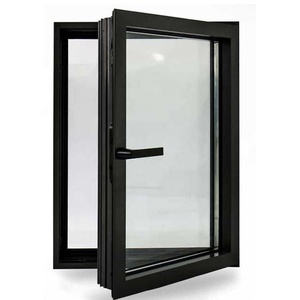 Acoustic / Thermal
Superhouse Passive House Energy Rating Clear Glass Crank Awning Window
Designed for passive building envelopes, featuring reinforced structural aluminum profiles, multi-chamber thermal breaks, and high-compression weather seals.
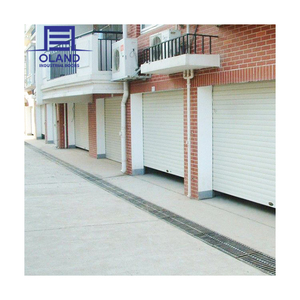 Security / Industrial
OLAND Industrial Electric Aluminum Alloy Roller Shutter Security Door
Engineered for warehouse bay perimeters, access points, and vault compartments requiring wind-resistant slat interlocking and motor-driven actuation.
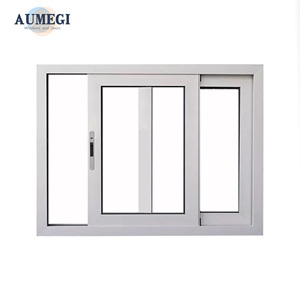 Automation
Aumegi Wall Thickness 1.4MM Aluminum Automatic Small Sliding Window
Compact utility access hatch and automatic sliding portal made with 1.4mm structural 6063-T6 aluminum frames for secondary inspections and maintenance tunnels.
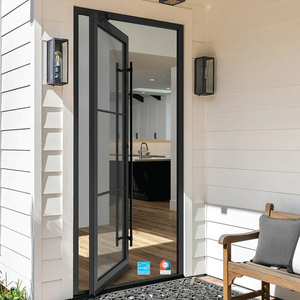 Heavy Duty Pivot
AMJ NFRC Standard Windproof Waterproof Energy-Saving Pivot Entry Door
Commercial-scale pivot engineering capable of supporting oversized architectural leaves with concealed floor pivot bearings and perimeter EPDM drop-seals.
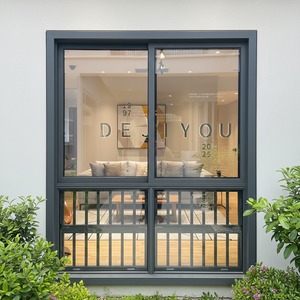 DERCHI Vertical
 Sliding Aluminum Window Double Glazed Counterbalanced System
Vertical counter-balanced sash and inspection panel designed for vertical wall access cavities, service risers, and high-performance building envelopes.
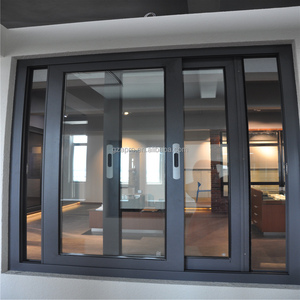 Impact Proof
Hurricane Impact Double Glass Energy Efficient Sliding Window System
Built to resist high cyclical wind pressures and impact forces, providing impenetrable seal integrity for roof skylight hatches and harsh coastal access.
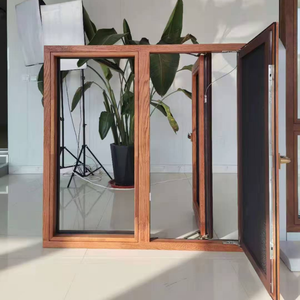 Architectural Clad
Customized Aluminum Clad Wood Double Glazed Architectural Aperture Door
Combines exterior fluorocarbon-coated aluminum shielding with natural internal timber, ideal for luxury floor wine-cellar trap doors and ceiling access points.
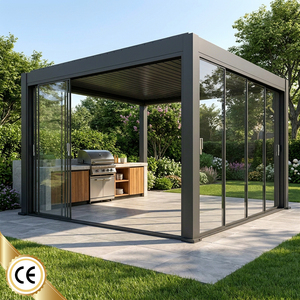 Retractable Roof
Environmental Aluminum Alloy Pergola & Electric Folding Roof Access Trap Door
Motorized structural aluminum roof hatch and louver system allowing expansive daylight, emergency smoke evacuation, and automated walk-out roof deck access.
1. The Engineering Architecture of Modern Aluminum Trap Doors
In modern industrial, commercial, and luxury residential projects, an aluminum trap door (or architectural access hatch) is no longer treated as a simple sheet-metal cutout. Whether providing subterranean access to utility piping, storm vaults, luxury wine cellars, or roof service platforms, modern trap doors are structural systems engineered to address three primary physical challenges: live and dead load tolerances, environmental hermetic sealing, and ergonomic counterbalanced actuation.
Compared to traditional mild steel or cast iron hatches, extruded aluminum alloy profiles (principally 6063-T6 and 6082-T6) deliver an exceptional strength-to-weight ratio, native oxidation resistance, and superior precision during CNC milling. When deployed as flush floor panels, roof hatches, or wall inspection ports, precision-engineered aluminum units eliminate galvanic corrosion, prevent frame deflection under traffic loads, and allow seamless integration of surrounding finishes such as tile, hardwood, or industrial diamond tread plates.
Load-Bearing Classifications
Engineered to comply with EN 124 and ASTM E282 standards, ranging from pedestrian foot traffic (Class A15 - 15kN) up to light commercial vehicular crossings (Class C250/D400) via structural internal rib networks.
Hermetic & Watertight Seals
Continuous co-extruded EPDM or silicone compression gaskets nested within recessed perimeter gutters prevent water ingress, radon gas seepage, sewer odor migration, and acoustic transmission.
Assisted Actuation Hardware
Industrial nitrogen-charged SUS304 gas springs, concealed multi-link torsion hinges, and 24V linear actuators allow an 80kg reinforced hatch to be lifted smoothly with less than 25N of manual hand force.
Comparative Metallurgy: 6063-T6 Extruded Aluminum vs. Steel Fabrications
B2B project managers, procurement directors, and facade contractors must balance initial factory tooling costs with lifecycle durability. Below is a direct metallurgical comparison highlighting why architectural aluminum has overtaken ferrous materials in high-specification access hatches:
| Performance Indicator | Structural Aluminum (6063-T6 / 6082-T6) | Standard Galvanized Carbon Steel | Cast Iron / Ductile Iron |
|---|---|---|---|
| Weight Ratio | ~2.7 g/cm³ (Lightweight, low hinge stress) | ~7.85 g/cm³ (Heavy, demands heavy cranes) | ~7.2 g/cm³ (Extremely heavy, brittle) |
| Corrosion Resistance | Native Al₂O₃ oxide layer; PVDF/Anodized 25μm | Requires zinc plating; rusts if breached | High rust scaling; stains surrounding deck |
| Thermal Break Integration | Seamless polyamide (PA66 GF25) cavity strip | Difficult; prone to extreme condensation | Impractical; high thermal bridging |
| Dimensional Precision | CNC extruded tolerances within ±0.15mm | Welded distortion; tolerances ±2.0mm | Casting shrinkage; poor sealing gasket seating |
| Gas Strut Life Expectancy | High (low leaf weight minimizes rod wear) | Moderate (excessive leaf mass exhausts seals) | Low (pneumatic cylinders fatigue quickly) |
2. Evaluation Matrix: Criteria for Top 10 Aluminum Trap Door Suppliers
When curating the top 10 global manufacturers and factory partners for architectural aluminum access hatches and floor trap doors, international procurement teams cannot rely simply on catalog claims. In this whitepaper evaluation, global factories are evaluated across six core industrial competencies:
1. Alloy Smelting & Extrusion Die Capability
Premier manufacturers control continuous casting billet quality, ensuring precise temper control (T5/T6) to prevent stress fracture when floor panels undergo dynamic live-load flexure.
2. In-House CNC Machining & Welding
Five-axis CNC centers ensure miters, lock pockets, and drain egress holes are milled with zero cumulative error, backed by certified TIG/laser welding under argon atmosphere.
3. Acoustic & Thermal Verification
Tier-1 factories deliver certified laboratory test reports (NFRC, AS2047, CE) validating sound transmission loss (Rw up to 42dB) and thermal insulation coefficients (U-value down to 1.1 W/m²K).
4. Hardware Lifecycle & Fatigue Testing
Continuous cycle rigs must prove that gas springs, stainless steel pivot arms, and rotary latch mechanisms survive a minimum of 25,000 opening and closing cycles without seal degradation.
5. Complete CAD/BIM Shop Drawing Service
Engineering departments must provide detailed sectional drawings, slab opening tolerances, drainage outlet locations, and anchorage specifications before extrusions enter production.
6. Seaworthy Crating & Global Logistics
Access panels must be packed in fully enclosed plywood crates with vapor-barrier desiccant wrapping to prevent maritime humidity pitting during ocean transit to destination ports.
Within this rigorous framework, Guangdong Dejiyoupin Doors and Windows Co., Ltd. (DERCHI) has positioned its 180,000-square-meter manufacturing headquarters in Foshan as a primary OEM/ODM benchmark. By unifying structural door engineering, high-load pivot bearing integration, and fenestration tolerances under one roof, DERCHI delivers custom aluminum trap door assemblies that integrate seamlessly with commercial building management systems (BMS).
3. Future Procurement Trends in Aluminum Trap Doors (2025–2030)
As smart buildings, seismic resilience standards, and zero-carbon architectural directives reshape global specifications, the aluminum trap door segment is experiencing three major procurement transformations:
1. Shift toward Flush "Trimless" Invisible Geometry
Architects increasingly specify access panels that visually disappear into flooring, ceilings, or exterior decking. Traditional visible aluminum flanges are being replaced by inverted perimeter profiles with recessed screed pans, allowing 15mm to 30mm thick inlays of marble, granite, timber, or ceramic pavers. The challenge for factories is engineering heavy-duty multi-pivot hinges that open 90 degrees without binding or crushing the delicate edges of inlaid stone finishes.
2. Integration of Building Automation & IoT Sensors
Modern commercial infrastructure demands real-time status monitoring of all access points. Modern trap door tenders increasingly mandate 24V DC brushless linear actuators linked into RS485 or KNX automation networks. Sensors immediately alert facility managers if a subterranean access hatch has been opened, left unlatched, or subjected to subterranean water buildup via integrated float sensors in the drain perimeter.
3. Low-Carbon Aluminum & Environmental Product Declarations (EPDs)
With tightening ESG reporting across Europe, North America, and Australia, tier-1 developers require aluminum products with certified embodied carbon limits. Top-tier suppliers are transitioning to aluminum smelted using renewable hydro or solar electricity, achieving carbon thresholds below 4.0 kg CO₂ per kg of aluminum, accompanied by certified EPD documentation.
Thermal Break Floor Hatches
Incorporating multi-chamber polyamide thermal barriers inside floor frames to eliminate cold drafts and subterranean condensation in subfloor heat-pump installations.
Walk-On Laminated Glass Hatches
Combining heavy 6063-T6 aluminum perimeter girders with 3-ply tempered PVB/SentryGlas floor glass, illuminating underground cellars while retaining full load safety.
Smoke & Pressure Relief Hatching
Dual-function roof hatches with automatic thermal release links, venting toxic fumes during fire events while retaining hurricane-rated wind uplift resistance.
4. Enterprise Manufacturing Advantages: Why DERCHI Leads the Industry
Backed by more than 25 years of engineering mastery, Guangdong Dejiyoupin Doors and Windows Co., Ltd. (DERCHI) operates one of Asia's largest dedicated manufacturing facilities for architectural aluminum entrance systems, security doors, pivot gates, and custom industrial access enclosures. Our specialized infrastructure eliminates subcontracting risks, guaranteeing direct factory accountability for project tenders:
- Massive 180,000 ㎡ Automated Production Campus: Equipped with automated precision extrusion cutting lines, multi-station CNC milling machines, and high-efficiency automated powder coating booths.
- Elite Engineering R&D Core: Supported by over 600 skilled technicians and in-house CAD/BIM structural engineers who formulate bespoke shop drawings, FEA load calculations, and drainage layouts tailored to your project.
- Exhaustive International Testing & Certification: Full compliance portfolios spanning CE, ISO9001, AS2047 (Australian N6 wind load standards), and UL fire-resistant configurations, simplifying consultant sign-offs.
- Heavy-Load Pivot & Strut Kinematics: Proprietary gas-spring brackets and stainless steel multi-pivot hardware capable of effortlessly actuating leaf weights exceeding 250 kg.
- Export-Ready Logistics: Direct maritime shipping consolidation for container loads (FOB or CIF) to major international commercial hubs across Africa, North America, Oceania, and the Middle East, protected by seaworthy foam-interleaved timber crates.
5. Frequently Asked Questions (FAQ) for Aluminum Trap Door Procurement
Here are authoritative engineering answers to the most common queries faced by procurement officers, quantity surveyors, and structural contractors when ordering aluminum access hatches:
How do we calculate the necessary load-bearing class for an aluminum floor trap door?
How does the factory prevent water leakage in exterior deck or pavement trap doors?
Can aluminum trap doors match the surrounding floor finishes like stone, tile, or hardwood?
What mechanism is used to keep heavy aluminum access doors easy to lift?
What surface treatment is best for coastal or highly corrosive environments?
Can you manufacture motorized or automatic trap doors connected to fire/BMS systems?
Request an Engineered Shop Drawing & Project Quotation
Connect directly with our Foshan engineering desk. Share your rough opening dimensions, expected live loads, and architectural finish requirements for a comprehensive CAD proposal and factory-direct quotation within 24 hours.
