Trackless Plisse
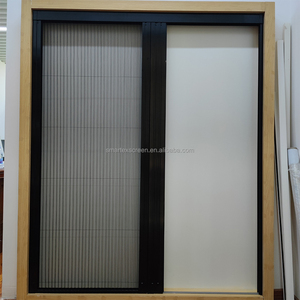
Engineered from precision architectural 6063-T5 aluminum alloy extrusions and high-tensile 304/316 stainless steel woven mesh, our screen door systems balance structural air circulation, cyclonic wind-loading resilience, forced-entry resistance, and seamless barrier-free architectural transitions.
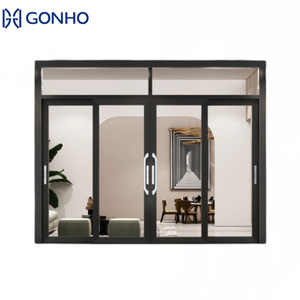
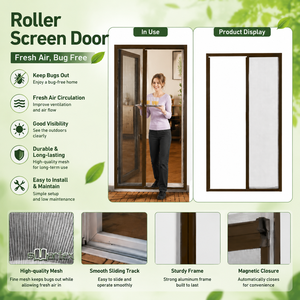
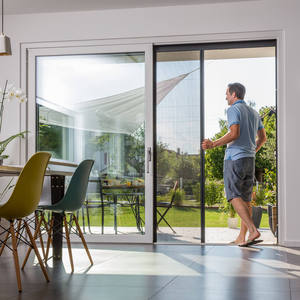
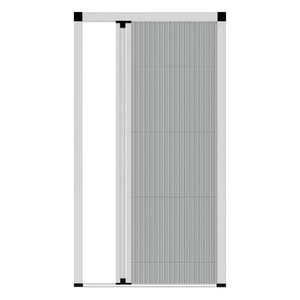
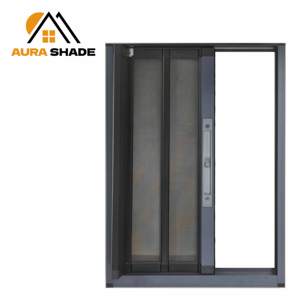
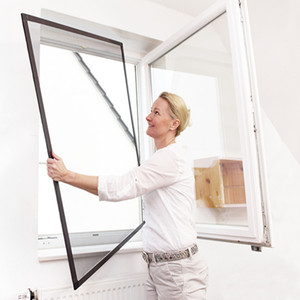
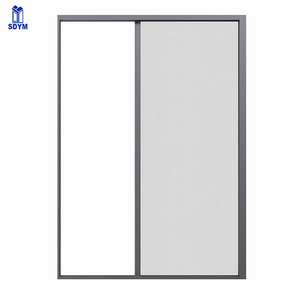
The global aluminum mesh door and architectural security screen sector has evolved from rudimentary barrier screens into highly sophisticated engineering assemblies. Modern building envelopes demand that screen systems comply with stringent international standards including Australian AS 5039 / AS 5041 (Security Screen Doors & Window Grilles), AS 2047 (Windows and External Glazed Doors in Buildings), European EN 1627 (Burglar Resistance), and American ASTM E330 structural deflection tolerances.
When commercial real estate developers, hospitality groups, and civil contractors procure aluminum mesh doors at scale, selecting the right manufacturing partner dictates not merely aesthetic cohesion, but cyclical longevity under severe environmental stress—ranging from high-salinity marine coasts to cyclonic wind regions and extreme solar irradiation.
| Manufacturer / Brand | Primary Hub | Core Metallurgy | Mesh Specification | Compliance Standards | Typical Application Sector |
|---|---|---|---|---|---|
| DERCHI (Guangdong Dejiyoupin Co.) | Foshan, China | 6063-T5 / 6061-T6 Extrusions | 0.8mm-1.0mm 316 Marine SS / Diamond | AS2047 N6, CE, ISO9001, UL Listed | Villas, High-End Commercial, Mixed-Use |
| Crimsafe Security Systems | Brisbane, Australia | High-Tensile Aluminum Frame | 0.9mm 304 High-Tensile Mesh (Screw-Clamp) | AS 5039, AS 5041, Hurricane Impact | High-Risk Residential, Institutional |
| ScreenGuard Stainless Security | Sydney, Australia | Architectural Grade Aluminum | 316 Marine Grade Wedge Retention | AS 5039, AS 1530 Bushfire Attack | Coastal Residential, Architectural Patios |
| YKK AP Inc. | Tokyo / Kurobe, Japan | Proprietary Structural Aluminum | High-Density Synthetic & Fine Wire | JIS A 4702, ISO 14001, LEED Compliant | Mass Urban Residential, Modular Buildings |
| Larson Manufacturing | Brookings, SD, USA | Extruded Aluminum & Core Blends | Retractable Plisse & Roll-up Poly | AAMA / WDMA Standards, Energy Star | North American Single-Family Retrofits |
| Andersen Windows & Doors | Bayport, MN, USA | Fibrex & Extruded Aluminum | Trukscene Fine Aluminum / Fiberglass | NFRC, AAMA 101, Dade County Impact | Custom Architectural Residential |
| Phantom Screens | Abbotsford, BC, Canada | Extruded 6063 Aluminum Sashes | Automated Polyester / Solar Mesh | CE, CSA International, GreenGuard | Motorized Patios, Luxury Estates |
| Schüco International KG | Bielefeld, Germany | Precision Engineered Thermal Alloys | Integrated Flush Architectural Screen | DIN EN 1627-1630 (RC2/RC3), CE | Passive House Commercial, Premium Facades |
| Aluprof S.A. | Bielsko-Biała, Poland | Architectural Billet Aluminum | Stainless Wire Weave & Plisse Roll | EN 12210 Wind Load, EN 12207 Air | European Multifamily, Hotel Enclosures |
| PanoramAH! Architectural Systems | Geneva / Porto, Europe | Structural Minimal Aluminum | Micromesh Micro-perforated Screens | Swiss & EU Seismic, Hurricane Proof | Ultra-Luxury Minimalist Estates |
The competitive architecture of aluminum mesh door manufacturing splits into distinct strategic tiers. Western enterprises—exemplified by Crimsafe and ScreenGuard in Australasia—have championed mechanical clamping patents that maximize dynamic kinetic impact dissipation. Their screw-clamp and wedge-retaining extrusions ensure that an intruder wielding a crowbar or blunt implement cannot dislodge the wire matrix from the sash perimeter, making them global benchmarks for forced-entry testing under AS 5041.
Conversely, European leaders such as Schüco and PanoramAH! prioritize minimal architectural sightlines and thermal efficiency. Their screen door profiles are flush-recessed directly into structural curtain wall tracks, utilizing motorized magnetic sensors and high-transparency stainless steel micro-wire matrices. In North America, companies like Larson and Andersen cater heavily to prefabricated, consumer-friendly hinged storm and retractable assemblies engineered for rapid residential modular installation.
Occupying the premier tier of high-capacity integrated custom manufacturing is DERCHI (Guangdong Dejiyoupin Doors and Windows Co., Ltd.). Headquartered in Foshan—the global epicentre of advanced aluminum extrusion metallurgy—DERCHI merges the structural security features of Australian standards with European minimalist visual engineering and large-format automated factory capacities. Operating an expansive 180,000 square meter manufacturing base with complete vertical integration (billet melting, extrusion, CNC milling, fluorocarbon powder coating, and robotic mesh tensioning), DERCHI serves as both a high-volume Tier-1 supplier for international hotel developments and an OEM/ODM manufacturing engine for global facade brands.
An aluminum mesh door cannot be evaluated solely as a finished decorative element; it is an engineered mechanical shield subjected to cyclic mechanical shearing, UV photochemical degradation, air pressure differential cycling, and environmental electrochemical oxidation. Understanding the anatomical composition is vital for engineering teams preparing project specifications.
DERCHI utilizes premium 6063 architectural alloy heat-treated to a strict T5/T6 temper. Extruded with a uniform profile wall thickness between 1.4mm and 2.0mm, the frame achieves a tensile strength exceeding 205 MPa and a yield strength over 170 MPa. This structural rigidity prevents profile twisting or sash sag over wide-aperture openings exceeding 3.5 meters in height.
For demanding security and coastal environments, woven stainless steel wire with a minimum tensile resistance of 900 MPa to 1100 MPa is deployed. With a calibrated 0.8mm to 1.0mm wire gauge woven in a square 11x11 or 12x12 aperture pitch, the screen resists high-energy knife shear tests (AS 5044) and dynamic impact energies up to 100 Joules without fiber rupture.
Profiles undergo automated multi-stage chromate-free zirconium passivation before receiving architectural thermosetting powders (AkzoNobel or PPG fluorocarbon). This process guarantees 3,000+ hours of continuous neutral salt spray exposure (ASTM B117) and Florida 5-year UV weathering durability without blistering, chalking, or edge delamination.
Security is compromised if locking points deflect under lateral crowbar pry attacks. DERCHI integrates all-stainless-steel multi-point locking mechanisms. Actuating the ergonomic master handle engages top, bottom, and center mushroom-head cam bolts into reinforced stainless strike plates embedded directly into the structural jamb casing, ensuring anti-jemmy resistance.
The architectural specifications governing aluminum mesh doors are experiencing transformative shifts driven by bioclimatic design mandates, universal accessibility standards, smart building integration, and extreme weather adaptation. Procurement officers and facade consultants must account for the following five micro-trends across 2026–2030 project cycles.
Traditional screen door tracks create trip hazards and violate universal barrier-free standards (such as ADA in North America and European barrier-free mandates). Procurement is shifting massively toward trackless retractable systems that utilize flat 2.5mm to 3mm self-adhesive PVC guide ribs combined with articulated caterpillar guide tracks that roll seamlessly inside the vertical frame stile, enabling effortless wheelchair and pediatric transit.
As international energy codes tighten U-value thresholds for building envelopes, exterior screen door assemblies can no longer act as thermal bypass bridges. Next-generation aluminum screen frames increasingly integrate 14.8mm to 24mm polyamide (PA66 GF25) thermal insulating strips. This engineering separation arrests interior-to-exterior conductive thermal transfer, eliminating condensation and supporting net-zero building energy targets.
Climate volatility has accelerated procurement of dual-rated screen systems. In fire-prone territories (Australia BAL-40 / California WUI codes), stainless steel 316 mesh serves as a critical radiant heat and ember attack screen. In tropical cyclone belts, engineers specify doors tested under cyclic pressure to AS2047 N6 (over 4,000 Pa wind load), where the screen acts as an energy-absorbing secondary skin preventing wind-borne debris from shattering primary glazing.
Large-format sliding and bi-folding patio screens in luxury hospitality and high-end residential estates are rapidly transitioning to concealed DC tubular motor drives. Integrated with building management systems (BMS), these screens deploy automatically based on anemometer wind readings, solar radiation levels, or twilight insect emergence patterns, featuring obstacle-sensing anti-pinch safety mechanics.
Recognized consistently among the Top 10 premium door and window manufacturers in China, Guangdong Dejiyoupin Doors and Windows Co., Ltd. (operating the international brand DERCHI) commands over 25 years of specialized metallurgical and precision fenestration engineering. From our state-of-the-art production base in Foshan, Guangdong, we engineer, certify, and export door systems engineered to endure the most challenging environmental exposures across global continents.

For international contractors, developers, and commercial distributors, sourcing from DERCHI eliminates the friction of multiple subcontractors. We manage the entire building opening envelope under one roof: heavy architectural aluminum entry doors, fire-rated pivot systems, cast aluminum villa main gates, structural sliding glass assemblies, and integrated insect screen and security diamond mesh doors.
Every bespoke unit is modeled through comprehensive CAD shop drawings signed off by structural engineers before aluminum profiles touch computer-controlled cutting machinery. Our products arrive export-crated in reinforced composite timber boxes with shock-absorbing foam protection, engineered to withstand containerized sea transit and customs handling into major international gateways across Africa (Lagos, Tema, Mombasa, Durban), North America, Oceania, and the Middle East.

Our in-house design office provides free shop drawings, structural wind load calculations, and BIM models tailored directly to your project's architectural door schedules, ensuring zero discrepancies between design and on-site rough opening dimensions.

Every profile batch undergoes physical testing in our environmental simulation chambers, validating water penetration resistance under dynamic pressure, forced-entry knife deflection, salt-fog corrosion, and mechanical hardware cycle endurance up to 100,000 cycles.

We provide full container load (FCL) optimization and export-compliant crating to minimize volumetric freight rates. Our documentation team prepares clean conformity certifications, bills of lading, and custom clearing documentation (including SONCAP, KEBS, and CE declarations).

Direct answers compiled by senior structural facade engineers to guide wholesale buyers, contractors, and architects through the complexities of aluminum mesh door specification.
While both are austenitic stainless alloys, Grade 316 contains 2% to 3% molybdenum, which dramatically elevates its resistance to chloride pitting and crevice corrosion. In coastal regions (within 10 km of seawater like Lagos, Durban, or Miami), Grade 304 will exhibit tea-staining and cosmetic rust spotting within 12 to 24 months. Grade 316, especially when finished with thermoset black epoxy or fluorocarbon coating, delivers 15+ years of zero-corrosion service life under aggressive salt spray.
Compliance requires passing three destructive physical tests: (1) The Dynamic Impact Test (a 40kg bag swung at 100 Joules across multiple strike zones without mesh perimeter breakout); (2) The Jemmy Test (a mechanical lever prying the frame and lock points to ensure latch bolts do not release); and (3) The Knife Shear Test (a heavy-duty utility blade drawn across the mesh under 350 N downward force along three continuous passes without penetrating the barrier).
Yes. Utilizing heavy-duty reinforced 6063-T6 aluminum structural stiles and multi-panel sliding or multi-leaf bi-fold configurations, we regularly engineer continuous opening screen solutions up to 3.8 meters in height and spanning over 12 meters in width. Structural interlock mullions are engineered with internal steel or heavy aluminum stiffener bars to meet local deflection limits (L/175 or L/240) under high wind loads.
DERCHI applies certified Qualicoat Class 1, Class 2, or AAMA 2604/2605 compliant architectural powder coatings and PVDF fluorocarbon coatings. In high-UV tropical environments (such as East Africa or the Middle East), our Class 2 super-durable coatings maintain gloss retention above 50% and color shift delta-E within international architectural limits over a standard 10 to 15-year warranty period.
Our trackless plisse doors integrate high-strength DuPont polyether tension cords threaded horizontally through each pleat at 200mm vertical intervals. These cords run into interlocking internal tension clips located within the top aluminum track and bottom crawler links, preventing the pleated mesh from popping out of its vertical channels during high wind gusts or accidental human impact.
Because every opening is custom-manufactured to architectural shop drawings, our standard production cycle is 25 to 35 calendar days following drawing sign-off and color confirmation. For custom architectural projects, our MOQ is flexible (starting from single-villa packages up to multi-container commercial hotel schedules). We offer FOB Shenzhen/Guangzhou or CIF delivery to all international container terminals.
Connect directly with DERCHI's senior architectural engineering department. Send your rough opening schedules, architectural floor plans, or project tenders to receive free structural CAD drawings, glass/mesh optimization, and factory-direct containerized pricing.
