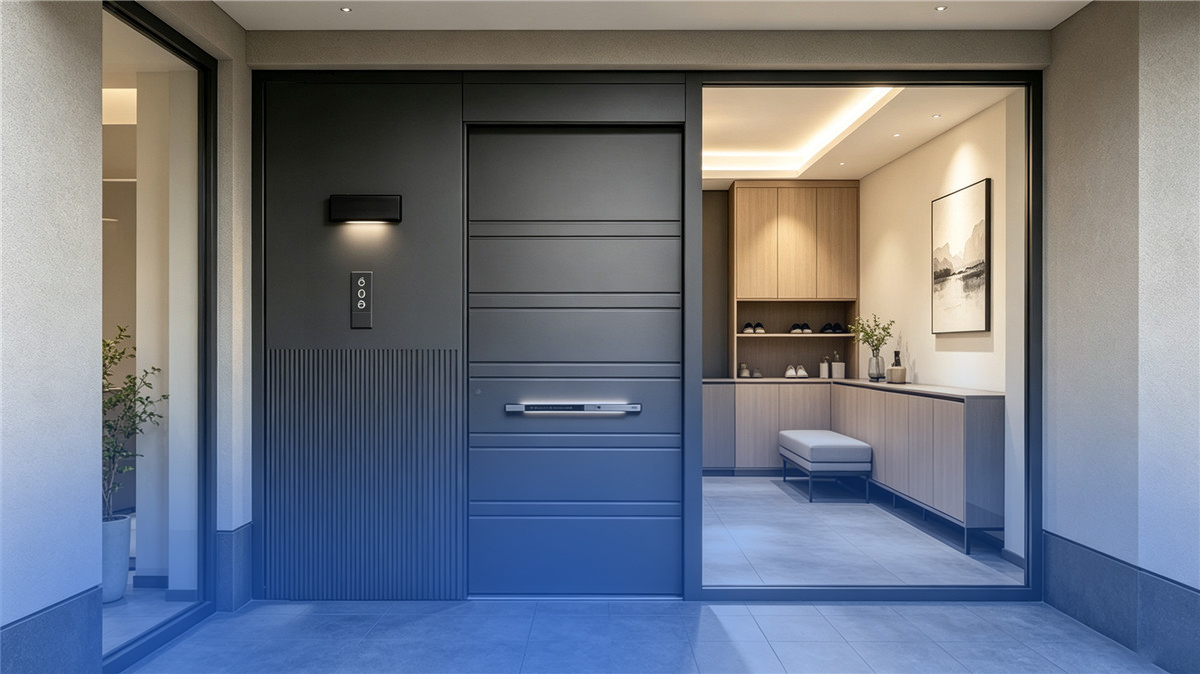
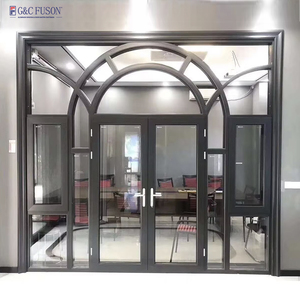
 Series 01
Technical Specification & Global Benchmark
Evaluating the Global Top 10 Aluminium Tilt & Turn Windows Suppliers
Aluminium tilt and turn windows represent the gold standard of modern fenestration engineering. Originating from German architectural standards (Dreh-Kipp), these systems provide dual functionality: tilting inward at the top for draft-free, secure micro-ventilation, and swinging inward like a casement for 100% clear opening access and effortless cleaning. For global developers, project facade engineers, and volume importers, choosing the right supplier requires scrutinizing structural profile metallurgy, thermal insulation barrier technologies, perimeter hardware locking nodes, and cross-border delivery reliability.
180,000㎡
Production Infrastructure
Intelligent fabrication hub in Foshan, Guangdong
600+
Skilled Specialists
Engineers, CNC operators & facade technicians
100+
Patents & Certifications
CE, ISO9001, AS2047 N6, UL certified
25+
Years Engineering Pedigree
Supplying North America, Africa, Australia & ME
Top 10 Global Aluminium Tilt & Turn Window Suppliers Matrix (2026-2027)
The following matrix benchmarks the world's leading suppliers across profile metallurgy, hardware integration, thermal U-factor ratings, and supply chain adaptability for commercial and high-end residential developments:
| Manufacturer / Supplier | Origin / Base | Primary Thermal Profile System | Hardware Engineering | Air / Water / Wind Compliance | Typical B2B Lead Time |
|---|---|---|---|---|---|
| DERCHI / Guangdong Dejiyoupin | Guangdong, China | Multi-Chamber Polyamide PA66 (Uw ≤ 0.82) | German Siegenia / Roto / Custom Multi-point | AS2047 N6 / CE / ISO9001 / AAMA | 15 – 25 Days (Direct Ocean Freight) |
| Schüco International | Bielefeld, Germany | AWS 75.SI+ / AWS 90.SI+ Systems | Schüco AvanTec SimplySmart | EN 12207 / EN 12208 Class 9A | 8 – 16 Weeks |
| Reynaers Aluminium | Duffel, Belgium | MasterLine 8 / Hi-Finity Insulated | Concealed Inward Hinges | CWCT / CE / EN 14351-1 | 10 – 14 Weeks |
| WICONA (Hydro Building Systems) | Ulm, Germany | WICLINE 75 evo / 95 evo Passive House | WICSTAR Concealed Fittings | Passive House PhA+ / DIN Standards | 12 – 18 Weeks |
| Alumil Aluminium | Kilkis, Greece | SUPREME S77 / SMARTIA S67 | Alumil Heavy-Duty Tilt & Turn Gear | IFT Rosenheim / CE Certification | 6 – 10 Weeks |
| YKK AP Inc. | Tokyo, Japan / USA | YFW 400 TU Thermally Broken | Perimeter Steel Tie-rod Locks | AAMA / WDMA / CSA 101/I.S.2 | 8 – 12 Weeks |
| Technal (Hydro Systems) | Toulouse, France | SOLEAL Next 65 / 75 Window Series | Concealed Turn-First Ergonomic Handles | Qualicoat / CE Class 4 / E1200 | 10 – 14 Weeks |
| Cortizo Aluminium Systems | Padrón, Spain | COR 70 Industrial / COR 80 Hidden Sash | Evo-Soft Dual-Mechanism Drive | EN 12210 Class C5 / CE Mark | 8 – 12 Weeks |
| Reynaers Middle East / Gulf | Manama, Bahrain | MasterLine 8 Tropical High-Wind Profile | Surface & Concealed Hardware | ASTM E283 / E330 / E331 Hurricane | 7 – 11 Weeks |
| Fuson Architectural Products | Foshan, China | Heavy-Duty Architectural 6063-T6 Systems | Kinlong / Siegenia Integrated Node Locks | ISO9001 / CE Commercial Class | 18 – 28 Days |
Engineering Evolution
Technological Trends Reshaping Aluminium Tilt & Turn Systems
The architectural window and facade market is shifting rapidly from basic aesthetic fenestration to ultra-high-performance thermal envelopes. Below are the core technological frontiers dominating the 2026–2030 building lifecycle.
Advanced Polyamide PA66 Thermal Breaks
Traditional aluminium frames suffer from high thermal conductivity. Next-generation systems employ multi-cavity, continuous polyamide 66 reinforced with 25% fiberglass (PA66-GF25) strips spanning 34mm to 54mm. Combined with aerogel infill panels, these achieve overall window U-values below 0.8 W/(m²·K), meeting stringent Passivhaus PhA+ standards for extreme continental and desert temperature differentials.
Concealed Hardware & Flush Architectural Sashes
Modern luxury villas and commercial towers demand clean sightlines without protruding barrel hinges. Concealed tilt-and-turn drive rod mechanisms are recessed entirely within the euro-groove profile rebate. These concealed hinges carry sash weights up to 300 kg while maintaining RC2 and RC3 forced-entry security ratings via mushroom-head perimeter locking cams.
Smart Actuation & Automated Micro-Ventilation
Integration with centralized Building Management Systems (BMS) is driving the adoption of concealed motorized chain actuators and smart sensors. Windows automatically switch to a 10mm micro-tilt mode when indoor CO₂ or humidity thresholds exceed targets, and instantly engage multi-point weather seals upon rainfall or windstorm detection via wireless weather station telemetry.
Acoustic Decoupling & Laminated Asymmetry
Rapid urban densification has accelerated the demand for superior Sound Transmission Class (STC) and Rw values. Modern tilt-and-turn profiles accommodate insulated glass units (IGUs) up to 52mm thickness, featuring asymmetrical glass configurations (e.g., 8mm tempered exterior + 16mm argon gas warm-edge spacer + 6.76mm acoustic PVB laminated interior), delivering noise dampening up to 48 dB.
Closed-Loop Low-Carbon Aluminium (Circal)
Institutional real estate investors increasingly enforce strict Scope 3 embodied carbon caps. Tier-1 extruders utilize prime billets manufactured with 75% to 85% post-consumer recycled scrap, smelted with renewable hydro power. This cuts embodied carbon from 18 kg CO₂ per kg aluminium down to below 4.0 kg CO₂/kg without degrading mechanical tensile strength or surface anodizing depth.
Coastal Marine Fluorocarbon (PVDF) Coatings
Salt spray corrosion in high-salinity coastal areas (such as Lagos, Mombasa, Miami, and Sydney) degrades standard coatings within 36 months. Top-tier suppliers utilize 3-coat/2-bake AAMA 2605 compliant PVDF fluorocarbon resin finishes and 25μm hard anodizing, enduring 4,000+ hours in acidified salt spray testing (ASTM B117) without micro-blistering or delamination.
Architectural Specification Insight: Why Air-Water Tightness Outclasses Traditional Sliders
Unlike horizontal sliding windows that rely on low-friction mohair pile weather-strips prone to air leakage, aluminium tilt and turn windows utilize continuous, vulcanized EPDM or silicone compression gaskets around three discrete perimeters (external water deflector, central continuous barrier, and internal acoustic cushion). When the ergonomic handle is rotated 90 degrees downward, multi-point perimeter roller cams pull the sash tightly against the outer frame with uniform mechanical torque, generating airtightness ratings conforming to Class 4 (EN 12207) and water impermeability beyond 900 Pa (Class E900, EN 12208).
Market Sourcing Strategy
Future Procurement Trends in the Global Fenestration Market
Procuring high-end fenestration systems for international developments has transcended transactional unit pricing. Today’s general contractors and institutional builders require agile supply partnerships that insulate project schedules against freight volatility and regulatory friction.
Direct Container Consolidation
Developers are eliminating intermediate distributors by contracting factory-direct from super-scale facilities. Combining windows, entrance doors, pivot gates, and curtain walls into consolidated 40-foot HQ shipping containers cuts landed cost per square meter by 32% to 45% while synchronizing delivery schedules.
Mandatory BIM/CAD Interoperability
Procurement teams require comprehensive Revit and IFC BIM families before tender issuance. Suppliers providing accurate 3D parametric families with parametric dimension variables, localized thermal data, and anchorage clearances minimize costly on-site change orders during structural framing.
Pre-Shipment PVoC Auditing
National conformity programs (e.g., SONCAP for Nigeria, KEBS PVoC for Kenya, SASO for Saudi Arabia, and AS2047 for Australia) require pre-export laboratory testing. Forward-thinking suppliers maintain in-house calibration chambers and accredited test reports to ensure rapid customs clearance at destination ports.
Digital Shop Drawing Approvals
The standard procurement workflow now mandates full CAD cross-sectional sign-offs and 3D exploded hardware diagrams prior to CNC profile cutting. This zero-defect approach guarantees that opening tolerances, expansion gaps, and perimeter flashing align with local site conditions.
Manufacturing Powerhouse
Why Guangdong Dejiyoupin (DERCHI) Anchors Global Specifications
With over a quarter-century of specialized manufacturing pedigree, Guangdong Dejiyoupin Doors and Windows Co., Ltd. (DERCHI) stands among China's Top 10 high-end door and window enterprises, operating from a modern 180,000 ㎡ production hub.
180,000 ㎡ Lean Smart Facility
Headquartered in Foshan, Guangdong, our high-precision production complex integrates automatic European CNC profile cutting centres, multi-axis milling units, and automated corner crimping lines. Over 600 skilled technicians maintain production outputs exceeding 40,000 square meters of high-end fenestration per month.
Rigorous International Testing
Our tilt & turn window series and architectural door lines carry comprehensive approvals including ISO9001 quality system management, CE certification, North American AAMA hurricane certifications, and Australian AS2047 N6 certification (the highest cyclone and wind-load performance tier). Fire-rated assemblies hold full UL safety listings.
Heavy-Duty Export Packaging
Long sea voyages expose goods to salt air, moisture, and rough container handling. Every DERCHI window is packaged with protective low-tac surface film, heavy-gauge expanded polyethylene (EPE) corner buffers, vacuum moisture desiccant bags, and solid fumigated plywood crating with steel strapping, eliminating transit damage.
Procurement Intelligence
Frequently Asked Questions for Commercial Buyers
Technical answers addressing load-bearing metrics, shipping logistics, hardware life-cycle engineering, and custom fenestration specifications.
What is the maximum opening sash dimension for an aluminium tilt and turn window?
Standard residential tilt & turn sashes are typically engineered up to 1,200mm wide by 2,400mm high. However, by deploying heavy-duty German concealed scissor stays, reinforced 6063-T6 corner-crimped profile extrusions (2.0mm to 2.5mm wall thickness), and structural silicone glazing bonding, our engineering team manufactures custom commercial sashes up to 1,600mm wide and 3,000mm high with total glass weights reaching 300 kg.
How does an aluminium tilt & turn window perform against cyclone or hurricane conditions?
Because tilt & turn sashes close by compressing against internal frame rebates rather than sliding past them, higher external wind pressure forces the sash more tightly into the EPDM gaskets. In our Australian AS2047 N6 and AAMA testing, DERCHI systems withstand ultimate design wind pressures exceeding 4,500 Pa and water penetration resistance up to 700 Pa, making them suitable for coastal regions in the Caribbean, Southeast Asia, Florida, and coastal Africa.
What testing standards verify hardware longevity under heavy commercial operation?
Our tilt-and-turn hardware sets (including gearbox drive rods, corner transmissions, and scissor stays) undergo rigorous cycle testing under EN 13126-8 and EN 1191 standards. Assemblies are certified for 25,000 continuous tilt-and-turn duty cycles and 100,000 casement swing cycles without mechanical deformation, play, or latching failure, backed by a 10-year factory performance warranty.
Can you provide custom powder coating or architectural finishes to match RAL standards?
Yes. We provide complete color matching across standard RAL Classic palettes, architectural metallic finishes, and realistic textured wood-grain sublimations. All coatings are applied using automated vertical electrostatic lines using AkzoNobel or PPG powders, compliant with Qualicoat Class 2 and AAMA 2604/2605 specifications for UV stability and chalk resistance.
How are project ocean shipments handled to prevent sea air condensation and glass breakage?
Each window unit is dry-sealed with industrial anti-corrosion VCI stretch wrap containing moisture-absorbing silica gel packs. Corner edges are capped with structural high-density EPE protectors, and the entire assembly is secured inside bespoke, fully enclosed solid plywood crates with integrated lifting skids. This ensures container transit to international ports (Lagos, Mombasa, Durban, Sydney, Long Beach, Rotterdam) arrives free of corrosion, scratches, or micro-cracks.
What technical documentation do you supply to assist local consultants and city code approvals?
We provide a complete engineering submittal package for every order: structural wind-load calculation sheets, finite element thermal analysis (flixo/THERM Uw simulations), glass acoustic test certificates, and full 1:1 scale DWG/CAD profile section details. We also coordinate with accredited third-party inspectors (SGS, Intertek, TÜV) to verify compliance before container seals are affixed.