Featured Acoustic Aluminium Windows & Architectural Doors
Custom-engineered multi-chamber profiles, acoustic PVB/SGP interlayers, and multi-point perimeter locking assemblies.
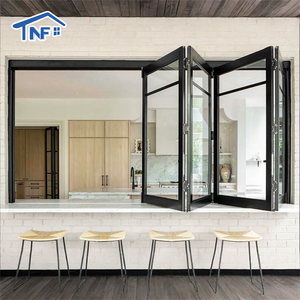 Rw 42 dB Rated
NF Modern Horizontal Folding Bifold Windows Aluminum Alloy for Canada & USA Markets Customized Size Powder Coated Villa Use
- Glass Configuration: 6mm+12A+6mm Argon
- Acoustic Interlayer: EPDM Multi-Fin Gaskets
- Profile Wall: 2.0mm Heavy Extrusion
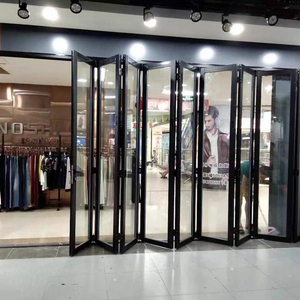 Rw 40 dB Rated
OUTUS Modern Aluminum Alloy Folding Door System Soundproof Sliding Bifold Doors for Living Room Bedroom Kitchen Partition
- Glass Configuration: 8mm+1.52PVB+8mm Low-E
- Track Mechanism: Heavy Stainless Steel Roller
- Acoustic Seal: Tri-Lip Continuous Barrier
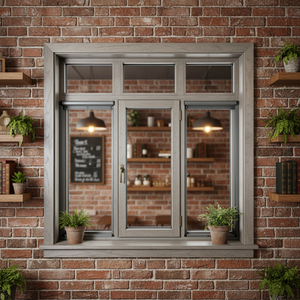 Rw 45 dB Rated
Double Glazed Single Hung Sliding Soundproof Aluminum Clad Wood Windows Interior/Exterior Replacement for Hotel Kitchen Use
- Core Structure: Alu-Clad Solid Hardwood
- Glazing: Triple Glazed Asymmetric IGU
- Frequency Damp: Resonance Isolation Clip
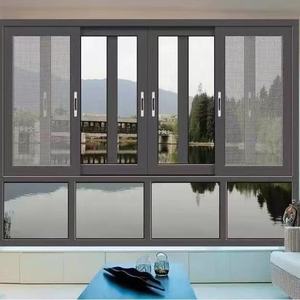 Rw 38 dB Rated
Double Glazed Aluminum Sliding Doors Windows Frameless Soundproof Sliding Glass Windows Customizable Size Kitchen Use
- Sightline: Ultra-Slim Minimalist Profile
- Interlock Seal: High-Density Brush + Fin
- Glass Spec: 6mm Low-E + 16Ar + 6mm
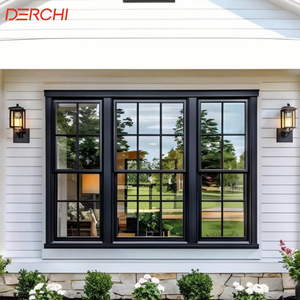 Rw 41 dB Rated
Double Hung Windows Modern Design High Quality of Aluminium Sash Windows Custom Hung Windows
- Balance Mechanism: Caldwell Constant Force
- Locking Point: Concealed Dual Cam Lock
- Weatherseal: Seamless Compression Seal
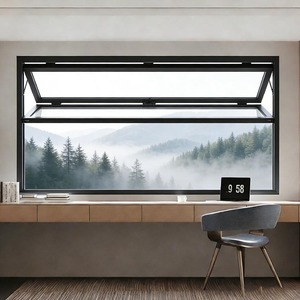 Rw 43 dB Rated
Modern Bifold Black Aluminum Alloy Tempered Double Glass Heat Insulation Accordion Vertical Folding Window
- Thermal Break: PA66 GF25 Polyamide 24mm
- Operation: Gas Spring / Motorized Assist
- Glass Composition: 5mm+0.76PVB+5mm+12A+5mm
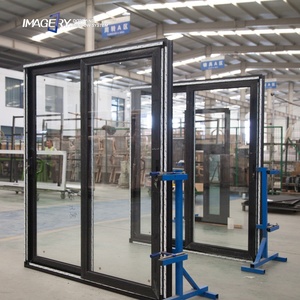 Rw 39 dB Rated
Space Saving Aluminum Sliding Door Slide and Stack Design for Apartment Hotel Office
- Profile Depth: 120mm Multi-Chamber Slide
- Hardware: Heavy-Duty German Boge Set
- Application: Hospitality Acoustic Divisor
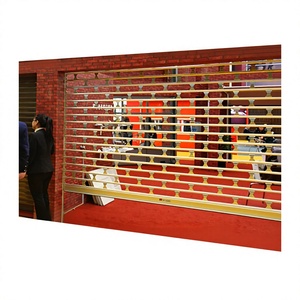 Rw 36 dB Anti-Theft
Customized Aluminum Alloy Hollow Postmodern Design Crystal Door Electric Rolling Shutter Door Shop Anti-Theft
- Slat Composition: Polycarbonate + 6063 Alu
- Motor Control: Smart Somfy / Tuya Silent
- Security Class: RC3 Forced-Entry Standard
Acoustic Attenuation Physics: Mass Law, Coincidence Dips, and STC Metrics
A rigorous examination of sound transmission loss across structural fenestration assemblies.
R ≈ 20 · log₁₀(m · f) - 47 dB (where m is surface mass in kg/m² and f is frequency in Hz).
However, standard insulated glass units (IGUs) suffer from two catastrophic acoustic degradation phenomena: Mass-Air-Mass Resonance ($f_{mam}$) in lower frequency bands and the Coincidence Critical Frequency Dip ($f_c$) in the mid-to-high frequency register. When symmetric monolithic lites (e.g., 6mm + 12mm Air + 6mm) are deployed, the matching stiffness and natural resonance frequencies cause the two panes to vibrate in sympathetic phase. This often results in acoustic performance inferior to a single heavy laminated lite at 250 Hz – 500 Hz (the critical band of vehicular traffic and aero-engine whine).
| Glazing & Profile Configuration | STC Rating (ASTM E413) | Rw (C; Ctr) Rating (ISO 717-1) | Dominant Noise Attenuation Band | Recommended Architectural Application |
|---|---|---|---|---|
| Standard Monolithic 6mm Clear | STC 31 | Rw 31 (-1; -2) dB | High-frequency treble only (> 2500 Hz) | Low-density suburban residential |
| Symmetric Double Glazed (6 + 12A + 6) | STC 34 | Rw 33 (-1; -3) dB | Resonance loss at 250 Hz (Traffic dip) | General residential, inland standard |
| Asymmetric IGU (8mm Tempered + 16Ar + 6mm) | STC 38 | Rw 37 (-2; -5) dB | Eliminates symmetric coincidence frequency | Urban mid-rise, commercial offices |
| Acoustic PVB Laminated (6 + 0.76A-PVB + 6 + 12Ar + 8) | STC 44 | Rw 43 (-1; -4) dB | Broadband attenuation (100 Hz – 4000 Hz) | Hospitality, airport noise zones, arterials |
| DERCHI High-Spec Tri-Seal (8.76PVB + 16Ar + 6 + 16Ar + 6) | STC 48 | Rw 47 (-2; -6) dB | Maximum low-frequency heavy diesel dampening | Luxury villas, oceanfront resorts, studios |
Top 10 Aluminium Soundproof Windows Suppliers & Exporters
Independent multi-variable audit based on acoustic laboratory certifications, extrusion tolerances, and global B2B fulfillment capacity.
Guangdong Dejiyoupin Doors & Windows (DERCHI)
Schüco International KG
Reynaers Aluminium
YKK AP Inc.
Kawneer Company, Inc.
Alumil S.A.
Technal (Hydro Building Systems)
WICONA
Internorm International GmbH
Milgard Windows & Doors
Future Sourcing Trends in Architectural Soundproofing
Emerging structural technologies transforming noise dampening, energy codes, and international project procurement.
1. Vacuum Insulated Glass (VIG) Integration
While classical acoustic IGU assemblies rely on gas spaces (Argon/Krypton), sound mechanically propagates through molecular collision in gas. The deployment of tempered Vacuum Insulated Glass (VIG) creates a near-absolute vacuum state (pressure < 0.1 Pa) separated by micro-pillars. Sound waves cannot travel through a vacuum, yielding an ultra-thin 8.3mm – 12mm profile that outperforms a conventional 32mm bulky double pane, slashing assembly deadweight on skyscraper structural anchors.
2. Multi-Chamber Polyurethane Cold-Pour Cavities
Standard architectural thermal struts utilize simple polyamide (PA66) bars. The next-generation acoustic trend integrates aerogel-infused or microcellular polyurethane fill directly inside the hollow chambers of the aluminium profile. This eliminates the "bell effect" (flanking cavity reverberation inside the aluminium extrusion itself), ensuring that noise flanking through the structural metal boundary is reduced by an additional 3 dB – 5 dB.
3. Full-Spectrum Modular Containerized Sourcing
Procurement heads are shifting away from fragmented multi-vendor purchasing. Sourcing windows from one factory, pivot entry doors from a second, and rolling security shutters from a third drives up container demurrage and installation friction. Integrated mega-manufacturers offering consolidated door, window, and curtain wall fabrication under single-responsibility warranties (such as DERCHI) provide unmatched container cubic optimization and BIM alignment.
Guangdong Dejiyoupin Doors & Windows Co., Ltd. (DERCHI)
Ranked among China’s Top 10 High-End Architectural Door & Window Brands, DERCHI operates an immense 180,000 ㎡ automated production campus with over 600 specialized structural engineers, acoustic technicians, and master fabricators. With 25+ years of engineering rigor, DERCHI solves acoustic, thermal, and security challenges for luxury villas, resort enclaves, and high-spec developments across North America, Africa, Australia, and Europe.

Frequently Asked Questions on Acoustic Windows & Global Export
Answers to technical, logistical, and architectural compliance inquiries from B2B specifiers and contractors.
What is the functional difference between STC, OITC, and Rw (C; Ctr) ratings in window specification? +
Outdoor-Indoor Transmission Class (OITC) (ASTM E1332) measures down to 80 Hz and weights lower frequencies heavily, making it far superior for airport, diesel locomotive, and heavy arterial highway traffic noise evaluations.
Weighted Sound Reduction Index (Rw) is the European/International standard (ISO 717-1). It includes spectrum adaptation terms: C for medium/high-frequency sounds (pink noise, light traffic) and Ctr for low-frequency urban road transport noise. When ordering soundproof windows, always demand the full Rw (C; Ctr) or OITC metric rather than standard STC to prevent unexpected low-frequency rumble penetration.
Why do ordinary double-glazed windows fail to attenuate street traffic and heavy diesel rumble? +
How does frame air-tightness affect the real-world acoustic performance of an aluminium window? +
Can DERCHI handle custom opening sizes, bespoke shop drawings, and local building approvals? +
What export packaging and container logistics are used to protect heavy acoustic glass across ocean freight? +
How should developers prepare technical documentation to receive an accurate acoustic window quote? +
Engineering Quiet Spaces with Certified Precision
Consult directly with DERCHI senior fenestration engineers to analyze your project acoustic schedules, calculate transmission loss matrices, and obtain factory-direct wholesale pricing with complete CAD shop drawings.
