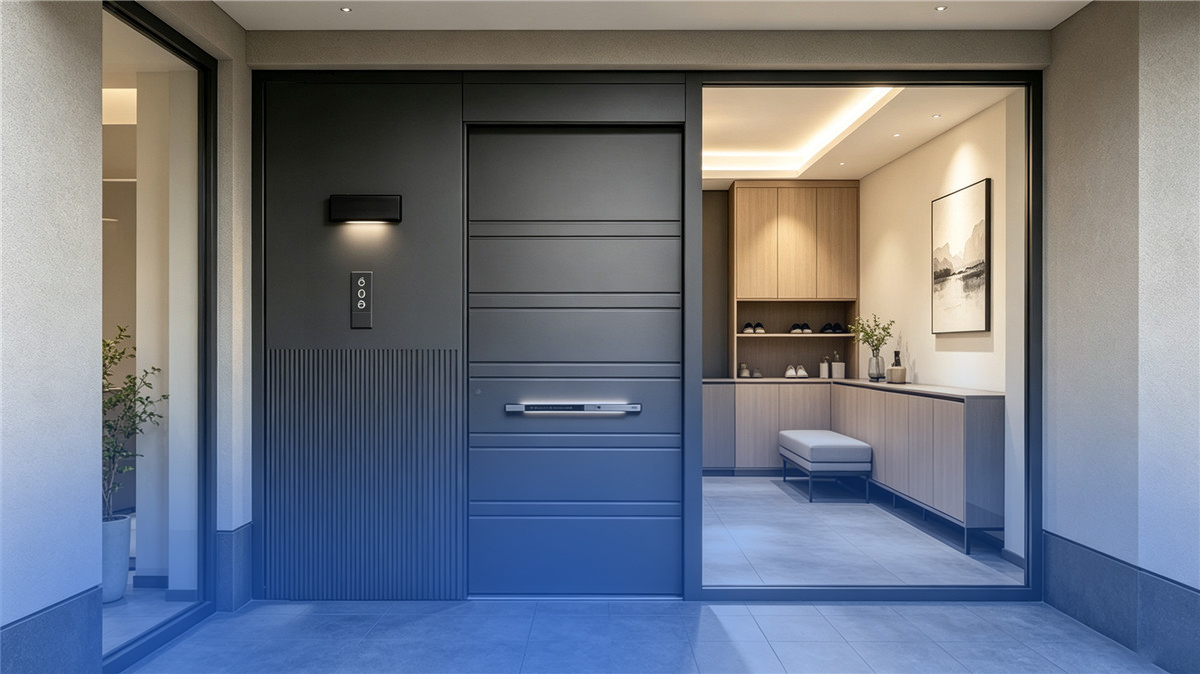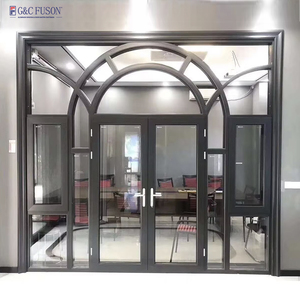
Fuson Luxury Aluminum Casement Swing Glass Door
- Heavy-duty 6063-T6 aluminum extrusion
- Concealed heavy-load friction hinges
- Multi-point locking for heightened sealing
Custom manufactured to exact structural schedules, tested against rigorous cyclone, acoustic, and thermal envelope standards.
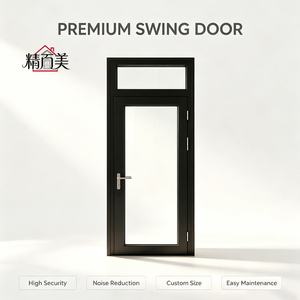
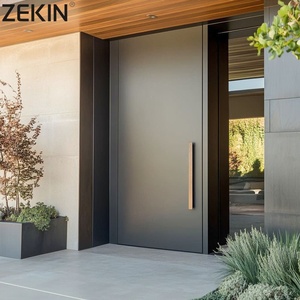
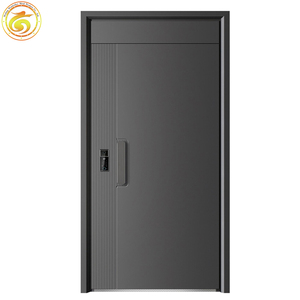
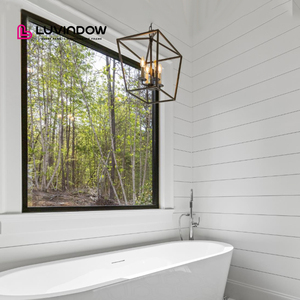
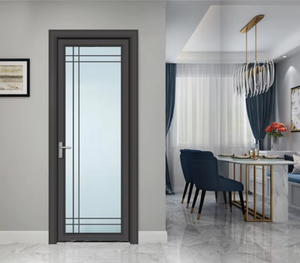
In modern architectural design and real estate development, an external door is no longer treated merely as a physical egress or ingress barrier. It is evaluated as an engineered structural envelope element directly impacting building energy rating (U-value), acoustic containment (STC/OITC), life-safety security resistance, and asset longevity. Specifiers, project developers, and general contractors sourcing OEM/ODM aluminum external doors from China must navigate the nuances of metallurgical standards, thermal break integrity, dynamic wind-load parameters, and automated smart access integration.
Premium aluminum external doors rely strictly on architectural-grade 6063-T5/T6 or 6061-T6 aluminum alloys. The wall thickness for high-traffic exterior swing, casement, and pivot systems must adhere to a minimum threshold of 2.0 mm to 3.0 mm for critical structural mullions to mitigate deflection under extreme cyclonic forces. In coastal regions subject to airborne marine chlorides—such as West Africa, Australia, Florida, or the Gulf Coast—standard anodizing fails prematurely. Industrial ODM programs mandate fluorocarbon (PVDF) three-coat finishes complying with AAMA 2605 or super-durable thermosetting architectural powder coatings (conforming to Qualicoat Class 2), achieving salt-spray resistance exceeding 3,000 to 4,000 hours without surface pitting, chalking, or delamination.
Stringent building codes (such as IECC in the US, Title 24, and European EN 14351-1 standards) necessitate that external doors break the continuous conductive path of aluminum. The incorporation of continuous, low-lambda polyamide PA66 GF25 (25% glass-fiber reinforced) thermal barrier strips eliminates bridging. Coupled with insulated glass units (IGU) incorporating warm-edge spacers, low-emissivity (Low-E) coatings, and argon inert gas fills, modern OEM systems reliably achieve thermal transmittance ratings of Uw < 1.4 - 1.8 W/(m²·K). This dramatically curtails HVAC loads and entirely prevents winter condensation on interior interior architectural profiles.
Key technological shifts determining architectural specification, supply-chain resilience, and asset valuation.
Global developers are mandating certified low-carbon billet extrusion (Scope 1 and Scope 2 tracking). Procuring aluminum produced with renewable hydropower reduces embodied carbon footprints by up to 70%, ensuring immediate alignment with LEED, BREEAM, and global carbon border adjustment mechanisms (CBAM).
Mechanical keys are giving way to factory-recessed motorized locking systems. Next-generation ODM production embeds 3D face recognition, optical fingerprint sensors, and hidden magnetic contact sensors directly into thermal profiles, communicating natively with BACnet and Zigbee building management networks.
Luxury residential and flagship commercial architecture demands single-leaf pivot panels exceeding 3,000mm in height and 1,800mm in width. Future-proof factories are shifting to internal carbon-fiber stiffeners, multi-axis hydraulic concealed floor closers, and pneumatic seal lines that automatically deploy upon closure.
Recognized among China's Top 10 premium architectural system brands, operating as an integrated engineering partner for international developers, architects, and trade importers.
End-to-end extrusion, CNC machining, automated powder coating, and robotic glass assembly lines in Foshan, Guangdong ensuring uncompromised precision and scalable lead times.
Fully compliant with international performance standards: CE conformity, ISO9001 quality systems, Australian AS2047 cyclonic testing (N6 rating), and UL-classified fire resistance listings.
Dedicated bilingual project engineering team providing comprehensive structural wind-load calculations, thermal transmittance simulations, and detailed shop drawings prior to extrusion.
Heavy-duty bespoke fumigated plywood crates with desiccant protection and corner cushions designed for container sea freight to Lagos, Durban, Mombasa, Melbourne, Miami, or Dubai.
Direct answers for global procurement directors, facade consultants, and general contractors.
For coastal marine environments (within 5 km of saltwater), we recommend 6063-T6 aluminum treated with Qualicoat Class 2 or 3 architectural powder coat, or 3-coat PVDF fluorocarbon paint (minimum 35 microns). All hardware, pivots, lock cassettes, and structural fasteners must be grade 316 stainless steel with EPDM or silicone-based vulcanized gaskets.
Yes. Guangdong Dejiyoupin Doors and Windows Co., Ltd. regularly provides third-party laboratory test reports (covering air infiltration, water penetration resistance, structural deflection, and operating force) and packing declarations required by pre-export inspection bodies such as SGS, Intertek, and CCIC for import customs clearance.
For standard architectural profiles with available extrusion dies, production requires 25 to 30 days after shop-drawing sign-off. Bespoke profile extrusion dies require an additional 10 to 14 days for die cutting, test extrusion, and metallurgical hardness verification before volume manufacturing.
We utilize certified polyamide PA66 GF25 strips knurled and crimped using calibrated automated equipment with inline shear test monitoring. This ensures the composite profile resists shear loads under high thermal gradient stresses without delamination or internal structural failure across temperature ranges from -30°C to +70°C.
High-security exterior doors are configured with insulated laminated glass units (e.g., 6mm Low-E Tempered + 12A Argon + 5mm + 1.52mm PVB/SGP + 5mm Tempered). The SentryGlas® (SGP) interlayer offers five times the tear strength and one hundred times the rigidity of conventional PVB, maintaining structural integrity against forced intrusion.
Yes. Our 180,000㎡ manufacturing facility integrates the production of aluminum external doors, interior wooden doors, cast aluminum pivot gates, and automatic garage systems. Orders can be consolidated into single 40ft HQ shipping containers, optimizing container utilization and reducing ocean freight charges.
Submit your architectural drawings, elevation schedules, or structural requirements. Our technical engineering office will provide comprehensive CAD shop drawings, thermal calculations, and direct factory pricing within 24 hours.
Get a Quote