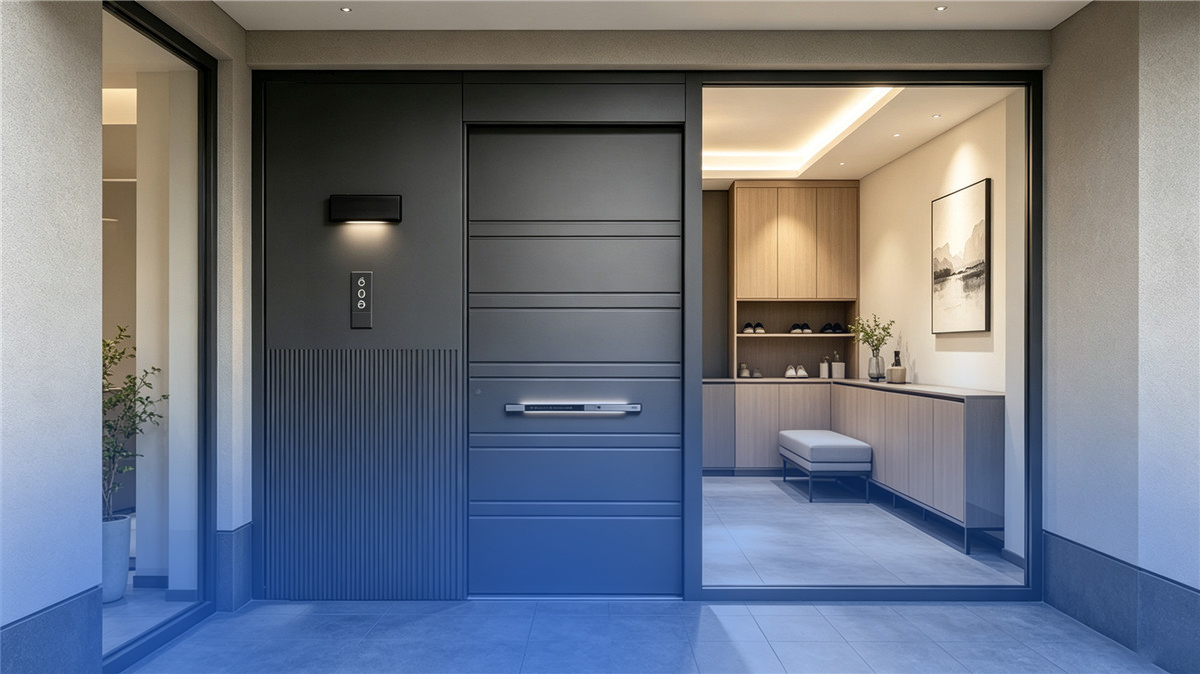
Featured OEM/ODM Architectural Window & Door Systems
Explore our verified product portfolio built for extreme thermal efficiency, seismic resilience, hurricane wind loads, and bespoke modern architecture. All systems support precision OEM/ODM fabrication according to project bill of quantities (BOQ) and shop drawings.
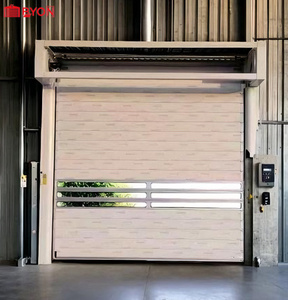
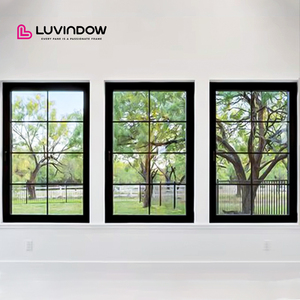
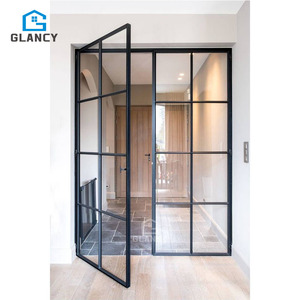
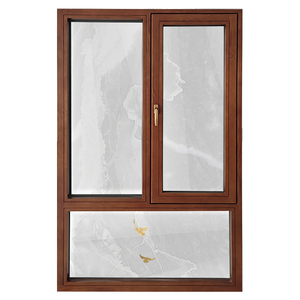
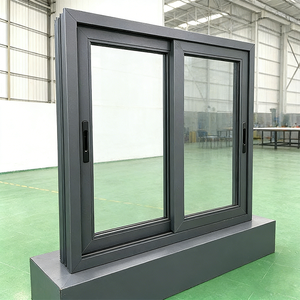
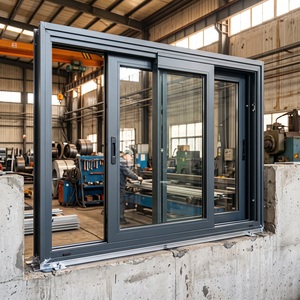
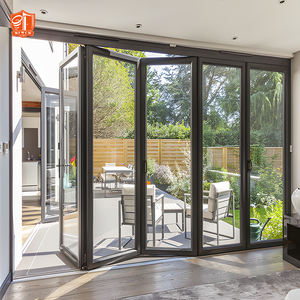
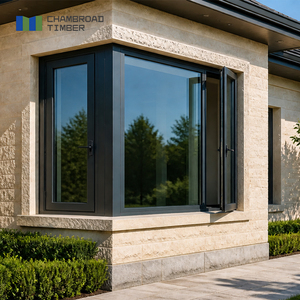
Engineering Excellence in Aluminum Clad Wood Windows: The Material Paradigm
In contemporary high-performance architecture, fenestration envelopes are no longer treated as passive viewing apertures; they represent the most critical thermal, structural, and acoustic boundary of the building envelope. As an internationally certified OEM/ODM Aluminum Clad Windows Supplier & Exporter, Guangdong Dejiyoupin Doors and Windows Co., Ltd. (DERCHI) engineers advanced composite systems designed to bridge the structural divergence between interior timber warmth and exterior metallurgical defense.
The engineering core of modern aluminum-clad wood windows relies on structural decoupling and dynamic thermal mechanics. Solid natural timber—such as FSC-certified North American White Oak, European Larch, or Siberian Red Pine—forms the interior core load-bearing skeleton. This organic core delivers superior natural thermal insulation (λ ≈ 0.13 W/m·K), completely eliminating interior cold radiation and thermal bridge transference. Concurrently, the exterior perimeter is sheathed in a heavy-gauge extruded aluminum alloy shield (6063-T5 or 6063-T6), treated with fluorocarbon PVDF, powder coatings, or architectural anodization.
The primary failure mode of lower-tier wood-aluminum composite windows is structural warping, caused by the radically different thermal expansion coefficients (α) of aluminum (23.1 × 10⁻⁶ /K) and natural timber (3.5 to 5.0 × 10⁻⁶ /K). DERCHI utilizes an engineered German-patented composite snap-clip decoupling mechanism made from glass-fiber reinforced polyamide (PA66-GF25). This floating connection provides independent longitudinal displacement tolerances during severe seasonal temperature swings (-40°C to +80°C), entirely eliminating frame stress deformation, interior seal shearing, and timber cracking.
Furthermore, our in-house milling line executes multi-layer finger-jointing, vacuum cycle anti-rot pressure treatment, and micro-porous German Remmers ecological waterborne four-coat painting. This guarantees that internal wood fiber remains dimensionally stable against hygroscopic swelling, rot, termites, and fungal degradation under both extreme high-latitude cold and tropical coastal humidity.
Technical Performance Benchmark: Material Systems Comparative Analysis
Evaluating commercial and residential fenestration configurations requires empirical performance criteria. The matrix below outlines how DERCHI OEM/ODM aluminum-clad timber windows benchmark against standard uPVC, non-thermal break aluminum, and standard thermal-break systems across global testing codes (AAMA/WDMA/CSA 101/I.S.2/A440, AS2047, and EN 14351-1).
| Performance Dimension | DERCHI Alu-Clad Timber (Passive Series) | Standard Polyamide Thermal Break Aluminum | Reinforced Architectural uPVC / Vinyl | Traditional Solid Timber Sash |
|---|---|---|---|---|
| Whole-Window U-Factor (Uw) | 0.79 – 1.10 W/(m²·K) (0.14 – 0.19 BTU/h·ft²·°F) | 1.40 – 1.85 W/(m²·K) (0.25 – 0.33 BTU/h·ft²·°F) | 1.30 – 1.70 W/(m²·K) (0.23 – 0.30 BTU/h·ft²·°F) | 1.50 – 1.95 W/(m²·K) (0.26 – 0.34 BTU/h·ft²·°F) |
| Structural Wind Load (AS2047 / ASTM E330) | Class N6 / DP 70 – DP 100+ (Extreme Hurricane) | Class N5 / DP 50 – DP 75 (High Commercial) | Class N3 / DP 30 – DP 45 (Standard Residential) | Class N4 / DP 40 – DP 55 (Moderate Exposure) |
| Acoustic Attenuation (STC / OITC) | STC 42 – 48 dB / OITC 36 – 40 dB | STC 34 – 38 dB / OITC 28 – 32 dB | STC 30 – 35 dB / OITC 26 – 30 dB | STC 36 – 40 dB / OITC 30 – 34 dB |
| Solar Heat Gain Coefficient (SHGC) | 0.21 – 0.42 (Engineered Spectrally Selective) | 0.24 – 0.50 (Coating Dependent) | 0.28 – 0.55 (Glass Dependent) | 0.30 – 0.58 (Standard) |
| Design Service Life & Durability | 50+ Years (Zero exterior maintenance, replaceable wood) | 35–40 Years (Subject to thermal break fatigue) | 15–25 Years (UV embrittlement, corner weld failure) | 20–30 Years (Requires quadrennial exterior painting) |
| Embodied Carbon & ESG Alignment | Carbon-negative core timber + 100% recyclable alloy | Moderate (High energy extraction, recyclable) | High environmental footprint (Chloride polymer) | Low embodied carbon, high maintenance resource use |
Future Procurement Trends: Where B2B Sourcing is Heading (2025–2030)
For international building material importers, façade engineering firms, and high-volume project developers, fenestration procurement is undergoing a generational shift. As compliance mandates tighten across North America (ASHRAE 90.1, IECC 2024), the European Union (EPBD recast for zero-emission buildings), and the Asia-Pacific region, commercial sourcing decisions are shaped by three emerging structural trends:
Institutional buyers are shifting procurement quotas toward Passive House Institute (PHI) certified window envelopes. Project tenders now require comprehensive Environmental Product Declarations (EPD) calculating Cradle-to-Grave global warming potential (GWP). Aluminum clad wood leads this trajectory by pairing carbon-sequestering interior wood with infinitely recyclable exterior aluminum.
Wholesale distributors are bypassing traditional regional tier-1 markups by consolidating entire project schedules directly with integrated tier-1 OEM/ODM manufacturers. Sourcing aluminum clad windows, thermal sliding glass partitions, exterior heavy-duty pivot doors, and quick garage doors within unified container loadings cuts logistical landed costs by 18% to 27%.
Severe weather volatility demands fenestration assemblies certified for simultaneous, overlapping environmental stresses: continuous seismic rack resistance, coastal salt-spray marine exposure, high-velocity hurricane-borne missile impacts (ASTM E1886/E1996), and dynamic airtightness that prevents moisture intrusion under 700 Pa cyclic water pressure.
Technological Development Trends Shaping Aluminum Clad Window Manufacturing
The manufacturing threshold for high-tier aluminum clad wood systems has evolved from traditional manual joinery into intelligent Industry 4.0 automation. As an R&D pioneer backed by over 25 years of specialized fenestration production in our 180,000 m² Foshan headquarters, DERCHI continuously integrates core mechanical and chemical breakthroughs:
Next-generation profiles are engineered to integrate 0.15 mm vacuum micro-cavity glass (center-of-glass Ug down to 0.45 W/m²·K) combined with warm-edge composite spacers and aerogel thermal barrier inserts inside the polyamide chambers, matching the insulation values of solid insulated masonry walls.
Departing from mechanically joined 45-degree exterior miters that risk hairline joint leakage over time, DERCHI employs robotic seamless laser corner welding on outer aluminum frames. After robotic planar grinding and fluorocarbon coating, the exterior shell becomes a single monolithic barrier against water ingress.
Architectural demands for minimalist sightlines drive the complete integration of German-engineered multi-point concealed hinges, automated motorized tilt actuators, hidden contact security sensors, and biometric access controllers directly flush-recessed within the timber rebating grooves.
The OEM/ODM Customization Protocol: From BOQ to On-Site Installation
Precision execution in international architectural window supply demands zero margin of error. As an accountable industrial exporter, Guangdong Dejiyoupin Doors and Windows Co., Ltd. applies a rigorous, audited 5-phase OEM/ODM engineering framework designed specifically for architects, procurement directors, and general contractors:
| Phase | Core Engineering Deliverables | Quality Gate & Compliance Milestone |
|---|---|---|
| 1. Technical Intake & Climatic Analysis | Review of architectural schedules, elevation wind load calculations, solar heat gain targets, acoustic STC requirements, and regional building energy codes (ASHRAE, AS2047, EN). | 24-Hour Engineering Feasibility Report and System Recommendation Sign-off. |
| 2. Precision CAD Shop Drawings & BIM | Preparation of 1:1 scale structural CAD sections, anchor strap placement diagrams, flashing detail plans, drainage weep profiles, and Revit/BIM files for spatial coordination. | Architectural sign-off on shop drawings; sample corner section prototype dispatch. |
| 3. CNC Fabrication & Coating Line | Automated Italian 5-axis timber processing, dry kiln moisture balancing (8%–12%), German Remmers micro-porous automated spraying, robotic laser miter welding on aluminum. | 100% In-line inspection: Caliper dimension check (±0.5 mm), coating thickness ≥ 40 μm. |
| 4. Pre-Shipment Testing & Assembly | Multi-point hardware operational torque testing, triple EPDM continuous gasket sealing audit, laser glass squareness verification, and cyclic water tightness chamber testing. | Comprehensive factory acceptance test (FAT) report with high-res photo/video log. |
| 5. Heavy-Duty Export Crating & Freight | Individual surface film protection, corner shock-absorbers, moisture desiccants, and fumigated solid plywood enclosed crating engineered for heavy marine container transport. | Container load plan optimization (FCL consolidation) & full customs documentation suite. |
Why Tier-1 Global Contractors Partner with Guangdong Dejiyoupin (DERCHI)
Guangdong Dejiyoupin Doors and Windows Co., Ltd. (operating globally under the DERCHI brand) is recognized among the Top 10 premium door and window manufacturers in China. Backed by over a quarter-century of industrial heritage, our manufacturing facility in Nanhai District, Foshan represents the benchmark for Chinese high-performance fenestration exports.
Our architectural window and entry door lines hold accredited test reports for European CE conformity, ISO9001 quality management, Australian AS2047 cyclonic certification (N6 rating), and American UL fire-rated standards, ensuring frictionless permitting and consultant approvals.
Eliminate multi-vendor friction. We engineer and fabricate aluminum clad wood windows, hurricane-proof casements, high-impact sliding patio doors, cast aluminum security entry doors, pivot gates, and quick spiral garage doors under one roof, shipped in unified containers.
From preparation of export compliance dossiers (e.g. SONCAP, KEBS PVoC, NRCS, SASO) to dedicated English-speaking senior façade engineers delivering live CAD/BIM revisions aligned with your time zone, we bridge the gap between design vision and flawless site delivery.
Frequently Asked Questions: Global Window Procurement & Engineering
Clear, uncompromised technical answers addressing common queries from architects, developers, importers, and commercial builders sourcing custom aluminum clad windows and door systems.
Our aluminum clad wood windows utilize an engineered four-tier moisture protection system: (1) An active internal air-circulation cavity between the aluminum cladding and timber core allows atmospheric vapor dissipation; (2) Dual drainage weeping channels prevent standing water accumulation at the base sash; (3) German Remmers micro-porous waterborne coating seals all timber faces without trapping internal cellular moisture; and (4) Triple-perimeter continuous EPDM compression gaskets prevent internal indoor conditioned air from reaching cold perimeter zones, keeping dew-point formation completely isolated from the timber core.
We source certified sustainable timber including North American White Oak, European Larch, Russian Larch, Siberian Pine, and Myanmar Teak. All timber undergoes precision drying in automated kiln chambers to achieve an exact equilibrium moisture content between 8% and 12%, preventing structural shrinkage or expansion post-installation. Chain-of-custody FSC certification and phytosanitary fumigation treatment certificates are supplied with every export shipment.
Yes. Our hurricane-impact aluminum clad windows and doors are engineered with heavy-wall 6063-T6 aluminum alloys, internal multi-point steel locking assemblies (supplied by German partners such as Roto, Siegenia, or GU), and laminated architectural impact glass incorporating 1.52 mm or 2.28 mm DuPont SentryGlas (SGP) or Solutia PVB interlayers. Our systems have successfully achieved Australian AS2047 N6 rating (the highest wind pressure tier) and comply with ASTM E1886/E1996 large missile impact criteria up to design pressures exceeding DP 70 to DP 100.
Standard OEM/ODM production lead time is 25 to 35 business days from final client sign-off on 1:1 CAD shop drawings and finish swatches. For large-scale multi-unit commercial developments or bespoke orders requiring custom extrusion tooling, lead times range between 35 and 45 business days. We coordinate container loading directly at our Foshan facility, executing optimized 3D container packing layouts to maximize volume efficiency and ensure zero in-transit damage across long-haul ocean routes.
Every window sash and frame unit undergoes a four-stage export protective packaging protocol: (1) Anti-static surface scratch-protective PE wrapping film; (2) High-density shock-absorbing cellular corner and edge protectors; (3) Thermal-sealed moisture-barrier vapor packaging with industrial desiccants; and (4) Heavy-duty bespoke fumigated solid plywood crates with internal rubber dampening cushions and steel strap banding. Crates are clearly labeled with opening elevations, window schedule codes, and center-of-gravity markers for rapid on-site crane or forklift handling.
As an established global exporter serving markets across North America, Europe, Australia, the Middle East, and Africa, we supply full statutory documentation including Commercial Invoices, Packing Lists with volumetric crate breakdowns, Bills of Lading (B/L), Certificates of Origin (CO / Form E / Form F), Mill Test Certificates for aluminum alloys, glass safety certification markings (SGCC, CE EN12150, AS/NZS 2208), and third-party conformity certificates required by destination ports (e.g. SONCAP for Nigeria, KEBS PVoC for Kenya, or SASO for Saudi Arabia).
Accelerate Your Project Specification with Factory-Direct Engineering
Whether you are engineering a luxury villa development, retrofitting a boutique hotel suite, or importing high-volume fenestration schedules for regional distribution, DERCHI delivers precision CAD shop drawings, sample corner cutaways, and direct factory container pricing within 24 hours.