Production Base
Skilled Technicians
Years Engineering
Global Patents & Certs
Engineered Aluminum Doors, Jaali Inserts & Fenestration Series
Precision-milled architectural profiles manufactured to international standards (CE, ISO9001, AS2047, UL) for extreme climate resistance and high-security residential or commercial applications.
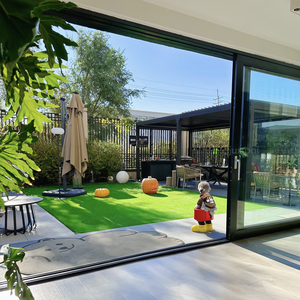
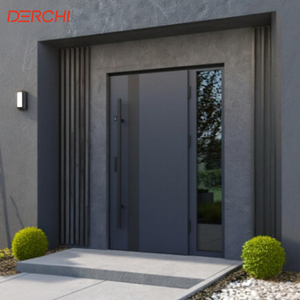
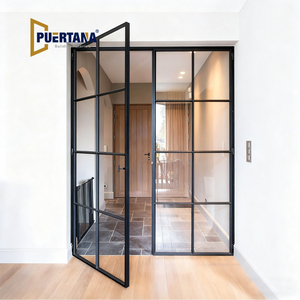
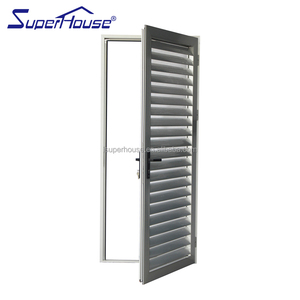
White Paper: The Engineering Evolution of OEM/ODM Aluminium Jali Doors
Architectural fenestration is undergoing a decisive paradigm shift. In modern building envelopes, the entrance door has progressed beyond a simple barrier; it serves as a sophisticated intersection between architectural legacy, dynamic ventilation, physical security, and thermal insulation. Historically rooted in Indo-Islamic and Middle Eastern architecture, the perforated stone or timber latticework known as "Jali" or "Mashrabiya" permitted airflow while preserving visual privacy and reducing direct solar gain. As structural urbanization deepens and climatic realities intensify, architectural engineers have systematically replaced perishable materials with heavy-duty aluminum alloys. Modern OEM/ODM aluminium jali door manufacturing represents the pinnacle of this convergence—combining high-yield-strength 6063-T5 or 6061-T6 aluminum alloys, CNC precision carving, high-pressure die casting, and multi-point mechanical security systems into an integrated solution.
Structural Metallurgy and Manufacturing Integrity
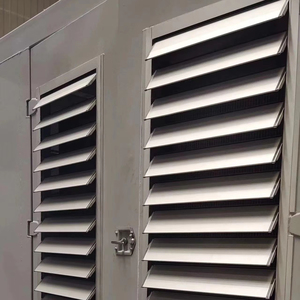
Industrial-grade aluminium jali doors engineered by Guangdong Dejiyoupin Doors and Windows Co., Ltd. (DERCHI) utilize premium primary aluminum ingots rather than recycled scrap metal. This material selection eliminates microscopic voids, grain boundary impurities, and internal stresses that compromise structural resistance. Utilizing advanced multi-axis CNC milling, high-pressure aluminum casting, and hydraulic press forming, our manufacturing plants fabricate jali panels featuring seamless intersections, monoblock rigidity, and intricate ornamental geometries. Where traditional doors rely on surface-welded iron grills that oxidize and degrade rapidly in humid climates, an extruded or cast aluminum jali panel forms a chemically stable, non-ferrous matrix protected by deep-layer anodization, fluorocarbon (PVDF) coatings, or exterior-grade thermoset powder coatings.
Forced Entry Resistance
Integrated multi-point security locking paired with solid cast aluminum jali grills delivers tested tamper-resistance compliant with international anti-burglary building codes.
Solar Factor & Microclimate Control
Engineered jaali apertures act as permanent sun shading elements, mitigating up to 45% of solar infrared heat flux while driving passive stack-effect interior air exchange.
Marine-Grade Corrosion Immunity
PVDF finishes withstand salt-spray exposure exceeding 3,000 hours (ASTM B117), providing zero-pitting performance in harsh marine coastal developments.
Architectural Procurement Trends in Global Fenestration
Global B2B procurement data reveals four major trends dictating the future trajectory of architectural jali entrance systems:
1. Decarbonization and Passive Ventilation Strategies: With rising cooling loads across tropical, desert, and Mediterranean zones, energy codes penalize envelope systems reliant solely on hermetic seals and mechanical HVAC. High-performance jali doors combine double-glazed thermal breaks with operable sub-sash jali panels or 316 stainless-steel security meshes. This design allows cross-ventilation during non-peak thermal hours without compromising domestic security or insect prevention.
2. Industrial Automation and Access Integration: Modern residential projects demand seamless smart-home integration. Top-tier OEM/ODM manufacturers are now designing concealed conduits within the extruded stiles to support 3D facial recognition, biometric finger-vein sensors, motorized pivot hinges, and automated multi-point locksets rated up to 1,200kg holding force.
3. Monolithic Large-Format Pivoting Systems: Standard hinge dimensions are giving way to floor-to-ceiling oversized pivot doors exceeding 3,000mm in height and 1,800mm in width. Such installations require structural counter-torque engineering, adjustable heavy-duty hydraulic floor springs, and internal reinforcement ribs to prevent sash deflection under dynamic wind pressure.
| Performance Criterion | Standard Commercial Door | DERCHI Heavy-Duty Aluminium Jali Door | Standard Test / Compliance |
|---|---|---|---|
| Profile Alloy & Temper | Recycled aluminum, 6063-T4 | Primary Virgin 6063-T5 / Cast A356 Alloy | GB/T 5237, ASTM B221 |
| Structural Wind Load | 1.5 kPa – 2.0 kPa | Up to 4.5 kPa – 5.0 kPa (N6 Cyclic Rating) | AS2047, ASTM E330 |
| Surface Protection | Standard Powder Coat (40–50μm) | Fluorocarbon PVDF ≥3 coats (80–120μm) | AAMA 2605 / 3,000h Salt Spray |
| Locking Security | Single-point deadbolt latch | Continuous 5-Point Stainless Interlock | EN 1627 RC3 / PAS 24 Approved |
| Thermal Transmittance (U) | U-value > 4.5 W/(m²·K) | U-value ≤ 1.8 - 2.2 W/(m²·K) (Thermal Break) | ISO 10077-1 / NFRC 100 |
Factory Direct Competitive Strengths: Guangdong Dejiyoupin Doors and Windows Co., Ltd.
As one of China’s Top 10 premium door and window manufacturers, DERCHI operates an integrated, high-capacity ecosystem structured to handle turnkey OEM/ODM architectural projects. Our facility in Foshan, Guangdong features:
• 180,000 ㎡ Modernized Manufacturing Hub: Housing fully automated CNC cutting centers, German profile extrusion processing machinery, robotic electrostatic coating lines, and integrated quality-control laboratories.
• Engineering Depth & 25+ Years Legacy: Employing a dedicated workforce of over 600 skilled technicians and fenestration structural engineers. We provide comprehensive CAD shop drawings, finite element analysis (FEA) for wind pressure, and customized mold tooling to meet distinct architectural specs.
• Certified International Compliance: Our manufacturing systems and products maintain ISO9001, European CE conformity, Australian AS2047 cyclonic testing credentials, and UL fire-rated certifications.
• Export Logistics & Global Reach: We serve major commercial contractors, developers, and trade importers worldwide, shipping containerized orders directly to key ports across Africa (Lagos, Tema, Mombasa, Durban), North America, Australia, and the Middle East. Every unit is packaged in reinforced wooden crates with internal moisture-absorbing desiccants and impact-absorbing edge guards to ensure damage-free transit.
Frequently Asked Questions (FAQ) for Global Buyers
Key technical considerations for civil contractors, commercial importers, and architects specifying aluminum jali entrance doors.
Q1: How does an aluminum jali door prevent water ingress and air infiltration?
Our engineered systems integrate continuous automotive-grade EPDM gaskets across both the outer perimeter frame and internal sash interfaces. Precision-machined weep holes and concealed internal drainage channels guide driving rain away from the door core, keeping it weathertight under positive and negative cyclonic pressures.
Q2: Can the jali pattern be custom-designed to match specific cultural or architectural themes?
Yes. As an OEM/ODM provider, our engineering team converts client sketches, DWG/DXF files, or 3D models into precision CNC toolpaths or custom sand-casting patterns. We produce traditional geometric jaali panels, modern minimalist linear louvers, and bespoke sculptural relief patterns.
Q3: Which surface treatment is optimal for coastal environments with high salt exposure?
For installations within 5 kilometers of the shoreline, we specify a minimum 3-coat PVDF (Polyvinylidene Fluoride) fluorocarbon finish compliant with AAMA 2605. Combined with Grade 316 stainless steel hinges, handles, and internal linkages, this treatment resists galvanic corrosion and salt-induced pitting.
Q4: How are oversized pivot jali doors supported structurally to prevent sagging over time?
Large-format pivot doors utilize internal diagonal steel tie-rod tensioners embedded within the aluminum profile chamber. The weight is transferred to heavy-duty floor pivots rated up to 800kg, taking structural load entirely off the vertical jamb and eliminating hinge fatigue.
Q5: What documentation is provided for port clearance and national conformity programs?
We supply full export documentation packages, including certified factory test certificates, third-party laboratory test reports (AS2047, CE, ISO), detailed commercial invoices, itemized packing lists, and destination-specific compliance documents such as SONCAP, KEBS PVoC, or SASO filings.
Q6: What is the standard production lead time for custom OEM containerized orders?
Following final approval of CAD shop drawings and hardware configurations, standard container orders (20GP/40HQ) are produced within 25 to 35 business days. Rapid prototyping for custom extrusion profiles or specialized casting dies takes approximately 12 to 15 days.
