180,000㎡
Smart Manufacturing Base
25+
Years Engineering Experience
100+
Patents & Global Certifications
600+
Specialized Technicians
Engineered Solutions

Commercial & Residential Aluminium Door Portfolio

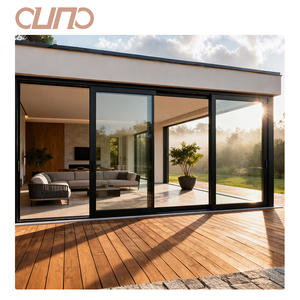
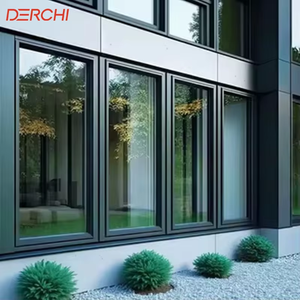
Manufactured using aerospace-grade 6063-T5 aluminium alloy profiles, insulated acoustic glass, and premium multi-point perimeter compression seals. Every system is made-to-order with precision CAD drawing validation.

Technical Whitepaper

The Shift from Wood to Extruded Aluminium in Interior Door Architecture

In modern multi-family residential construction, luxury hospitality suites, and coastal developments, conventional solid timber and hollow-core MDF internal doors are being replaced by precision-extruded 6063-T5 aluminium alloy systems. Tropical humidity, seasonal temperature swings, and severe environmental stresses cause traditional wood assemblies to absorb moisture, leading to leaf warping, hinge sagging, latch misalignment, and accelerated termite degradation.

DERCHI's OEM/ODM aluminium bedroom door systems resolve structural degradation through closed multi-cavity architectural profiles reinforced by mechanical corner crimping and structural adhesive injection. With a minimum extrusion wall thickness of 1.6mm to 2.2mm, these door frames resist torsional deflections under extreme physical stress while enabling ultra-narrow sightlines (down to 16mm visible frame widths) demanded by contemporary minimalist architecture.

Performance Benchmark Architectural Grade Aluminium (DERCHI) Traditional Solid Hardwood Standard Hollow Core / MDF
Dimensional Stability (RH 95%) Zero deflection / Zero volumetric expansion 2.8% – 6.4% volumetric expansion Irreversible swell, core delamination
Acoustic Attenuation (STC / Rw) 35 dB – 44 dB (With insulated acoustic core) 28 dB – 32 dB (Solid core leaf) 18 dB – 22 dB (Hollow paper honeycomb)
Termite & Bio-degradation 100% Immune (Inorganic alloy composition) Vulnerable (Requires chemical biocides) Highly vulnerable to wood-boring insects
Surface Hardness & Coating Life Fluorocarbon / PVDF / Qualicoat (25+ Yrs) Polyurethane varnish (Re-coat every 3-5 Yrs) Paper / PVC foil wrap (Vulnerable to peeling)
Fire Retardancy Rating Class A / Non-combustible base core Class B / Combustible, flame spreading Class C / High smoke & toxic gas production

Acoustic isolation remains a primary user requirement for private living areas. By pairing dual-chamber EPDM silicone co-extruded perimeter gaskets with automatic drop-down mechanical drop seals integrated within the door base rail, DERCHI systems eliminate airborne sound flanking paths, providing laboratory-certified noise reduction down to Rw 42 dB.

Industry Dynamics

Future Global Procurement Trends in Aluminium Interior Doors

Data-backed procurement shifts observed across real estate investment trusts (REITs), hospitality procurement executives, and international developers for 2026–2030 cycles.

1. Acoustic Comfort & Work-From-Home Isolation

With residential bedrooms functioning simultaneously as remote workspaces, acoustic specifications have elevated from standard partition standards to commercial hotel STC 40+ ratings. Multi-chamber thermal break profiles with acoustic laminated glass (PVB/SGP) and drop-down drop seals have transitioned from luxury options to standard tender specifications.

2. Minimalist Frameless & Concealed Systems

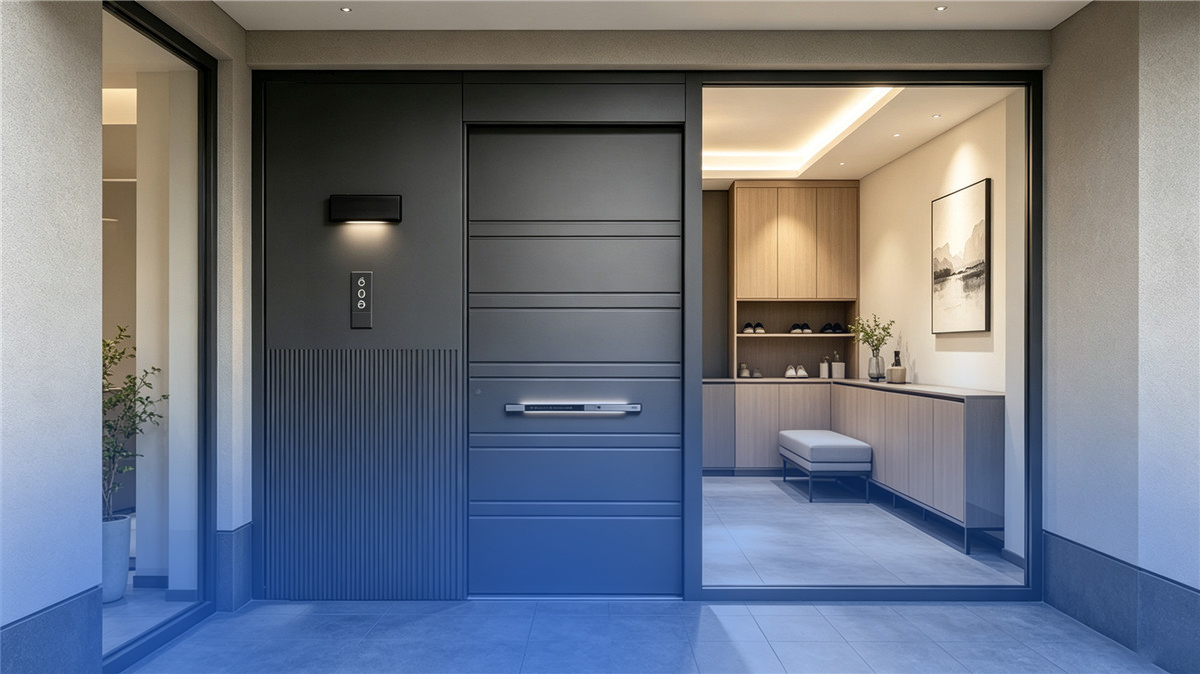
Architects are standardizing flush-to-wall details where door leaves align seamlessly with drywall or timber wall panels. Hidden multi-axis 3D-adjustable hinges, magnetic noiseless mortise locksets, and sub-frame trimless integration dominate high-end residential bids across North America, Europe, and the Middle East.

3. Smart Access & Biometric Integration

Standard mechanical key cylinders are rapidly giving way to concealed biometric handles, Tuya/Zigbee/Matter protocol smart ecosystem locks, and contactless RFID integration. Specifiers require internal door manufacturers to pre-mill internal wiring channels and precision lock-cases directly during CNC profile extrusion.

4. Sustainable Lifecycle & Circular Certification

Embodied carbon accounting, Environmental Product Declarations (EPDs), and circular building certifications (LEED v4.1, BREEAM) are now mandatory qualification criteria. High-recycled-content aluminium scrap processing and zero-VOC electrostatic powder finishes provide export advantages over wood doors treated with formaldehyde resins.

Manufacturing Excellence

DERCHI Industrial Capability & Quality Engineering

Operating a massive 180,000 ㎡ high-tech production complex in Foshan, Guangdong. Backed by German digital machining centers, vertical coating facilities, and strict quality verification protocols.

180,000 ㎡ Automated Production Infrastructure

Guangdong Dejiyoupin Doors and Windows Co., Ltd. represents one of China's Top 10 leading manufacturing facilities. With more than 600 full-time technical specialists, automated CNC multi-axis profile machining centers, and continuous assembly bays, our factory reliably processes monthly container shipments exceeding 35,000 square meters of specialized fenestration systems.

Full International Certification Compliance

Our structural designs are engineered to satisfy stringent cross-border building codes. Products are fully verified under European CE standards, certified quality management systems (ISO 9001), Australian cyclone and weather-tightness regulations (AS2047 N6 rating), North American NFRC performance protocols, and Underwriters Laboratories (UL) fire door resistance ratings.

End-to-End Export Logistics & Engineering Support

We provide complimentary CAD/BIM shop drawings tailored to complex tender schedules, custom hardware routing, and dedicated container optimization schemes. Every product unit is individually wrapped in anti-scratch pearl foam, corner-protected, and crated in fumigated non-coniferous marine-grade plywood cases to guarantee zero transit damage across transoceanic sea routes.

Procurement Guide

Frequently Asked Questions on OEM/ODM Aluminium Bedroom Doors

Comprehensive engineering insights addressing commercial tender terms, raw material metallurgy, acoustic thresholds, and container export logistics.

What are the key technical differences between 6063-T5 aluminium profiles and cheaper recycled alloys for interior doors?
Primary virgin 6063-T5 aluminium alloy provides tensile strengths exceeding 160 MPa and yield strengths above 110 MPa with strict magnesium and silicon ratios. This metallurgical consistency guarantees sharp extrusion angles, zero internal wall voids, and exceptional dimensional stability. Conversely, scrap-recycled aluminium alloys contain uncontrolled iron, zinc, and copper contaminants that cause profile brittleness, premature hinge sag, poor anodizing acceptance, and surface pitting. DERCHI works exclusively with prime billet 6063-T5 profiles to guarantee that precision internal components and 3D hinges maintain millimeter-accurate alignment across decades of cycle testing.
How does DERCHI achieve STC 38–42dB acoustic ratings on aluminium bedroom door leaves?
Achieving sound attenuation above 38dB requires eliminating both structural profile resonance and airborne perimeter leaks. Our acoustic bedroom doors utilize a multi-pronged system: (1) Dual hollow chambers injected with high-density acoustic mineral wool or polyurethane dampening foam; (2) Infill options comprising 5mm+0.76PVB+5mm acoustic laminated glass or composite acoustic solid panels; (3) Continuous co-extruded EPDM hollow bulb perimeter seals with mechanical corner vulcanization; and (4) An automatic internal drop-down threshold seal embedded within the bottom leaf profile that deploys hermetically against the floor upon latch closure.
Can DERCHI manufacture custom dimensions, concealed frames, and match specific architect RAL codes?
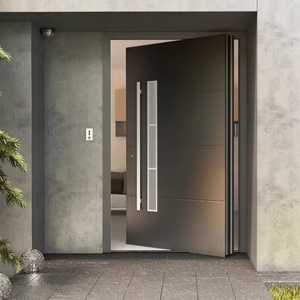
Yes. Every production run is custom manufactured based on contractor opening schedules and architectural drawings. We provide trimless concealed frames (frameless flush designs), standard telescopic architraves, and custom pivot doors up to 3.8 meters in clear height. Surface finishes include high-durability electrostatic fluorocarbon coatings (PVDF), Qualicoat-certified architectural powders in all international RAL colors, mechanical anodizing (15μm to 25μm), and Italian 3D thermal sublimation realistic wood grain finishes that resist UV-fading and chemical cleaning agents.
What are the lead times, Minimum Order Quantities (MOQ), and ocean freight packaging standards?
For standard customized profiles, our flexible OEM/ODM MOQ begins at a single 20ft container (approx. 180–220 door sets) or mixed container consolidation for commercial projects. Sample prototype lead times range from 7 to 10 days, while mass order production runs complete within 20 to 28 days post-CAD approval. Packaging protocols follow strict export criteria: individual PE protective masking film, multi-layer pearl cotton corner buffers, water-resistant shrink wrapping, and heavy-duty reinforced plywood crates suitable for maritime container loading to avoid movement, moisture corrosion, or impact damage during transit.
How are fire safety and international compliance certifications supported for local building audits?
We provide full document packages required by regional building authorities, including European CE documentation, ISO 9001 quality factory audit reports, Australian AS2047 test certificates, and UL 10C positive pressure fire-resistance test reports for models specified with 30, 60, or 90-minute intumescent fire seals and fire-rated cores. For African markets, our documentation team assists importers with regulatory certificates such as SONCAP (Nigeria), KEBS PVoC (Kenya), and NRCS certifications (South Africa) to ensure swift customs clearance.