High-Precision Door Profiles & Grill Compatible Portfolios
Explore engineering solutions ready for integration with architectural jali frameworks, insect meshes, and multi-point impact hardware.
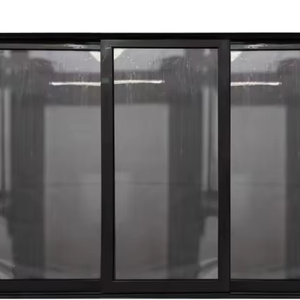
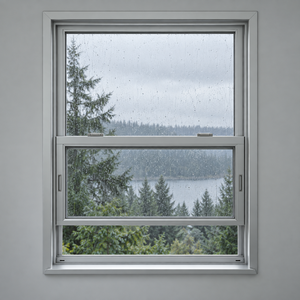
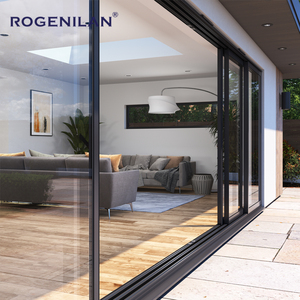
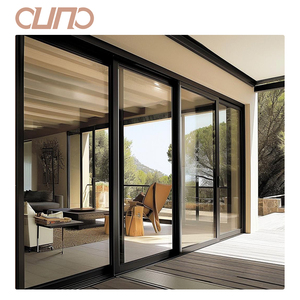
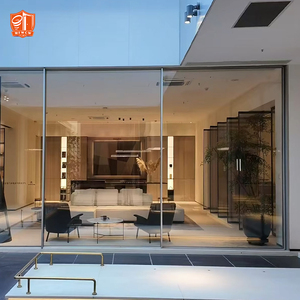
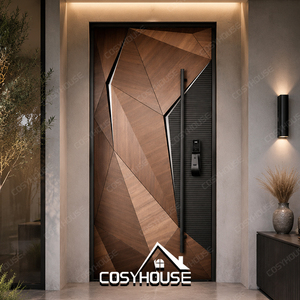
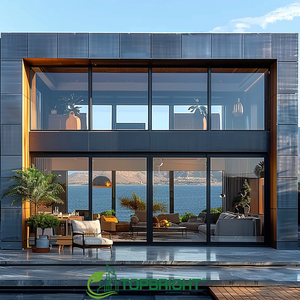
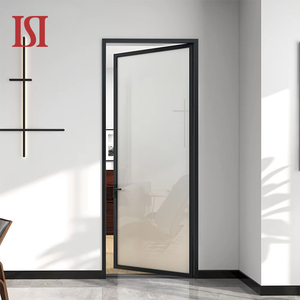
Integrated Production Base
Skilled Technical Workforce
Years Extrusion Engineering
CAD/CAM Accuracy Control
Technical Whitepaper: Precision OEM Aluminium Jali for High-Performance Fenestration
In modern fenestration and entrance door manufacturing, the Aluminium Jali (ornamental security perforation screen and lattice framework) has transitioned from a traditional aesthetic motif into a high-performance architectural component. Door factories, commercial assemblers, and building product exporters demand structural stability, absolute dimensional repeatability, and surface passivations that endure harsh microclimates without structural corrosion.
Traditional cast-iron or low-grade mild steel grills present prohibitive weight penalties, weld embrittlement, and systemic oxidation lines that run down door profiles in coastal and tropical export regions. Engineering-grade 6063-T5 and 6061-T6 structural aluminium alloys resolve these structural vulnerabilities. Through computer-numerical-control (CNC) sheet laser routing, automated hydraulic piercing, and profile interlock extrusions, modern aluminium jali screens deliver superior strength-to-weight ratios, intrinsic shear protection, and seamless integration within thermally broken outer frames.
Metallurgical Selection and Mechanical Resilience
For custom door manufacturing partners, our OEM production incorporates virgin-ingot billets refined to control silicon and magnesium fractions strictly. This precise metallurgy enables clean edge fidelity during rapid multi-axis fiber-laser cutting, preventing micro-burrs and edge crystallization that cause premature paint de-lamination.
- 6063-T5 Structural Alloy: Optimized for intricate jali geometric patterns, yielding superior tensile yield strength while retaining maximum extrudability and mirror-level anodizing/fluorocarbon powder-coating affinity.
- High Impact Shear Resistance: Engineered cross-sections resist deliberate pry-tool insertion, complying with international forced-entry security standards without aesthetic bulk.
- Thermal Expansion Co-Efficiency: Coefficients of thermal expansion (CTE) are systematically calculated to balance with perimeter structural glass units and heavy-duty pivot frames, eliminating seasonal frame buckling.
Procurement Trends Shaping the Global Fenestration Sector
As tier-one building contractors and door fabricators assess their supply chain vulnerabilities, procurement methodologies for architectural jali frameworks are undergoing tectonic changes:
First, there is rapid transition toward Knock-Down (KD) precision-slotting systems. Global freight rates penalize the transport of volumetric air. Forward-thinking door exporters no longer procure fully welded, unwieldy assemblies. Instead, they demand CNC pre-notched jali extrusions that mechanically lock together on the assembler's shop floor in under three minutes using stainless drive fasteners and structural corner-keys.
Second, architects are requiring multi-layered security-screening assemblies. Contemporary villa entry doors, kitchen balconies, and public corridor swing systems now integrate dual-infill tracks: an exterior high-tensile 304/316 marine-grade stainless wire mesh to obstruct insects, backing a heavier 4.0mm–8.0mm monolithic architectural aluminium jali screen that delivers mechanical intrusion barrier integrity.
Future Technology & Engineering Vectors in Aluminium Jali Manufacturing
Strategic advancements shaping the competitive positioning of door factories over the next engineering cycle.
Additive Parametric Topology
Integration of parametric algorithmic design directly from architectural BIM files into automated laser nestings. This facilitates organic biomimetic load-path variations across single jali panels, reducing unneeded metal volume by 22% while boosting center-deflection resistance against wind loads.
Smart Acoustic & Micro-Louvering
Emerging patent configurations incorporate variable multi-angle micro-louvered jali perforations. These geometries reflect oblique solar rays while allowing level horizontal line-of-sight airflow, actively reducing solar heat gain coefficients (SHGC) while achieving localized acoustic dampening.
Advanced Fluoropolymer Electrostatics
Application of ultra-durable Qualicoat Class 3 and AAMA 2605 fluorocarbon (PVDF) powder formulations. These molecular sealants offer hyper-resilience against maritime salt-spray (10,000+ hour test exposure), extreme desert UV irradiance, and cyclic humidity variations across developing markets.
Factory Competence & Global Supply Chain Infrastructure
Operating as an internationally acknowledged market leader, Guangdong Dejiyoupin Doors and Windows Co., Ltd. (DERCHI) commands a modern manufacturing footprint encompassing over 180,000 square meters in Foshan, Guangdong. Backed by over 600 production specialists, automated CNC profile machining centers, and an expansive R&D engineering hub, we support global window and door assembly plants with factory-direct supply chains.
Our competitive advantages directly solve common OEM pain points:
- Exacting International Certifications: Our full systems hold verified CE, ISO9001, AS2047 (N6 cyclone rating test compliance), and UL fire-resistant approvals. Importers avoid regulatory clearance barriers through complete documentation packages.
- Complete Shop Drawing & CAD/CAM Handshake: We bridge digital designs into real-world production. Every single jali grill, frame extrusion, and hardware routing profile is confirmed via shop CAD drawings, verifying opening dimensions before tooling strikes metal.
- Consolidated Container Logistics: We streamline distribution. By consolidating multi-model shipments—including heavy-duty exterior cast aluminium security doors, minimal sliding glass frames, and bulk extruded jali panels—importers maximize payload cubing and slash maritime freight overhead.
- Dedicated Export Compliance: Experienced in shipping to key gateways like Lagos, Mombasa, Tema, Durban, and global commercial centers, we prepare standard conformity documentation, including SONCAP, KEBS PVoC, and international fumigation certificates.
Frequently Asked Questions by Industrial Importers & Door Factories
Essential technical, commercial, and logistic insights for B2B sourcing teams.
What are the standard alloy specifications and thickness ranges for custom OEM aluminium jali screens?
Can you produce custom laser-cut patterns matching our private-label door designs?
How do your protective surface finishes resist corrosive coastal salt spray?
What is the minimum order quantity (MOQ) and production lead time for OEM container orders?
How are jali panels packaged to eliminate surface abrasions and deflection during ocean transit?
Can you support regional import inspection paperwork like SONCAP or KEBS?
Scale Your Door Factory Output with Precision OEM Supply
Connect with our senior technical engineering desk to request CAD design optimization, factory-direct wholesale extrusion price matrices, or physical coating sample kits.
Inquire Now