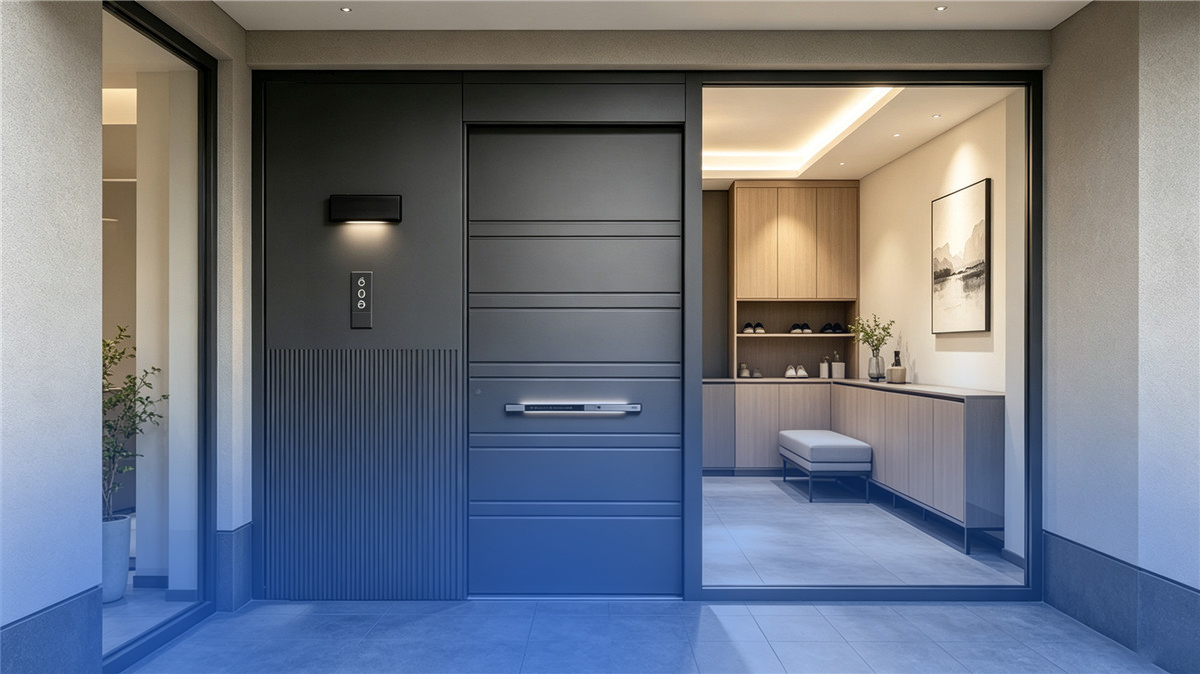
Featured Custom OEM Glazing & Architectural Door Portfolios
Engineered to satisfy stringent acoustic, thermal, and barrier specifications across modern commercial developments, luxury residential spaces, and culinary wet-dry partitions. Review our factory-tested series ready for direct export container loading.
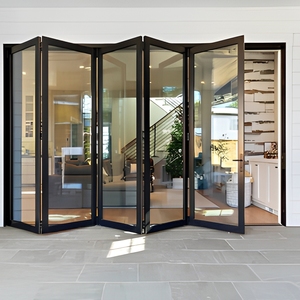
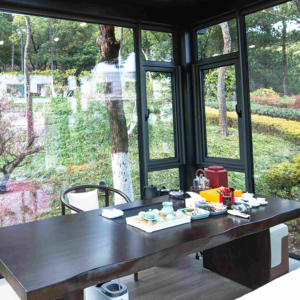
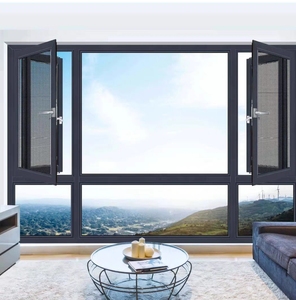

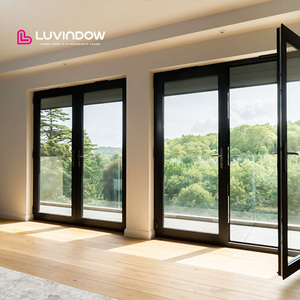
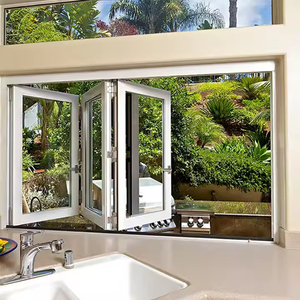
Anatomy of Commercial-Grade Aluminium Glass Kitchen & Partition Doors
Modern culinary architectural planning necessitates rigorous separation between airborne grease, high humidity vapors, and dining or living environments. Commercial OEM kitchen door manufacturing requires careful alloy selection, precision surface chemistry, and high-performance perimeter sealing.
Procurement engineers and multi-unit residential developers face recurring challenges with inferior secondary-scrap extruded profiles. Sub-par alloys develop microscopic warping over thermal variations, culminating in roller misalignment, frame binding, and premature seal deterioration. At Guangdong Dejiyoupin Doors and Windows Co., Ltd. (DERCHI), profile extrusion begins with spectrometer-audited metallurgical ingots. Frames are combined with multi-chamber polyimide thermal barriers (PA66 GF25) that prevent radiant thermal bridge transfer between commercial cooktop sectors and air-conditioned living spaces.
| Performance Parameter | Commercial Grade Specification | DERCHI Factory Standard | Audit & Compliance Protocol |
|---|---|---|---|
| Aluminium Alloy & Temper | EN AW-6063 / ASTM B221 T5 | High-purity 6063-T6 Structural Profile | Spectral chemical composition verification |
| Glazing Seal Gasket | Standard PVC / Neoprene Foam | Continuous Co-extruded EPDM + Silicone | ASTM C864 vulcanization aging test |
| Air Infiltration Rating | Class 2 (Static Pressure 150 Pa) | Class 4 (≤ 0.5 m³/h·m at 600 Pa) | AS/NZS 4420.4 Air infiltration baseline |
| Acoustic Attenuation (Rw) | Rw 25 dB – 28 dB | Rw 36 dB – 42 dB (Laminated/IGU Low-E) | ISO 10140 Laboratory airborne noise audit |
| Hardware Cycle Life | 20,000 Open/Close cycles | 100,000+ Cycles (Stainless Steel Bearings) | EN 13126-15 Cyclic mechanical wear test |
Future Procurement Trends for Global B2B Door Importers
Data-driven procurement officers and wholesale hardware distributors are modifying their procurement criteria to match shifting green building codes, supply chain dynamics, and architectural trends.
Low-Carbon Embodied Aluminum
Importers in Europe, North America, and Australia prioritize low-carbon aluminum smelted with renewable hydro-energy. Environmental Product Declarations (EPD) are rapidly moving from optional credentials to mandatory customs clearance submittals.
Minimalist Narrow Sightline Profiles
Bulk orders are pivoting rapidly away from bulky 60mm visible mullions toward ultra-slim 15mm-20mm profiles. Kitchen pass-through doors must deliver structural wind-load and deflection resistance while maximizing light transmission.
Knock-Down (KD) Flat-Pack Engineering
Volumetric ocean freight rates demand optimized space utilization. Importers are transitioning to pre-machined, modular Knock-Down (KD) frames, tripling container piece-capacity without requiring complex on-site workshop welding.
Smart Actuation & Concealed Hardware
Commercial spaces require hands-free magnetic levitation sliding systems and flush floor tracks. Integrated motion sensors, obstacle auto-reversal, and micro-gap brush sealing prevent cooking odors from escaping while meeting ADA barrier-free access.
Technological Innovations Reshaping Kitchen Door Fabrication
Explore the engineering advancements separating commodity manufacturing from precision, high-margin architectural fenestration production.
Advanced Fluorocarbon & Anodizing Chemistries
High-temperature cooking steam and oil splatters attack standard powder coatings. Modern plants use vertical automated lines applying 3-coat PVDF (fluorocarbon) finishes or 25-micron deep hard-anodized layers, achieving complete resistance to aggressive cleaning solvents and chemical abrasion.
Switchable Smart PDLC Privacy Glazing
Laminating Polymer Dispersed Liquid Crystal (PDLC) films directly between dual tempered glass layers enables on-demand transition between translucent privacy and ultra-clear visibility. Connected to home automation or foot-pedal switches, this offers instant separation between kitchen and dining areas.
CNC Corner-Crimping & Glue-Injection
Replacing standard mechanical screws with four-axis CNC corner-crimping machines and two-component polyurethane joint adhesive ensures structural integrity under continuous operation. This eliminates unsightly corner gaps, frame sagging, and perimeter air leaks across heavy daily cycles.
Guangdong Dejiyoupin (DERCHI) Industrial Ecosystem
Positioned within Shishan Town, Nanhai District, Foshan — the world epicenter for high-precision architectural aluminium production — DERCHI bridges advanced European engineering with scalable manufacturing capacity.
Scale, Automation, and Global Delivery Infrastructure
Covering over 180,000 square meters of smart manufacturing space, DERCHI operates high-speed CNC profile cutting centers, automated double-head mitre saws, and computerized glass processing bays. Our 600+ personnel maintain single-source manufacturing accountability across entry doors, vertical sliding windows, hurricane bifold patio configurations, and interior slim-line kitchen systems.
For foreign contractors, general developers, and wholesale importers, dealing directly with an authentic OEM/ODM eliminates trading-house markups while providing clear visibility into shop drawings, structural calculations, and QA inspections.
Export crating protocols utilize fully enclosed fumigated plywood crates with custom foam separation, corner corner-protectors, and desiccant packs. This guarantees zero moisture degradation or scratching throughout extended maritime transit to hubs across North America, Europe, the Middle East, Southeast Asia, and major African container terminals.

Frequently Asked Questions for B2B Kitchen Door Importers
Clear answers on compliance certifications, production minimums, custom engineering, and port-to-port export logistics.
1. What profile wall thickness and glass specifications do you mandate for kitchen sliding doors?
2. How does DERCHI handle project custom OEM sizing, finishes, and shop drawings?
3. What is the typical Minimum Order Quantity (MOQ) and sample lead time?
4. How are doors packaged to prevent transit damage on long container routes?
5. Can your factory supply corresponding installation guidance and hardware replacement parts?
6. What documentation do you furnish for customs clearance and regulatory compliance?
Accelerate Your Commercial Fenestration Supply Chain
Submit your project elevations, door schedules, or distributor OEM specifications. Receive full CAD shop drawings, glass thermal performance data, and a competitive FOB/CIF quotation within 24 hours.