Engineered Aluminum Windows & Architectural Door Systems
Tested rigorously under international cyclone, air permeability, and thermal transmittance standards. Explore our wholesale window systems tailored for commercial towers, residential luxury developments, and passive energy projects.
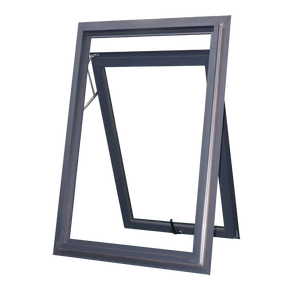
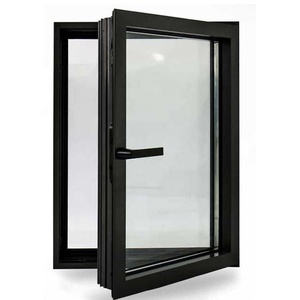
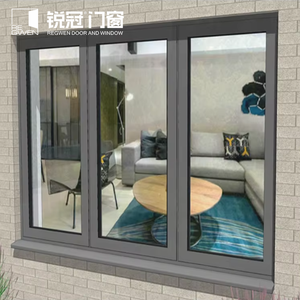
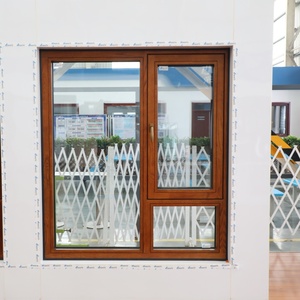
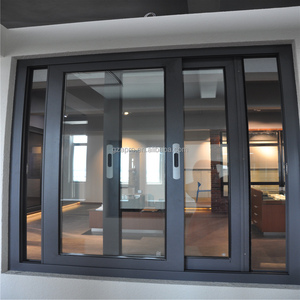
The Mechanics of Aluminum Tilt and Turn Systems (Dreh-Kipp)
Why commercial builders and high-end residential developers globally specify European-style dual-action tilt-and-turn windows over conventional outward-swing casements or bypass horizontal sliders.
Dual-Operation Kinematics
A single ergonomic handle controls the peripheral gearing mechanism. Turn the lever 90 degrees horizontally to swing the sash inward like a casement for 100% unimpeded clearance and effortless interior glass maintenance. Rotate the lever 180 degrees upward, and the top of the sash tilts inward 10-15 degrees.
This tilt posture creates an optimal convection flow: cool fresh air enters smoothly through the top perimeter while warm, stale room air exhausts upward, eliminating turbulent drafts at human level and preventing rain ingress even during heavy downpours.
- Inward swing for easy ground & high-rise cleaning
- Top tilt for secure, draft-free micro-ventilation
- Eliminates wind-catching hazards common in awnings
Continuous Perimeter Multi-Point Compression
Conventional sliding windows rely on brush pile weatherstripping, which invariably degrades, leaks air, and produces whistle under high velocity winds. DERCHI tilt and turn fenestrations utilize mushroom-head cam bolts locking into hardened steel keeps spaced every 400-600mm across the sash circumference.
When the handle is returned to the down position, the sash pulls uniformly into multiple layers of co-extruded EPDM marine gaskets, generating an airtight, impervious perimeter compression seal capable of achieving Class 4 Air Permeability (EN 12207) and Class 9A Water Tightness.
- Uncompromising acoustic isolation up to Rw 45 dB
- Forced-entry deterrence rated to European RC2 / RC3
- No air whistling or pressure-drop under typhoon loads
Polyamide Thermal Barrier Matrix (PA66 GF25)
Raw aluminum is a natural thermal conductor. To meet modern ultra-low-energy and Passive House building envelope standards, our extruded aluminum profiles incorporate reinforced Polyamide 66 with 25% structural glass fiber insulation struts, measuring 24mm to 39mm wide depending on the architectural series.
Combined with multi-chamber internal hollow configurations and Warm Edge TPA spacers, overall window assembly thermal transmittance reaches values as low as Uw ≤ 0.8 to 1.3 W/m²·K, drastically cutting building HVAC operating loads across desert, tropical, and sub-zero climates.
- Zero condensation risk along interior frames
- Supports up to 48mm triple-glazed argon IGUs
- Complies with AS2047, NFRC, and European CE standards
System Specification Matrix: Tilt & Turn vs. Conventional Systems
Data-backed performance verification based on laboratory testing under ASTM, EN, and AS2047 fenestration standards.
| Performance Parameter | DERCHI Commercial Tilt & Turn | Standard Aluminum Casement | Standard Horizontal Slider | Compliance Standard |
|---|---|---|---|---|
| Air Infiltration Rate | < 0.05 m³/(h·m) (Class 4 / Airtight) | 0.25 - 0.50 m³/(h·m) (Class 2) | 1.2 - 2.5 m³/(h·m) (Class 1) | ASTM E283 / EN 12207 |
| Water Tightness Under Static Pressure | Up to 900 Pa - 1200 Pa (Class E1200) | 450 Pa - 600 Pa (Class 9A) | 150 Pa - 300 Pa (Class 4A) | ASTM E331 / EN 12208 |
| Structural Wind Load Deflection | ± 4500 Pa (Cyclone N6 / C5 Rating) | ± 2500 Pa (Class C3) | ± 1600 Pa (Class C2) | AS2047 / ASTM E330 |
| Sound Transmission Class (STC) | STC 42 - 47 dB (with Acoustic PVB Laminate) | STC 32 - 36 dB | STC 26 - 30 dB | ASTM E90 / ISO 717-1 |
| Overall Thermal Transmittance (Uw) | 0.79 – 1.3 W/m²·K (Passive House Verified) | 1.8 – 2.4 W/m²·K | 2.8 – 3.8 W/m²·K | NFRC 100 / ISO 10077 |
| Anti-Intrusion Security Rating | RC2 / RC3 (Multi-point perimeter hooks) | RC1 / Single-point cam | Basic crescent latch | EN 1627-1630 |
Future Sourcing Trends in Aluminum Fenestration (2025–2030)
How leading developers, façade contractors, and wholesale importers are navigating structural shifts in architectural codes, sustainability mandates, and global supply chains.
Low-Carbon Recycled Billets
Global regulatory bodies (such as the EU Carbon Border Adjustment Mechanism) are driving commercial projects toward certified low-embodied-carbon aluminum. Primary smelting using renewable hydro-power and certified secondary aluminum alloys (6063-T6 with minimum 40% post-consumer content) is shifting from a green option to a mandatory tender prerequisite across Oceania, Europe, and North America.
Our foundry integrates traceable billet provenance, cutting carbon intensity per metric ton of extruded profile without degrading tensile structural capacity.
Minimalist Sightlines with Hidden Hinges
Architects increasingly demand maximum daylight opening ratios and flush exterior glass façades. The industry is moving rapidly toward fully concealed tilt-and-turn hinges hidden within the rebate channel, supporting sash payloads in excess of 180kg to 300kg.
Our ultra-narrow 45mm visible face sightline systems provide seamless visual integration without forfeiting the multi-stage safety stops or micro-ventilation locks required by international building codes.
Smart Mechatronic Actuation
The integration of concealed mechatronic actuators directly into Building Management Systems (BMS) allows automated nighttime pre-cooling, smoke evacuation venting, and smart climate control. Motorized tilt-and-turn hardware with concealed magnetic reed switches now communicates directly with home automation protocols.
This allows windows to automatically tilt open during optimal ambient temperature deltas and clamp securely tight upon HVAC engagement or rain sensor triggering.
Modular Pre-Glazed Unitized Crating
On-site labor costs in target export markets have escalated by 35% post-pandemic. Commercial contractors increasingly avoid knocked-down (KD) field assembly, demanding factory-glazed, fully calibrated, pre-hung window units that can be hoisted and installed directly from export containers into structural rough openings.
DERCHI's steel-reinforced wooden crating and desiccant-vacuum packaging eliminate coastal sea spray corrosion and site fabrication errors.
Enterprise Advantages: Guangdong Dejiyoupin Doors and Windows Co., Ltd.
Operating under our globally recognized DERCHI brand, we deliver end-to-end manufacturing integrity, robust engineering documentation, and scalable wholesale capabilities.
180,000㎡ Intelligent Production Base
Based in Foshan, Guangdong—the world capital of architectural aluminum extrusion—our automated facility houses German-engineered CNC 4-axis profile machining centers, robotic corner-crimping cells, and high-precision double-mitre saws. With an annual capacity exceeding 300,000 square meters of high-performance architectural fenestration, we guarantee reliable project scheduling for large-scale multi-family and commercial tenders.
- Precision CNC tolerance within ±0.2mm
- Vertical powder coating & PVDF lines
- On-site structural glass bonding & curing
Exhaustive International Testing & Certifications
We eliminate import compliance friction. DERCHI systems hold formal certifications including AS2047 (N6 Cyclone Tested), Australian Glass Compliance AS1288, European CE (EN 14351-1), ISO9001 Quality Management, and UL Fire-Rated Listings. All test reports, seismic drift analyses, and acoustic dampening curves are prepared and documented for direct submission to structural engineering consultants and municipal inspectors.
- AS2047 Australian Standard Verified
- NFRC 100/200/400 Thermal Simulations
- Compliant import documentation (SONCAP, PVoC, CE)
Full-Scope CAD/BIM & Engineering Consultation
Our 50+ in-house fenestration engineers provide comprehensive value engineering before aluminum billet cutting begins. We analyze wind-load deflection calculations (L/175 and L/250 criteria), thermal expansion coefficients, and water penetration thresholds. Every custom order is supported by free shop drawings, submittal packages, anchor-detail CAD drawings, and container load-optimization models.
- Custom extrusion die development
- Fluent bilingual structural engineering desk
- 24-hour turnaround for project inquiries
Frequently Asked Questions on Aluminum Tilt and Turn Procurement
Direct technical and logistics insights for façade contractors, architects, importers, and procurement directors.
What are the critical hardware considerations when sourcing tilt-and-turn windows from China?
Tilt-and-turn functionality is entirely dependent on hardware mechanical tolerance. Cheap zinc-alloy imitations frequently fail within 18 months under heavy sash weight. DERCHI standardizes on genuine German hardware suites (Siegenia, Roto Frank, Hoppe) alongside our proprietary heavy-duty multi-point gearing engineered for sashes weighing up to 200kg.
Key components include: adjustable mushroom locking pins, anti-mishandling devices that prevent accidental dual-engagement of tilt and turn modes, integrated sash lifters to reduce hinge stress over decades, and anti-corrosion finishes exceeding Grade 5 (480-hour salt spray testing) under EN 1670 for coastal applications.
How do you prevent glass thermal stress breakage and seal failure on exported IGUs?
Thermal stress fracture occurs when differential solar radiation heats the center of a glass lite faster than its shaded edges, particularly with high-performance Low-E coatings. We mitigate this through fully automated CNC edge grinding to eliminate micro-fissures, followed by full thermal tempering or heat-strengthening.
For insulated glass units (IGUs) crossing high-altitude mountain passes or transported via ocean container ships subject to atmospheric barometric shifts, we install capillary equalization tubes or factory-sealed pressure relief valves. Dual-seal construction utilizing polyisobutylene (PIB) primary seals and structural silicone secondary seals guarantees hermetic longevity and argon gas retention rates of >99% over 20 years.
What is your minimum order quantity (MOQ) and production lead time for custom architectural dimensions?
For standard profile extrusions in stock architectural finishes (Matte Black, Anthracite Grey, Silver Anodized, Architectural White), our MOQ is flexible—starting at 20 square meters for residential custom villas and scaling up to 100,000+ square meters for master-planned commercial towers. Production lead time for custom dimension orders is typically 25 to 35 calendar days following client sign-off on shop drawings.
For bespoke architectural dies requiring custom extrusion dies or unique fluorocarbon (PVDF) color matching, die tooling takes approximately 10-14 days, followed by profile extrusion and fenestration assembly.
How are oversized tilt-and-turn windows protected against maritime transit damage?
Fenestration exports face aggressive dynamic stresses during ocean shipping, including container sway, vertical vibration, humidity shifts, and salt fog. DERCHI utilizes an export-engineered crating protocol: each window sash is locked into its transport frame with corner corner protectors; profiles are cocooned in anti-scratch electrostatic protective films; and assemblies are placed into fully fumigated ISPM-15 compliant plywood crates.
Units are separated by dense EVA foam spacers, strapped with high-tensile composite banding, and packed with container-grade desiccant packs to prevent moisture condensation during sea voyage transit across tropical trade lanes.
Can DERCHI tilt and turn systems meet coastal hurricane impact and high seismic drift requirements?
Yes. Our hurricane-impact rated architectural series features heavy-gauge structural profile wall thicknesses up to 2.2mm to 2.5mm, reinforced with internal galvanized steel stiffeners in high-load structural chambers. Glazing is upgraded to laminated safety glass utilizing DuPont SentryGlas (SG) or heavy 1.52mm PVB interlayers.
Under cyclic wind pressure and large missile impact testing (ASTM E1886/E1996 and AS2047 cyclonic N6 testing), our frames maintain structural integrity under positive and negative pressures exceeding ±5.0 kPa, preventing water envelope breach even under category 5 storm conditions.
What warranties and post-handover technical support do you provide to overseas developers?
DERCHI provides a comprehensive 10-year warranty on aluminum profiles and surface finishes (including Qualicoat Class 2 architectural powder coatings and AAMA 2605 fluorocarbon finishes against chalking, fading, or peeling). Insulated glass units carry a 10-year hermetic seal warranty against internal condensation, and hardware suites carry a 5 to 10-year mechanical operational guarantee.
For installation, we supply complete 3D video animation guides, detailed step-by-step installation manuals, and provide remote engineer-to-engineer video conference support during rough-opening leveling and perimeter flashing stages.
Launch Your Fenestration Sourcing Project With Us
Connect directly with our engineering department in Foshan, Guangdong. Submit your window schedules, architectural elevations, or tender specifications for immediate structural analysis, thermal optimization, and an itemized factory-direct quote.
Inquire Now