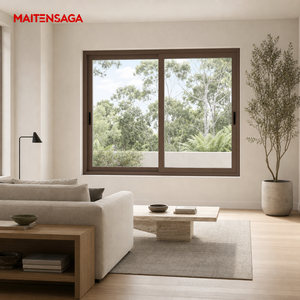
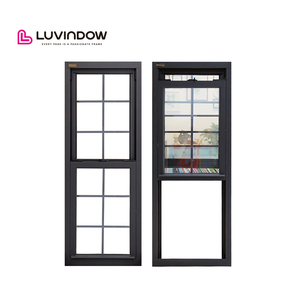
Thermal Break Aluminum Sliding Window Triple Glazed Soundproof Custom Size
Triple Glazed
Acoustic Guard
Thermal Isolation
View Specification
Explore factory-direct extruded aluminum architectural systems engineered with structural rigor, anti-corrosion finishes, and international certification standards.
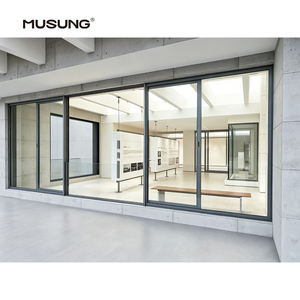
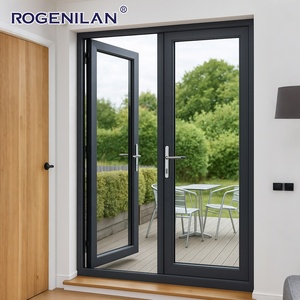
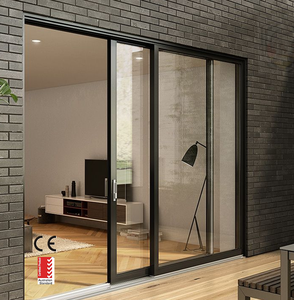
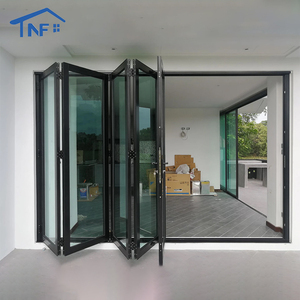
In modern commercial architecture, industrial warehousing, and modular cabinetry, the aluminum tambour door (also known as the aluminum roller shutter or coiled slat system) has transitioned from a utilitarian closure to a high-precision architectural mechanism. Selecting an authoritative China wholesale aluminum tambour door supplier requires in-depth evaluation of profile metallurgy, interlock tolerances, coiling barrel spring ergonomics, and automated extrusion quality control. As global infrastructure demands compact spatial utility and stringent anti-theft properties, precision-machined aluminum alloys provide superior stiffness-to-weight ratios compared to legacy PVC or galvanized steel alternatives.
The longevity of an aluminum tambour door profile depends heavily on the alloy grade and thermal aging state. The majority of architectural tambour slats are produced from aluminum alloy 6063, treated to a T5 temper. This alloy contains magnesium and silicon calibrated to deliver tensile yield strength exceeding 160 MPa while maintaining smooth surface uniformity suitable for anodizing or architectural powder coating. For heavy-duty industrial roll-up doors exposed to hurricane-grade wind pressure, suppliers formulate customized 6061-T6 structural slats capable of withstanding lateral shear loads in excess of 240 MPa.
A critical quality differentiator in Chinese manufacturing is billet purity. Top-tier manufacturers utilize 100% primary A00 electrolytic aluminum ingots rather than recycled scrap melt. Primary aluminum prevents internal microscopic micro-fissures from forming along the extruded interlocking joints. In flexible roll-up assemblies where slats articulate repeatedly through tight guide-rail radiuses, low-impurity aluminum prevents fatigue failure along hinge knuckles, ensuring maintenance-free lifecycles spanning more than 100,000 articulation cycles.
Tambour slats operate in demanding environments—from maritime coastal depots with salt-spray exposure to commercial kitchens and laboratory storage spaces subject to caustic cleaning agents. Guangdong Dejiyoupin employs multi-stage chemical pretreatment, stripping organic surface residue before applying either deep anodizing (minimum 15–20 microns) or electrostatic polyester powder coatings adhering to Qualicoat standards. Fluorocarbon (PVDF) wet coating options provide enhanced ultraviolet resistance against hyper-saline and tropical conditions, preventing surface chalking, micro-cracking, and color fading over decades of exterior exposure.
How smart automation, space-saving compact geometries, and sustainable architectural mandates are redefining international supplier selection.
Next-generation commercial tambour systems feature ultra-narrow slat designs (15mm–25mm profile height) engineered with micro-hinges. These profiles allow minimal coil spiral diameters, fitting within shallow architectural ceiling bulkheads and kitchen storage niches where vertical clearance is limited.
Global procurement teams are shifting away from manual counterbalanced springs toward concealed, tubular DC brushless drive systems. Built-in RS485, Zigbee, and dry-contact automation allow tambour units to integrate smoothly into Building Management Systems (BMS) with automated obstruction-sensing safety loops.
Energy conservation mandates in European and North American building codes are accelerating the adoption of double-wall extruded aluminum tambour slats filled with high-density polyurethane (PU) foam. These slats create reliable thermal bridges and acoustic barriers exceeding Rw 28 dB isolation.
Guangdong Dejiyoupin Doors and Windows Co., Ltd. delivers direct factory engineering capabilities, ISO-controlled manufacturing, and global project support.
Our Foshan manufacturing campus operates precision CNC profile cutting lines, automated roll-forming equipment, and dedicated assembly facilities. This infrastructure supports large production volumes while maintaining millimetre-level dimensional consistency across commercial orders.
Our architectural systems hold verified compliance with CE, ISO9001, AS2047, and UL fire-rated standards. Slats and track guides undergo cycle endurance testing, structural wind pressure analysis, and neutral salt-spray testing to verify long-term performance.
Our engineering team provides structural CAD shop drawings and 3D modeling tailored to opening dimensions, structural jamb constraints, and electrical requirements before fabrication begins, reducing coordination errors on job sites.
To eliminate transit damage during multi-week ocean shipments, all roll-up curtains and guide rails are individually wrapped in protective PE films, edged with shock-absorbent corner guards, and crated in fumigated plywood cases with moisture-absorbing desiccant systems.
Clear technical and logistical answers to support commercial purchasing, project engineering, and customs clearance.
For custom architectural profiles and wholesale tambour door systems, standard order minimums typically start at 50 square meters or 10 full sets, with sample evaluation available for custom dies. Standard production cycles run 15–22 business days following shop drawing sign-off and color chip verification.
Every extrusion batch undergoes tension leveling and optical laser profiling checks to ensure a maximum deflection limit of less than 0.5mm per linear meter. Slats undergo dry-assembly testing on calibrated guide fixtures to confirm consistent articulation without operational binding.
Yes. Heavy-duty security configurations utilize double-walled extruded slats with internal reinforcing webs, high-tensile steel bottom rails, anti-lift end locks, and keyed or motorized electromagnetic braking systems to resist forced entry.
For installations within 5 kilometers of coastlines, we recommend hard-coat anodizing (Class I, 18+ microns) or multi-coat fluorocarbon PVDF finishes (70% Kynar 500 resin base) that exceed 3,000 hours in neutral salt-spray tests without blister formation or coating loss.
We regularly handle EXW, FOB (Foshan, Shenzhen, Guangzhou), CIF, and DDP shipments to global destinations including Africa, Southeast Asia, Europe, and the Americas. Comprehensive shipping documentation—such as commercial invoices, packing lists, CE declarations, and certificates of origin—is issued for each container.