China Wholesale Aluminum Internal Doors Manufacturers & Suppliers

Direct-from-Source Engineering, High-Precision Architectural Extrusions, Acoustic Partitioning, and Commercial-Grade OEM/ODM Solutions for Global Specifiers.

Verified Factory Portfolio

Engineered Aluminum Interior & Architectural Fenestration Systems

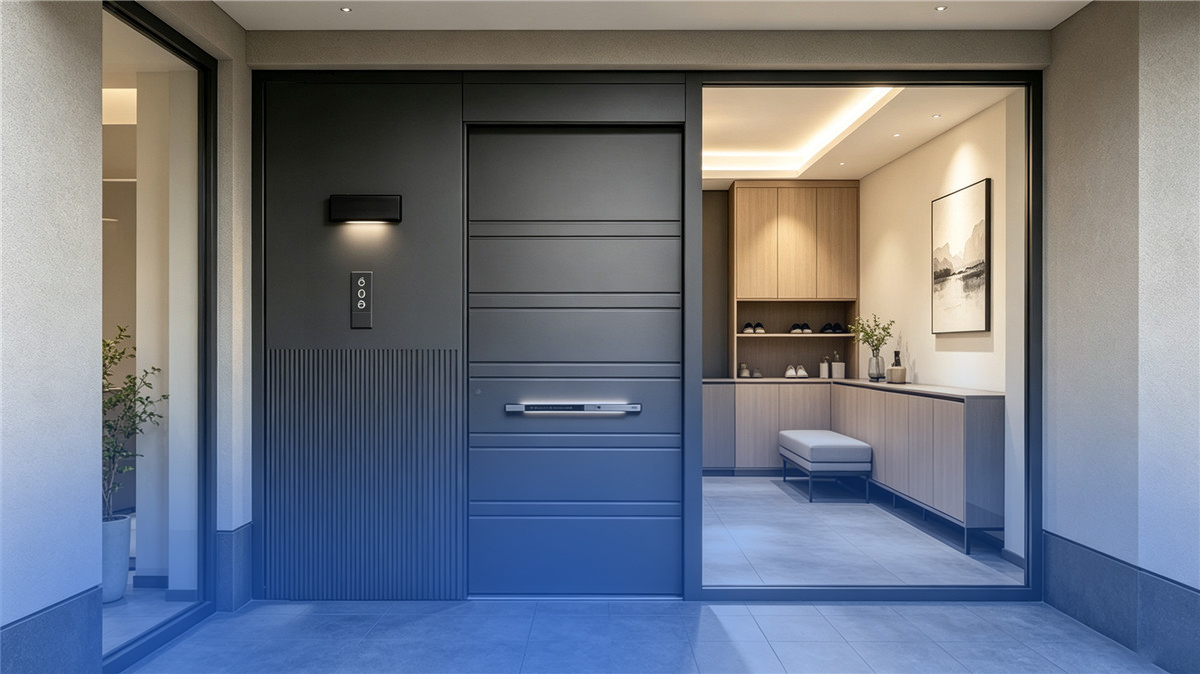
Explore our export-certified internal and architectural door configurations. Designed with heavy-wall 6063-T5 aluminum profiles, multi-point acoustic sealing systems, and factory-tested hardware integration for commercial, medical, and luxury residential projects.

B2B Procurement Whitepaper

Emerging Procurement Dynamics & Architectural Evolution in Aluminum Internal Doors

A technical assessment of profile metallurgy, acoustic decoupling, surface polymer chemistry, and green building standard certifications shaping global architectural sourcing for 2026–2030.

1. Minimalist Ultra-Slim Sightlines & Flush Invisibility

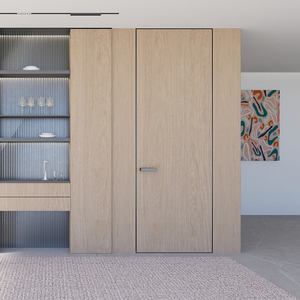
Modern interior architecture demands maximum spatial fluidity. Traditional bulky architraves and visible rebates are being replaced by 16mm ultra-narrow visible stiles and fully concealed sub-frames recessed into drywall and masonry partitions. Our custom extrusion dies allow wall-flush installation where the door leaf integrates seamlessly with adjacent wall finishes.

  • Concealed 3D multi-axis adjustable zinc-alloy hinges
  • Magnetic latch bolt assemblies eliminating strike-plate protrusion
  • Structural glass integration with hidden perimeter glazing beads

2. High-Performance Acoustic Decoupling & Sealing

With corporate workplace densification, hotel guest comfort standards, and multi-family residential zoning, acoustic insulation is no longer optional. Aluminum doors must achieve Sound Transmission Class (STC) ratings between 35 and 45 dB. This requires decoupling internal voids through honeycomb aluminum or rock-wool infills combined with dual-durometer peripheral EPDM gaskets.

  • Automatic mechanical drop-down threshold sweeps upon closure
  • Acoustic laminated glass configurations (e.g., 5mm+0.76PVB+5mm)
  • Thermal-break polyamide PA66 GF25 acoustic dampening strips

3. Decarbonized Circular Aluminum & Low-VOC Finishes

Tier-1 commercial developers across North America, Europe, and Australasia now mandate Environmental Product Declarations (EPD). Procuring from Chinese extruders utilizing hydro-powered recycled billet aluminum substantially slashes embodied carbon (Scope 3 emissions), aligning fenestration schedules with LEED v4.1 Platinum, BREEAM, and WELL building protocols.

  • Qualicoat Class 2 hyper-durable architectural powder coatings
  • Zero-VOC electrophoretic conversion coatings and PVDF systems
  • 100% circular recyclability of 6063 architectural aluminum scrap
Engineering Standards

Technical Specification & Performance Comparison Matrix

Compare aluminum internal door material systems against conventional interior door types to make informed technical procurement selections for commercial and institutional projects.

Performance Parameter Architectural Aluminum (6063-T5) Solid Wood / Timber Core Hollow Core MDF / HDF Testing & Compliance Standards
Structural Rigidity & Deflection Tensile Yield ≥ 160 MPa; Zero warping under humidity Susceptible to seasonal bowing (1.5–3.5mm variance) High deflection risk under temperature shifts ASTM E330 / BS EN 12211
Acoustic Attenuation (STC) 36 – 44 dB (Dual-seal + acoustic core/glazing) 28 – 34 dB (Solid core timber) 18 – 24 dB (Hollow cellular core) ASTM E90 / ISO 10140-2
Moisture & Termite Immunity 100% Impervious to rot, termites, and fungal decay Requires chemical treatment; prone to delamination Swelling occurs at relative humidity > 70% ASTM D543 Chemical Resistance
Surface Finish Longevity Anodized (15-25µm) or Powder Coated (60-80µm) Requires periodic re-lacquering every 3–5 years Melamine/PVC wrap peels under high-traffic friction AAMA 2604 / Qualicoat Class 2
Hardware Integration & Cycling Tested up to 500,000 continuous opening cycles Screw retention degrades after ~150,000 cycles Hinge pull-out failure common under commercial use ANSI/BHMA A156.1 / EN 1191
Fire Retardancy & Flame Spread Non-combustible metal; Cores up to 60–90 min rated Class B or C without expensive intumescent additives Class C (Rapid fuel contribution) UL 10C / BS 476 Part 22 / EN 1634-1
Factory Infrastructure

Advanced Manufacturing Powerhouse in Foshan, Guangdong

Combining 25+ years of fenestration engineering expertise with a 180,000 ㎡ automated production campus, delivering turnkey door schedules to contractors, distributors, and developers globally.

180,000㎡
Production Base
600+
Skilled Craftsmen & Engineers
100+
Patents & Certifications
25+
Years Engineering Excellence

High-Precision CNC Extrusion Processing & Corner Crimping

Internal door leaf squareness and miter joint tightness dictate longevity and visual prestige. Our Foshan factory utilizes dual-head 45-degree digital CNC cutting centers paired with pneumatic hydraulic corner crimping systems that guarantee joint variances below 0.1 mm.

Every profile is extruded from pure prime ingot 6063-T5 aluminum alloy, chemically de-greased, chromate-free passivated, and finished under strict cleanroom conditions to prevent microscopic pinholes, orange-peel textures, or anodizing oxidation defects.

  • Automatic 4-axis CNC milling for lock sets, flush bolts, and hinges
  • Custom structural wall thicknesses ranging from 1.4 mm to 3.0 mm
  • Integrated corner cleats with injected two-part structural polyurethane adhesives
Aerial view of Foshan aluminum door and window manufacturing facility

International Testing Approvals: CE, ISO9001, AS2047 & UL

Navigating global building codes requires comprehensive documentation. Our doors and windows have completed rigorous mechanical and cyclic load tests, meeting European CE requirements, ISO9001 quality manufacturing management, Australian AS2047 N6 cyclonic wind testing, and UL-certified fire-rated configurations.

For import clearance across emerging markets—including Nigeria (SONCAP), Kenya (KEBS PVoC), South Africa (NRCS), Saudi Arabia (SABER), and North American ASTM protocols—our regulatory compliance office provides complete test reports, lab-verified glass certifications, and mill test certificates (MTC).

  • Air infiltration and water penetration laboratory-verified data
  • Comprehensive acoustic testing according to ISO 140-3 standards
  • Full export documentation, commercial certification, and fumigated packaging
International Door Testing Certifications including CE, ISO9001, AS2047 and UL

Free CAD Shop Drawings & Marine-Grade Export Crating

To eliminate site fitting errors, our dedicated project engineering group produces complete 2D/3D CAD shop drawings for every unique rough opening before extrusion profiles are cut. We cross-verify wall return details, hinge swing clearances, floor finish transitions, and locking hardware interoperability.

Every internal door order is packaged for containerized ocean voyages. Panels receive protective low-tack surface film, foam corner protectors, shock-absorbent multi-layer bubble wrap, and are secured inside solid OSB plywood crating equipped with moisture desiccant bags to prevent corrosion caused by maritime condensation.

  • 24-hour drawing turnaround for project door schedules
  • Container load optimization to reduce shipping cost per leaf
  • Clear step-by-step English installation schematics and video support
Factory showroom and export crating preparation area
Procurement FAQ

Frequently Asked Questions by Global Buyers & Project Specifiers

Essential guidance on lead times, custom extrusion tooling, acoustic compliance, container logistics, and payment terms when sourcing aluminum internal doors directly from Chinese manufacturing bases.

What is the Minimum Order Quantity (MOQ) for custom aluminum internal doors? +
For standard aluminum architectural profiles and finishes (such as Matte Black, Architectural White, and Silver Anodized), our MOQ starts at just 10 units—accommodating luxury villa projects and boutique hotel schedules. For fully bespoke custom extrusion dies or special RAL powder-coat formulations, typical MOQ requirements range from 50 to 100 sets to amortize tooling and color-batch setup charges.
How do aluminum internal doors perform compared to solid timber doors in humid climates? +
Aluminum internal doors are completely inert to relative humidity fluctuations. Unlike solid hardwood, veneer, or MDF doors which absorb atmospheric moisture and experience swelling, binding, hinge sag, or veneer bubbling in coastal or tropical regions (such as Miami, the Caribbean, Southeast Asia, or coastal Africa), 6063-T5 aluminum profiles maintain 100% dimensional stability and zero microbial growth.
Can you integrate European or North American third-party hardware locks? +
Yes. Our 4-axis digital CNC milling machinery can be custom-programmed to prepare lock pockets, strike plates, and hinge mortises for any international hardware brand, including dormakaba, ASSA ABLOY, Häfele, Schlage, ROTO, or HOPPE. You may either ship master hardware samples directly to our Foshan factory for precision dry-fitting or provide factory CAD drilling templates.
What acoustic STC rating can be achieved with aluminum glass internal doors? +
Standard single-glazed 8mm tempered glass doors achieve an acoustic STC of approximately 28 to 31 dB. By upgrading to double-glazed laminated glass configurations (e.g., 5mm Clear + 0.76mm acoustic PVB/EVA + 5mm Clear) coupled with twin peripheral EPDM perimeter seals and an automatic bottom-drop acoustic drop seal, our commercial door systems achieve field ratings up to STC 42–44 dB, ideal for medical suites and boardroom partitions.
What is the standard production lead time and shipping transit duration? +
Standard manufacturing lead time is 25 to 35 business days following formal sign-off of CAD shop drawings and hardware matrix confirmation. Ocean transit times vary by destination port: 12–18 days to the US West Coast, 28–35 days to US East Coast / European main ports (Rotterdam, Hamburg, Felixstowe), and 25–40 days to major African ports such as Lagos, Durban, or Mombasa. Air cargo dispatch is available for critical mock-up samples.
How are doors packaged to prevent scratches and transit damage during sea transit? +
Every aluminum profile is protected by peelable 50-micron anti-scratch film. Finished door leaves are encapsulated in high-density closed-cell polyethylene foam edging, wrapped in 5-layer heavy corrugated cartons, and crated in fumigation-free engineered plywood crates with internal structural timber bracing. Every container is inspected and photographed with moisture desiccant bags installed prior to final seal closure.

Ready to Engineer Your Next Fenestration Schedule?

Send your architectural door schedules, CAD layouts, or elevation drawings to our dedicated B2B engineering department. We deliver free CAD shop drawings, acoustic recommendations, and competitive direct factory quotes within 24 business hours.