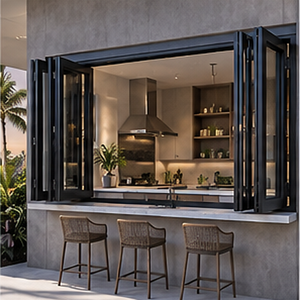
Acoustic Series
New Design Aluminum Glass Folding Windows Bi-fold Soundproof Sliding Terrace Balcony Door System
Rw ≥ 38 dB
Double Glazed
Heavy-Duty Track
Direct wholesale export specifications built with virgin 6063-T6 aluminum alloys, precision Polyamide PA66 thermal breaks, high-end multi-point German security hardware, and customizable architectural glazing.
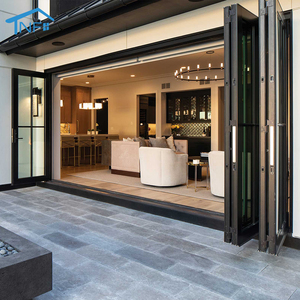
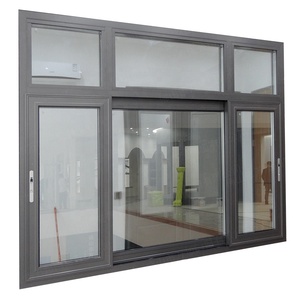
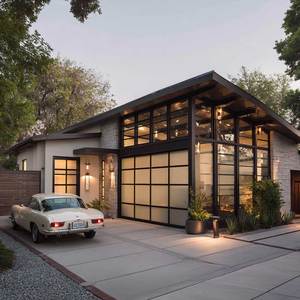
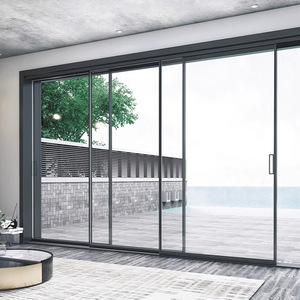
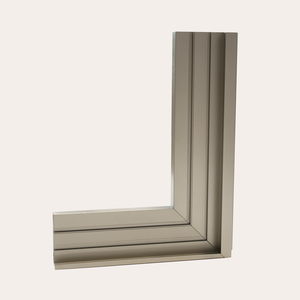
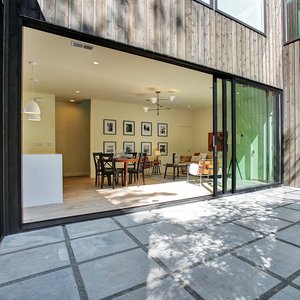
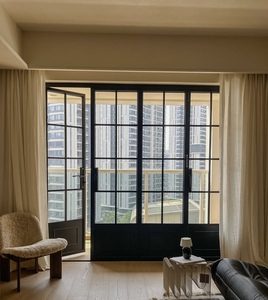
In modern architectural fenestration, the specification of aluminum folding patio doors (often designated bi-fold door systems) requires an exacting balance between structural kinetics, thermodynamic insulation, and long-term wind-load resistance. As a premier manufacturer rooted in Guangdong, China's foremost industrial fenestration cluster, our engineering philosophy rejects sub-standard thin-wall profiles in favor of certified 6063-T6 and 6061-T6 structural aluminum alloys extruded with nominal wall thicknesses spanning 2.0mm to 3.0mm.
Critical Engineering Principle: Bifold panels operate as a hung kinetic partition. Deflection limits under cyclic loads must maintain ≤ L/175 per ASTM E1300 standards to prevent roller binding, air-barrier disruption, and premature perimeter seal shearing under high positive/negative wind pressures.
A persistent flaw encountered in standard-tier wholesale folding doors is thermal bridging. Aluminum is inherently a rapid thermal conductor with a thermal conductivity rating of roughly 200 W/(m·K). To meet contemporary building energy codes—including Title 24 (California), the International Energy Conservation Code (IECC), and European CE/EN 14351 directives—our folding patio door profiles integrate high-tensile Polyamide PA66 GF25 (polyamide reinforced with 25% glass fiber) mechanical thermal barriers. This architectural thermal break effectively interrupts conductive pathways, reducing overall assembly thermal transmittance (U-Factor) down to ≤ 1.4 W/(m²·K) in double-glazed configurations and ≤ 0.85 W/(m²·K) in triple-glazed argon gas compositions.
The following performance benchmarks reflect verified third-party laboratory test data across our bifold and sliding fenestration portfolios:
| Test Parameter | Governing Standard | Observed Test Value | Engineering Significance |
|---|---|---|---|
| Air Infiltration Resistance | ASTM E283 / AS4420.4 | < 0.10 cfm/ft² @ 300 Pa (Level A3) | Eliminates continuous draft, dust penetrations, and micro-convection heat losses. |
| Water Penetration Resistance | ASTM E331 / AS4420.5 | Static pressure > 700 Pa (14.6 psf) | Guarantees zero liquid leakage under torrential rain driven by gale-force winds. |
| Structural Design Load (Wind) | ASTM E330 / AS2047 (N6) | Positive / Negative 4500 Pa Design Load | Resists tropical cyclonic forces; ideal for coastal zones and high-rise elevations. |
| Thermal Transmittance (U-Value) | NFRC 100/200 / ISO 10077-2 | Uw 1.10 – 1.45 W/(m²·K) | Maintains interior climate control, lowering commercial HVAC running expenditures. |
| Acoustic Attenuation (STC / OITC) | ASTM E90 / ISO 140-3 | STC 38 to 44 dB / Rw 42 dB | Attenuates low-frequency urban traffic rumble and high-frequency terrace vibrations. |
| Hardware Cycle Life | AAMA 910 / EN 13126-15 | 100,000+ Continuous Open/Close Cycles | Ensures 25+ years of daily commercial operating reliability without bearing deformation. |
In high-span patio enclosures, structural deflection in overhead architectural lintels is inevitable as upper floors settle. DERCHI and our engineering consortium resolve this vulnerability through optimized bottom-rolling load-bearing carriages. Outfitted with precision-ground 316 marine-grade stainless steel sealed roller bearings running over an extruded monolithic stainless steel track inlay, the net sash weight is transferred squarely into the structural slab rather than loading the lintel. Quad-wheel bogie assemblies distribute up to 300 kg per panel seamlessly, mitigating track gouging and sash drop.
Concealed shoot-bolt hardware integrated into top and bottom extrusions provides robust 5-point physical interlocks against forced pry attacks.
Dual-durometer co-extruded vulcanized EPDM perimeter seals prevent degradation from extreme thermal expansion cycles (-40°C to +85°C).
Engineered concealed drainage chambers with one-way weep valves evacuate water runoff under 100km/h driving rain conditions without backflow.
Global architectural procurement is evolving beyond mere purchase price. Discerning real estate developers, general contractors, and fenestration importers now evaluate supply chain decarbonization, lifetime maintenance overhead, and compliance with stringent net-zero building directives.
Architects are shifting from traditional 100mm sash stiles to minimalist ≤45mm sightlines. Structural silicon bonding directly fastens the insulated glass unit to the aluminum frame, transforming the glass into a structural diaphragm that prevents sash racking.
Driven by strict European Energy Performance of Buildings Directives (EPBD), standard thermal breaks are advancing into multi-cavity chambers filled with low-density expanded polystyrene (EPS) or silica aerogel blankets, achieving Uw ≤ 0.8 W/(m²·K).
High-end hospitality and luxury villa developments increasingly mandate integrated brushless motorized drive tracks concealed within the header, linking opening cycles to HVAC cut-off systems, smart home apps, and rain-sensor modules.
International procurement frameworks now require verifiable Environmental Product Declarations (EPD). Utilizing recycled post-consumer aluminum billets reduced through hydropower smelting slashes embodied carbon by up to 70% per square meter of facade.
The transition from artisanal workshop manufacturing to high-precision aerospace-grade automated machining defines the modern era of Chinese fenestration export. In our manufacturing facility, four critical technological vectors are driving our competitive edge:
Traditional deep-well weathered tracks present tripping hazards. Our newly patented zero-step flush tracks utilize magnetic drop-down seal inserts that pop up solely when panels lock, delivering barrier-free access with airtight sealing.
For high-UV and salt-spray coastal environments, standard polyester coatings suffer chalking and delamination within 5 years. Our automated vertical electrostatic PVDF lines apply 70% Kynar 500 resin finishes with 25-year anti-fading warranties.
Mitered joint integrity dictates the life of a bifold frame. We utilize heavy pneumatic corner-crimping machines paired with cast aluminum corner cleats and anaerobic bi-component structural adhesives, preventing diagonal racking over 100,000 cycles.
Additionally, glass composition engineering has evolved rapidly. Modern projects seldom demand basic monolithic or annealed units. Our bifold configurations incorporate argon-filled insulated glass units featuring warm-edge composite spacers (such as Technoform or Swisspacer) that suppress condensation along panel perimeters. For hurricane-prone territories like Florida or the Caribbean, we engineer SentryGlas (SGP) laminated glass buildups capable of withstanding large missile impacts (±9000 Pa cyclic pressure testing) without glass dislodgement.
Ranked among China's Top 10 High-End Architectural Fenestration Brands, DERCHI operates out of Shishan Town, Nanhai District, Foshan—the epicenter of the world's most advanced aluminum profile manufacturing ecosystem. With over 25 years of specialized export fabrication, we combine German Elumatec CNC profile machining centers with strict Lean Manufacturing controls.

Clear, unvarnished engineering and logistical guidance to empower developers, project managers, and fenestration distributors making strategic international volume purchases.
Whether you require custom CAD shop drawings, acoustic lab reports, or direct factory-floor pricing for multi-unit residential or hotel projects, our bilingual engineering team is prepared to review your schedule.
Send an Inquiry