Commercial & Architectural Grade
High-Performance Aluminum Doors & Windows Directory
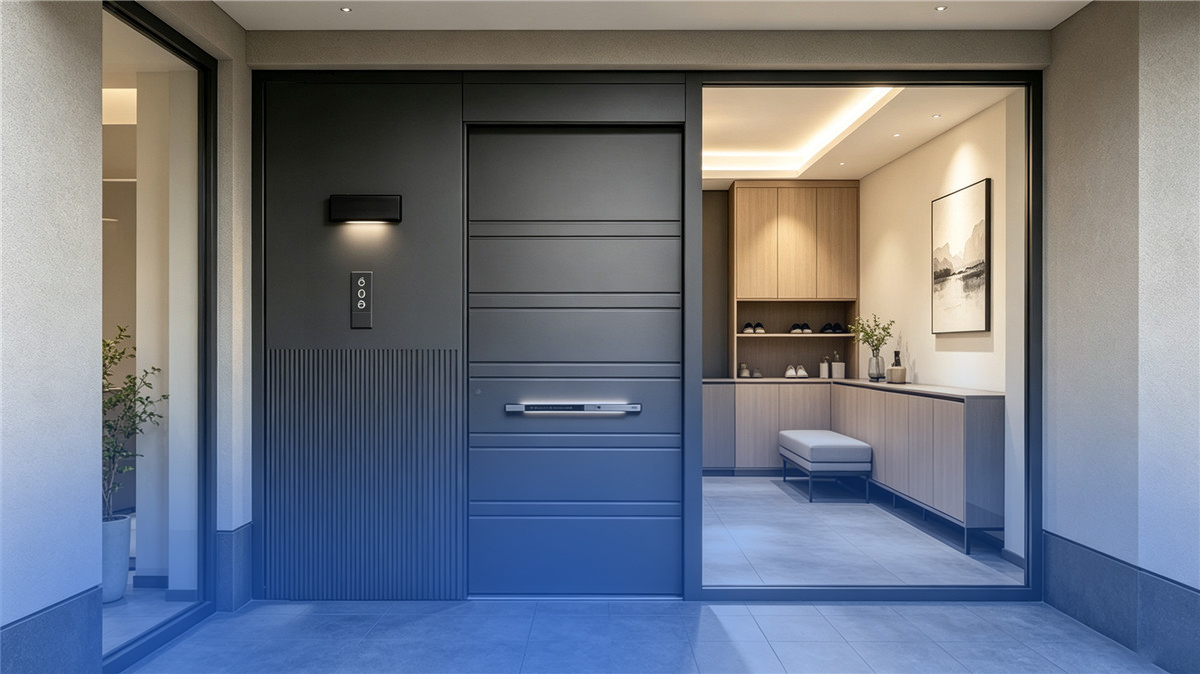
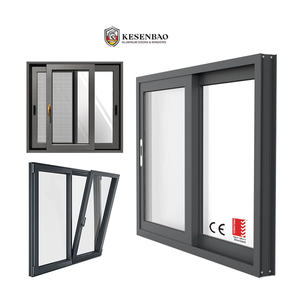
Engineered to international wind-pressure, thermal-insulation, and acoustic ratings. Every assembly is custom fabricated with precision 6063-T5/T6 alloy profiles, thermal multi-cavity polyamides, and multi-point security hardware.
Market Intelligence & Forecasting
Future Procurement Trends for Global Fenestration Buyers (2025–2030)
Global architectural standards are transitioning rapidly toward strict building enclosure decarbonization, climate resilience, and supply chain consolidation. International procurement leaders must adapt to three core structural shifts.
1. Whole-Life Carbon Accounting & Circular Billets
Institutional commercial projects in the EU, North America, and Australia now demand Environmental Product Declarations (EPDs). Procurement frameworks are actively penalizing primary coal-fired aluminum, mandating secondary scrap recycling (minimum 40% post-consumer content) and hydro-powered smelting to achieve strict embodied carbon thresholds without sacrificing tensile strength or anodizing consistency.
2. Passive House Thermal Metrics (U-Value < 0.8 W/m²K)
Traditional non-thermal or shallow thermal break profiles are facing widespread regulatory phase-outs. The standard baseline is shifting toward multi-chamber polyamide PA66 GF25 insulative strips exceeding 34mm, combined with triple-glazed warm-edge argon cavities and triple-EPDM continuous vulcanized co-extrusion weather-strips to arrest conductive, convective, and radiant heat exchange.
3. Complete Envelope Consolidation & BIM Pre-Assembly
Developers are steering away from fragmented component purchasing (extrusions, glass, sealants, and handles from disparate vendors). The industry trend favors Turnkey Engineering Contracts where certified manufacturers furnish modular shop drawings, full factory mock-up leak testing, pre-fitted multi-point hardware, and seaworthy timber-crate packing matched precisely to on-site crane scheduling.
Technical Benchmarks
Engineering Evolution: Legacy Aluminum vs. Next-Gen Fenestration Systems
Understanding the metallurgical, mechanical, and glass processing enhancements driving China’s premier export fenestration factories.
| Performance Dimension | First-Generation Legacy Systems | Next-Gen DERCHI Engineered Systems | Compliance & Verification Protocol |
|---|---|---|---|
| Alloy Metallurgy & Wall Spec | Recycled billet, unregulated wall thickness (1.0 - 1.2mm) | Virgin 6063-T5 / T6 structural alloy, 1.8mm – 3.0mm profiles | EN 755-9, GB/T 5237-2017, ASTM B221 |
| Thermal Insulation (U-Factor) | Non-thermal break or resin pour (Uw > 3.8 W/m²K) | Polyamide PA66 GF25 multi-cavity barrier (Uw 0.79 - 1.4 W/m²K) | NFRC 100/200, ISO 10077-1/2, Passive House |
| Structural Wind Load (Cyclonic) | Standard deflections, vulnerable to gusting (< 1500 Pa) | Heavy-gauge reinforcement mullions rated up to 4500–6000 Pa | AS2047 Serviceability/Ultimate (N6), ASTM E330 |
| Glazing Architecture | Single monolithic float or standard untreated IGU | Low-E tempered + laminated SGP structural interlayer with Argon | CE EN 12150, AS/NZS 2208, ANSI Z97.1 |
| Gasketing & Infiltration Sealing | PVC seals prone to UV degradation and shrinkage | Continuously vulcanized automotive-grade EPDM foam gaskets | AAMA 501.1, ASTM E283 Air & E331 Water (1000 Pa) |

Manufacturing Pedigree
Guangdong Dejiyoupin Doors & Windows Co., Ltd. (DERCHI)
Ranked consistently within the Top 10 premium window and door brands in China, DERCHI has maintained a specialized 25-year trajectory in high-end structural glazing, hurricane-proof fenestration, cast aluminum security entry doors, and expansive architectural pivot systems.
Operating across an integrated 180,000 ㎡ advanced production complex in Foshan, Guangdong, our facilities employ automated precision CNC profile processing centers, computerized double-head miter saws, robotic corner-crimping units, and rigorous multi-stage QA laboratories.
ISO 9001 Certified
CE European Conformity
AS2047 (N6 Cyclone Tested)
NFRC Thermal Rating
UL Fire-Rated Listings
For international general contractors, real estate developers, and commercial building material distributors, DERCHI provides an accountable single-source supply chain: CAD shop drawings, free structural calculations, consolidated sea freight packaging, and comprehensive remote technical engineering.
Custom CAD / BIM Support
Parametric 3D shop drawings and BIM object generation for seamless integration with architectural engineering plans.
Surface Treatment Purity
AkzoNobel & PPG fluorocarbon (PVDF) 3-coat spray finishing, Class 15 anodizing, and photorealistic thermal-transfer woodgrain.
Heavy-Duty Hardware Sourcing
Factory-integrated premium hardware including German Siegenia, Roto, Hoppe, and custom proprietary multi-point lock systems.
Export Reinforcement Crating
Heavy custom plywood cases with internal EPE foam cushioning and desiccant buffers for zero salt-fog damage during long voyages.
Climatic Engineering
Optimized Configurations for Diverse Global Microclimates
A window or door system must be metallurgically tailored to local ambient humidity, UV irradiation, and wind shear. We customize hardware and profile chemistry based on site topology.
Coastal Marine & Cyclonic Regions
Target Ports: Miami, Durban, Lagos, Sydney, Manila, Caribbean Basin.
Engineering Focus: Severe marine salt-spray and cyclonic gusting. Assemblies incorporate 316 stainless steel friction hinges and fasteners, Qualicoat Class 2 / PVDF fluorocarbon coatings resisting 3,000-hour acetic salt fog (AASS), heavy-duty structural mullions, and hurricane-rated laminated SGP glass interlayers.
Arid, High-UV & Desert Zones
Target Ports: Dubai, Riyadh, Cairo, Phoenix, Melbourne.
Engineering Focus: Intense solar infrared exposure and extreme diurnal temperature swings. Systems utilize multi-layer magnetron sputtering Low-E coatings with low Solar Heat Gain Coefficients (SHGC < 0.23), anti-dust multi-lip EPDM compression seals, and UV-stabilized polyamide strips preventing warping.
Sub-Zero & Continental Cold Climates
Target Ports: Vancouver, Hamburg, Oslo, Chicago, Harbin.
Engineering Focus: Severe conductive thermal loss and indoor condensation damage. Systems feature multi-cavity 39mm Technoform polyamide breaks, triple glazed units filled with 90% Argon gas, warm-edge composite spacers, and continuous multi-perimeter central gasket barriers.
B2B Purchasing Guidance
Frequently Asked Questions: Sourcing Windows & Doors from China
Expert answers addressing quality control, international compliance, custom shop drawings, logistics protection, and field installation support.
What are the key technical specifications required to obtain an accurate commercial quotation? ▼
To provide a factory-direct bill of quantities (BOQ) with precise pricing, our engineering department requires:
1. Architectural window and door schedule indicating structural rough opening dimensions (Width × Height in mm or inches).
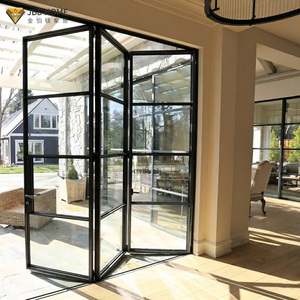
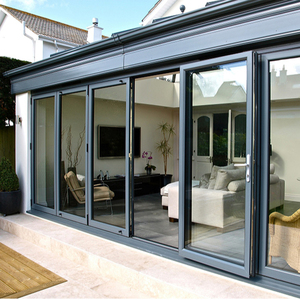
2. System operation typologies (e.g., tilt-turn, sliding lift, parallel casement, bi-fold, or pivot).
3. Glazing specifications (e.g., double 6mm + 12A + 6mm tempered, triple glazing, Low-E coating requirements, acoustic PVB or structural SGP laminated layers).
4. Surface finish and color criteria (RAL powder coating, anodized micrometer depth, or fluorocarbon PVDF).
5. Design wind pressure criteria (Pa) or specific compliance standards (AS2047, NFRC, CE EN 14351-1).
How does your factory ensure profile accuracy and air/water tightness on large volume orders? ▼
Our quality assurance program follows strict ISO 9001 guidelines across three distinct checkpoints:
Milling Precision: We utilize CNC automated dual-axis machining to maintain 45° and 90° miter cutting tolerances within ±0.2mm. Corner joints are injected with German two-component structural corner sealant and mechanically cold-crimped with heavy cast brackets.
Gasket Integration: We utilize continuous closed-loop vulcanized EPDM gaskets that eliminate corner-joint cuts, mitigating 98% of long-term air leakage vectors.
Chamber Testing: Random factory mockups undergo rigorous air infiltration (ASTM E283), static water penetration (ASTM E331 at up to 1000 Pa), and structural deflections under load before mass crating.
How are oversized pivot doors and bi-folding glass patio doors protected against transit damage during container sea shipping? ▼
Heavy architectural units face mechanical shock, harmonic vibration, and salty humidity during 20–45 day sea voyages. Our multi-layer export crating protocol includes:
1. Polyethylene protective wrap applied directly over all metal surfaces to prevent abrasion.
2. Corner shock-absorber boots engineered from high-density cellular foam.
3. Heavy fumigation-free solid plywood crates reinforced with internal timber braces and steel banding.
4. Internal silica-gel desiccant packs within moisture-sealed polybags to prevent oxidation and glass fogging during oceanic passage.
Can DERCHI support custom architectural shop drawings, calculation sheets, and local certification compliance? ▼
Yes. Our in-house technical team of over 60 structural and facade engineers generates complete CAD shop drawings, glass stress analysis calculations, and thermal transmittance simulation reports. We routinely provide documented evidence supporting local building inspectors, including CE Declaration of Performance (DoP), Australian AS2047 N6 test reports, and North American NFRC/AAMA listings.
What is the standard production lead time and minimum order quantity (MOQ) for custom project orders? ▼
Our standard manufacturing cycle is 25 to 35 business days following final sign-off on CAD shop drawings and glass specifications. For standard extrusion systems in classic RAL finishes (matte black, architectural bronze, deep gray), lead times can be optimized. We accommodate single-villa bespoke orders (no rigid container MOQ), but provide volume container tiering (FCL 20GP/40HQ) to maximize ocean freight efficiency for distributors and large developments.