Commercial Grade
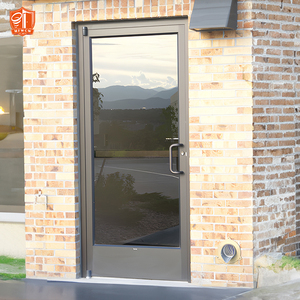
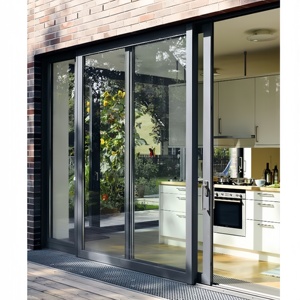
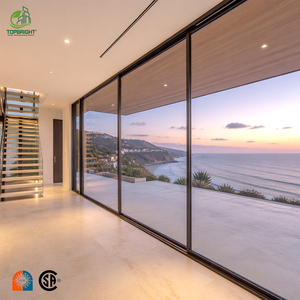
Precision-manufactured aluminum alloy systems rated for severe cyclonic wind loads, thermal dissipation control, acoustic isolation, and seamless transition between indoor and terrace environments.
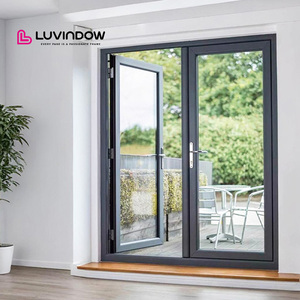
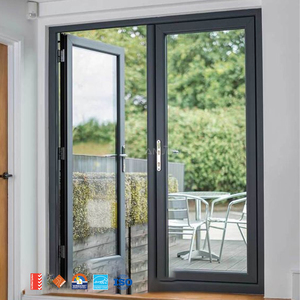
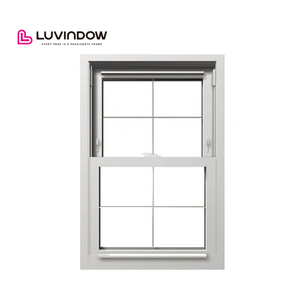
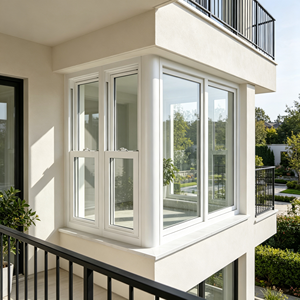

Recognised consistently among the Top 10 premium door and window manufacturers in China, Guangdong Dejiyoupin Doors and Windows Co., Ltd. (DERCHI) serves as a trusted Tier-1 exporter for monumental, commercial, and luxury residential projects globally.
Situated in the industrial heart of Shishan Town, Nanhai District, Foshan, our facility combines automated German-engineered CNC milling, multi-chamber extrusion processing, robotic sealant application, and calibrated assembly lines. With certified export compliance for demanding building environments—such as the cyclonic AS2047 standard in Australia, NFRC thermal metrics in North America, CE protocols in Europe, and UL fire classifications—we provide international real estate developers, structural engineers, and importers with verifiable structural integrity.
Every terrace profile undergoes rigorous deflection, wind-load resistance, air tightness, and water penetration assessments verified under CE, ISO9001, AS2047, and UL requirements.
Eliminate cross-supplier discrepancies. Source thermal break terrace doors, slim pocket stacking sliders, cast aluminum front portals, and curtain walling within single container logistics.
Our dedicated engineering team renders parametric CAD shop drawings, structural anchorage details, and threshold drainage layouts directly aligning with your architectural specifications.
Container loading optimization, specialized export crating, and marine-grade protective film ensure total transit safety whether discharging at Lagos, Durban, Sydney, or Long Beach.
A deep architectural dive into modern thermal barrier metallurgy, extreme weather envelope testing, and ultra-minimalist sightline mechanics driving exterior door engineering.
Early generation aluminum doors acted as thermal conduits, transferring outside heat or cold directly into residential interiors. Modern systems incorporate 24mm to 34mm multi-chambered polyamide (PA66 GF25) thermal insulation strips reinforced with 25% glass fiber. This isolates structural extrusions, dramatically reducing U-values to below 1.4 W/m²K, eliminating condensation risks in humid coastal climates and reducing HVAC thermal losses.
Terrace and veranda entrances face severe environmental pressure differences during extreme storms. Chinese precision manufacturers have engineered heavy-duty wall profiles (2.0mm to 3.0mm primary structural thickness) combined with SGP (SentryGlas®) laminated safety glass. When subjected to large missile impact tests and cyclic wind load sequences up to +4500Pa/-4500Pa, these systems ensure building envelope integrity without catastrophic mechanical failure.
Architectural demand has shifted decisively toward seamless indoor-outdoor floor transitions. Traditional raised tracks are being replaced with sunken, zero-barrier subterranean drainage profiles equipped with integrated water collector trays. Coupled with fully concealed 3D adjustable pivot hinges and multi-point perimeter compression gearboxes, terrace doors achieve high air and water tightness ratings while maintaining clean sightlines.
Evaluating shifting specifications across North American, European, Australian, and emerging African commercial residential markets.
Procurement directors across the EU and North America increasingly require Environmental Product Declarations (EPD). Modern exporters utilize primary aluminum billets processed with renewable hydropower or recycled aluminum scrap (>40%), guaranteeing traceability and avoiding cross-border carbon border tariffs.
Coastal real estate developments demand specialized coatings to resist accelerated saline atmospheric corrosion. Buyers are abandoning standard architectural powder coatings in favor of AAMA 2605-compliant PVDF fluorocarbon coatings or marine-grade hard anodizing resistant to 3,000+ hours of continuous salt spray testing.
Luxury high-rise penthouses and villa projects require motorized terrace doors interfaced with centralized Building Management Systems (BMS). Hidden low-noise linear drives, biometric recognition access, wind-and-rain sensors, and electromagnetic interlocking mechanisms are becoming baseline RFP requirements.
Direct technical clarification on structural engineering, testing compliance, logistics packing, and cross-border project execution.
