B2B Engineering & Global OEM/ODM Procurement White Paper

China Top Aluminum Kitchen Windows Factories & Suppliers

Technical Fenestration Guide for Commercial Contractors, Developers, and Importers: Grease Resistance, Multi-Point Air Sealing, and High-Volume Manufacturing Standards

180,000 ㎡
Foshan Mega Production Facility
25+ Years
Architectural Precision Engineering
100+ Patents
Thermal Break & Acoustic R&D
NFRC · AS2047
CE, ISO9001 & UL Fire Compliance
Factory Direct Fenestration Systems

Engineered Aluminum Kitchen Windows & Architectural Openings

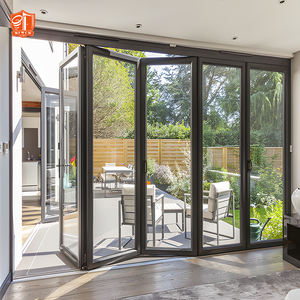
From gas-strut serveries and tilt-turn systems to high-exposure patio dividers, our 8 core architectural systems offer hermetic grease sealing, structural wind-load performance, and seamless interior-exterior transition.
Engineering White Paper

Technical Fenestration Requirements for Kitchen Environments

Kitchen fenestration demands rigorous thermal and chemical engineering. Chinese manufacturing hubs have evolved from rudimentary extrusions to high-performance, multi-chambered, grease-impermeable systems designed for heavy residential and hospitality use.

Vapor & Grease Hermetic Sealing

Standard PVC or low-grade rubber gaskets degrade and harden rapidly when exposed to cooking oil aerosols and hot vapor. Industrial-grade kitchen windows mandate vulcanized cellular EPDM or continuous silicone perimeter gaskets with zero plasticizer migration.

  • ASTM D395 Compression Set < 20%
  • Hydrocarbon and oleic acid resistance
  • Triple-stage rebate drainage paths

Condensation & Thermal Bridging

High localized humidity from induction ranges and convection ovens causes immediate glass sweating if the thermal break is inadequate. Multi-cavity polyamide (PA66 GF25) thermal struts eliminate condensation runoff behind backsplashes.

  • U-frame values as low as 1.4 W/(m²·K)
  • Warm-edge composite spacer bars (Swisspacer)
  • Argon gas fills preventing internal fogging

Gas-Strut Servery & Flush Opening

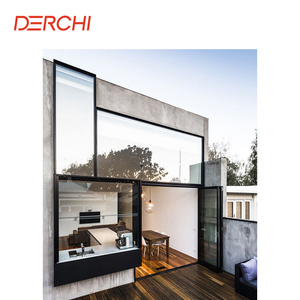
Modern kitchen layouts integrate outdoor barbecue and patio zones via upward-opening gas-strut awning serveries. Precision pneumatic dampening allows 90-degree zero-obstruction clearance for effortless pass-through catering.

  • 316 Marine-grade stainless gas cylinders
  • 50,000+ cycle fatigue longevity test
  • Flush sill profiles with hidden sub-drainage

Kitchen Fenestration Configuration Matrix: Comparative Performance Parameters

Window Architecture Type Ventilation Efficiency Air Infiltration (ASTM E283) Water Resistance (Pa) Ease of Grease Cleaning Recommended Kitchen Zone
Gas-Strut Servery Window 100% Full Aperture < 0.1 m³/(h·m) 600 Pa (Static) Excellent (Zero Sill Track) Island Bar / Patio Pass-Through
German Tilt & Turn (Inward) Dual Action (Micro + Tilt) < 0.05 m³/(h·m) 900 Pa (Heavy Storm) Easy (Accessible Outer Pane) Prep Counters / High-Wind Facades
Thermal Break Casement (Outward) 85% Catchment Angle < 0.08 m³/(h·m) 700 Pa Moderate (Rebate Access) Direct Over-Sink Locations
Slim-Frame Lift & Slide 50% Continuous Slide < 0.15 m³/(h·m) 450 Pa Good (Removable Guide) Large Kitchen Dining Extensions
Industry Intelligence & Market Outlook

Future Procurement & Product Development Trends

Global building codes, LEED v4.1 mandates, and lifestyle changes are reshaping how architects specify kitchen apertures. Chinese Tier-1 suppliers are at the forefront of these transitions.

Aerial view of Guangdong Dejiyoupin DERCHI 180,000 sqm production facility
Accredited testing partner certifications including CE, AS2047, ISO9001 and NFRC
Enterprise Benchmark

Guangdong Dejiyoupin Doors & Windows Co., Ltd. (DERCHI)

Consistently recognized among the Top 10 premium window and door manufacturers in China, Guangdong Dejiyoupin Doors and Windows Co., Ltd. provides international developers, wholesalers, and general contractors with industrial fabrication reliability.

Our Shishan Town, Foshan production headquarters consolidates German 5-axis CNC profile machining centers, automated robotic corner crimping, and computerized insulated glass production lines, ensuring tolerances within ±0.5mm across complex multi-unit orders.

180,000 ㎡ Mega Industrial Base
600+ Skilled Technicians & Staff
Certified AS2047, NFRC & CE Testing
Dedicated International CAD Shop Drawings
Custom Sea Crate Packaging
Full Container Consolidation Support
Procurement & Engineering FAQ

Frequently Asked Questions by Commercial Buyers

Direct, technical answers addressing the critical legal, logistical, thermal, and mechanical concerns of international specifiers sourcing from China.

1. How do top Chinese factories ensure kitchen window frames do not discolor or peel from cooking grease and heat? +
Top manufacturers like DERCHI utilize automated pre-treatment baths (degreasing, acid etching, and chrome-free passivation) followed by electrostatic fluorocarbon (PVDF) or Qualicoat Class 2 powder coating baked at 200°C. This molecularly fuses the pigment to the 6063-T6 aluminum extrusion. When subjected to fatty acids, steam, boiling grease splatters, and alkaline kitchen cleaners, the finish maintains adhesion (cross-hatch classification 0) and color stability (Delta E < 1.0 after 3,000 hours of accelerated weathering test).
2. What is the standard export lead time and packaging protocol for preventing container glass breakage? +
Standard lead times for custom-engineered architectural orders are 25 to 35 business days following final CAD shop drawing sign-off and deposit receipt. For export safety on transoceanic routes, fenestration products undergo five-tier protection: (1) low-tack protective film over aluminum profiles, (2) corner caps on frame junctions, (3) waterproof bubble poly-wrap, (4) honeycomb card buffers, and (5) fully enclosed, ISPM-15 certified heat-treated plywood crates with built-in forklift skids and internal shock-dampening rubber shims.
3. How does thermal break thickness affect condensation behind high-humidity induction cooktops? +
Kitchen cooking generates localized Relative Humidity (RH) often exceeding 75% at temperatures between 22°C to 28°C. Under these conditions, the indoor dew point sits at approximately 18°C. If non-thermal or narrow thermal breaks (e.g., 14.8mm) are used during cold outdoor ambient temperatures, the interior surface of the profile drops below the dew point, producing condensation that drips into counter joints. Tier-1 Chinese suppliers engineer 24mm to 34mm multi-chambered fiberglass-reinforced polyamide (PA66 GF25) strips, elevating the Temperature Factor (fRsi) above 0.70 to prevent sweating and mold growth.
4. Can custom window hardware integrate with regional certifications (NFRC, AS2047, CE)? +
Yes. Leading Chinese manufacturers engineer their profile dies around internationally compliant euro-groove standards. This allows flexibility to integrate original German hardware (Roto, Siegenia, Hoppe) or proprietary heavy-duty multi-point locking gear tested to meet Australian AS2047 (N6 wind speed ratings), American NFRC/AAMA/WDMA, and European CE standards. Third-party testing documentation (e.g., Intertek, TÜV Rheinland) can be furnished during tender submission.
5. What minimum order quantity (MOQ) and customization parameters are standard for project orders? +
For standard anodized and powder-coated architectural schedules, MOQs are flexible, typically starting from a single 20GP container (or 50 square meters for boutique villa projects). Full customization is standard: exact opening dimensions down to 1mm increments, frame profile depths from 65mm to 120mm, custom glass build-ups (e.g., 6mm Low-E + 12Ar + 6mm Clear tempered, acoustic laminated PVB), insect screen integration (304 stainless diamond mesh or pleated retractable systems), and customized mullion placements.
Direct Factory Support

Request an Engineering Quotation & Complete CAD Schedule

Connect with Guangdong Dejiyoupin's dedicated technical fenestration team. Send your architectural drawings, window schedules, or structural wind load criteria to receive itemized DDP/CIF/FOB proposals within 24 hours.