Villa Accordion
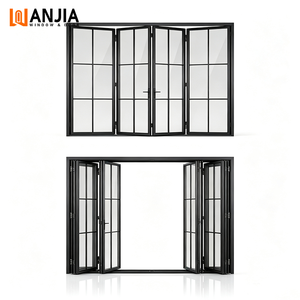
American Standard Grill Design Villa Accordion Folding Door
Heavy Load Rollers
SDL Grill Inserts
Flush Sill Threshold
Precision fabricated from aircraft-grade 6063-T5 aluminum alloys, our fenestration portfolio incorporates thermal barrier technology, German-engineered multi-point locking systems, and heavy-duty structural glazing compliant with North American and European codes.
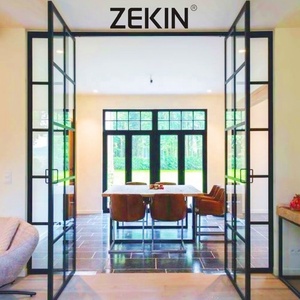
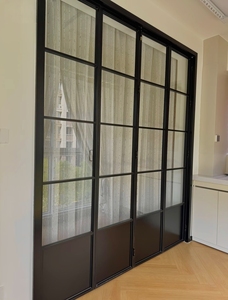
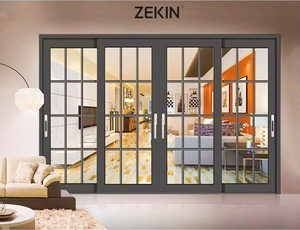
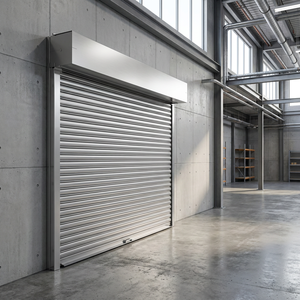
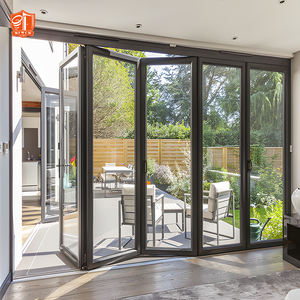
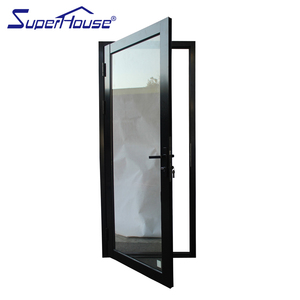
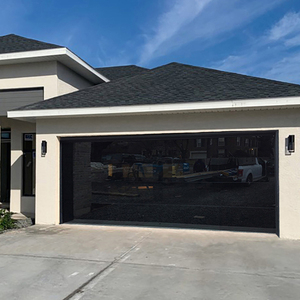
Ranked among the top architectural fenestration and entrance door manufacturers in Southern China, DERCHI operates an integrated manufacturing ecosystem spanning 180,000 square meters. Our facility merges automated profile extrusion finishing, CNC corner-crimping precision, and automated insulated glazing assembly lines.
For international contractors, developers, and wholesale distributors, sourcing aluminum alloy windows and doors from China demands more than low unit costs. It mandates strict structural adherence, documented metallurgical traceability of virgin 6063-T5 aluminum ingots, certified EPDM triple-sealing assemblies, and hardware durability cycles exceeding 100,000 operations.

Comparing standard commercial profiles with DERCHI export-grade thermal break systems engineered for extreme coastal humidity, desert heat, and cyclonic hurricane belts.
| Performance Attribute | Standard Commercial Grade | DERCHI Engineered Export Standard | Testing Standard / Target Code |
|---|---|---|---|
| Alloy Composition | Recycled / Secondary 6063 Aluminum | Primary Virgin Billet 6063-T5 / 6063-T6 (Wall: 1.8mm - 3.0mm) | ASTM B221 / GB 5237.1 High Precision |
| Thermal Barrier Core | None or PVC Insulating Strip | German Technoform PA66 GF25 Polyamide Thermal Break | DIN 16941 / ASTM C518 (U-value down to 1.1 W/m²K) |
| Surface Protective Coating | Ordinary Powder Coating (40-50μm) | AkzoNobel / PPG PVDF Fluorocarbon & Qualicoat Class 2 (70-90μm) | AAMA 2605 / 20-Year Coastal Salt-Spray Pass |
| Impact / Wind Load Deflection | Standard 1200 - 1800 Pa Design | Cyclonic Rating up to 4500 Pa (N6 Cyclonic Zone Compliant) | AS 2047 / ASTM E330 / Miami-Dade TAS 201/202/203 |
| Glazing Architecture | Single 5mm / Clear Float Glass | Double/Triple Tempered Low-E + Argon Gas + Warm-Edge Spacer | IGCC / SGCC / EN 12150 / ASTM C1048 |
| Acoustic Attenuation (STC) | STC 25 - 28 dB | STC 38 - 44 dB (Acoustic PVB / SGP Laminated Configuration) | ASTM E90 / ISO 717-1 |
| Export Logistics Packaging | Single bubble wrap layer | 5-Layer Polyethylene + Fumigated Plywood Crate + Steel Banding | ISPM-15 Certified Ocean Containerized Protection |
Global fenestration supply chains are shifting toward decarbonized manufacturing, rigorous energy auditing, and standardized pre-assembly delivery formats.
Across North America, the European Union, and Australasia, updated energy conservation ordinances (such as IECC 2024 and Title 24) are mandating fenestration U-factors below 0.28 BTU/(h·ft²·°F) (1.6 W/m²K). Future B2B window procurement is decisively moving toward multi-chambered thermal break cavities filled with aerogel or polyurethane foam, coupled with triple-glazed units utilizing double silver and triple silver Low-Emissivity coatings. Buyers are auditing Environmental Product Declarations (EPD) to ensure the embodied carbon of aluminum extrusions is mitigated via hydro-powered green smelting.
Climate unpredictability has transformed impact-resistance from a localized Florida or Caribbean requirement into a worldwide procurement prerequisite. Specifiers are demanding doors and windows certified under ASTM E1886/E1996 or Australia AS1170.2 cyclonic debris benchmarks. The adoption of SentryGlas (SGP) structural interlayers over standard PVB prevents delamination and membrane puncture during sustained category 5 hurricane wind reversals. Moreover, marine-grade fluorocarbon (PVDF) 3-coat finishes meeting AAMA 2605 are becoming non-negotiable for coastal development zones.
Modern luxury residential and commercial architecture prioritizes visual transparency and daylight penetration. The architectural trend is driving the demise of bulky 100mm sash profiles in favor of concealed sash casements and panoramic motorized sliding walls with interlock stiles narrow as 20mm to 25mm. Achieving this without sacrificing wind-load rigidity requires structural glazing techniques where structural silicone structurally bonds the insulated glass unit (IGU) directly to the aluminum sash, enabling glass panels weighing over 500kg to glide effortlessly.
Institutional developers and EPC contractors are progressively abandoning the fragmented model of purchasing windows from one supplier, entrance gates from another, and interior bi-folds from a third. Consolidating orders under DERCHI guarantees uniform surface powder coat color matching, streamlined container volumetric cubic capacity (CBM) utilization, uniform hardware keying systems, and a singular warranty liability point. Sourcing full villa door and window schedules under one roof reduces total project landed costs by 18% to 27%.
Commercial and high-end residential fenestration increasingly integrates low-voltage brushless DC actuators, hidden chain winders, and electromagnetic multi-point latching systems. These components seamlessly communicate with central Building Management Systems (BMS), KNX, or smart home platforms (Zigbee / Matter). Windows and roller shutters automatically respond to interior CO₂ monitors, exterior anemometers, rain sensors, and solar radiation thresholds to optimize passive ventilation and cooling loads.
B2B purchasers now require verifiable mill test certificates (MTC) proving aluminum alloy chemical purity and tensile yield strength before contract signing. Concurrently, architects demand Revit and ArchiCAD BIM libraries detailing exact thermal bridge parameters, wall anchoring details, and water drainage paths. DERCHI provides comprehensive 3D CAD shop drawing submittals and full technical files for every customized opening prior to production sign-off.
Our aluminum alloy window and door systems undergo third-party laboratory evaluations across four continents. Whether submitting engineering files to municipal building inspectors in Florida, certifying structural safety in Sydney under AS2047, or clearing European Union CE declarations of performance, our technical dossier eliminates regulatory import friction.
We actively assist importers with pre-shipment inspection certifications including SONCAP for Nigeria, KEBS PVoC for Kenya, SASO for Saudi Arabia, and NRCS compliance for Southern Africa.
Get Catalog
Direct, technically rigorous answers addressing factory audits, international compliance, lead times, glass specifications, and freight risk mitigation.
DERCHI extrudes strictly from virgin 6063-T5 or 6063-T6 aluminum billets, never secondary scrap alloys. Profile wall thicknesses strictly comply with national and international structural codes: 1.4mm to 1.8mm for standard residential casements and tilt-and-turn windows, and 2.0mm to 3.0mm for heavy-duty commercial sliding patio doors, folding partitions, and curtain wall mullions to resist severe cyclonic wind loads.
For installations within 5 miles of coastal shorelines (e.g., Caribbean, Florida, West Africa, Australasia), we specify high-durability fluorocarbon (PVDF) 3-coat finishes or Qualicoat Class 2 / Class 3 certified powder coatings with a minimum dry film thickness of 75-85 microns. All assembly screws, corner brackets, and hinges are fabricated from marine-grade 304 or 316 stainless steel to eliminate galvanic electrolytic corrosion.
Yes. Our product configurations have passed independent laboratory tests for key international criteria: AS2047 (reaching the maximum N6 cyclonic structural rating for Australia), NFRC thermal performance ratings (SHGC and U-factor), Florida Building Code (FBC) / Miami-Dade NOA hurricane impact protocols (TAS 201, 202, 203), and European CE marking under EN 14351-1. Complete test reports are provided for consultant submittals.
Our standard production cycle is 25 to 35 business days following final CAD shop drawing sign-off and color chip approval. For standard profile colors (e.g., Matt Black, Architectural White, Dark Bronze), our MOQ is flexible—we accommodate custom residential villa schedules starting from 30 m² up to multi-container 10,000 m² commercial tower contracts.
Every fenestration unit undergoes a 5-step industrial export packaging protocol: protective scratch-resistant film on profiles, protective corner edge buffers, dense EPE foam wrapping, and crating inside heavy-duty, fumigated ISPM-15 compliant plywood crates. For oversized glass lites, we utilize internal steel A-frame racks secured with high-tensile polyester strapping within the container.
Yes. Our in-house facade engineering department employs over 20 CAD and BIM technicians. Upon receipt of your architectural window schedules or rough opening dimensions, we generate comprehensive 2D CAD elevation plans, horizontal/vertical cross-section connection details, structural anchoring points, and water drainage channel diagrams for review prior to tooling.
