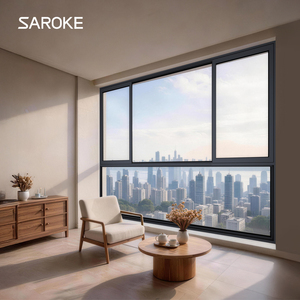
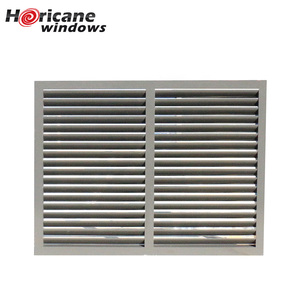
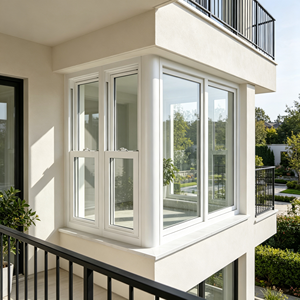
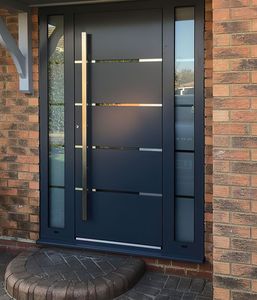
China Top Aluminium Sliding Window Factories & Exporters
A technical evaluation of precision profile extrusion, thermal break barrier engineering, hurricane-impact durability, and supply-chain logistics for global developers and architectural contractors.
Factory-Engineered Showcase
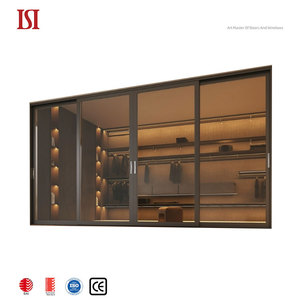
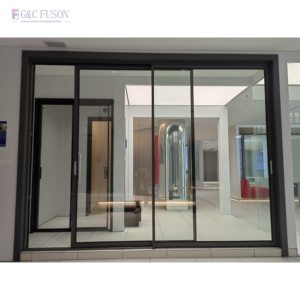
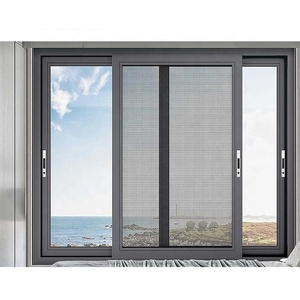
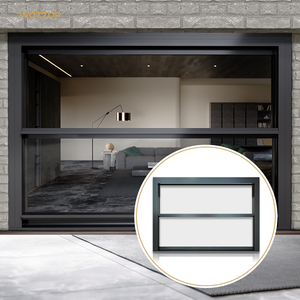
Featured Commercial & Architectural Fenestration Systems
Manufactured within Foshan's premier production facility utilizing primary 6063-T5/T6 alloy billets, precision CNC fabrication, and high-performance multi-point sliding hardware certified to European and North American building codes.
Integrated extrusion, CNC machining, automated anodizing, and testing center in Foshan.
600+
Technical Workforce
Dedicated fenestration engineers, facade structural draftsmen, and certified master builders.
100+
Global Certifications
CE, ISO9001, AS2047 (N6 Cyclone Tested), AAMA/WDMA, and UL Fire-Rated assemblies.
80+
Export Destined Ports
Regular container departures to North America, Australia, Europe, the Middle East, and Africa.
China Top Aluminium Sliding Window Factories & Exporters: The Engineering Benchmark
The international specification of aluminium sliding window systems has moved dramatically beyond fundamental aesthetic framing. Modern facade engineers, commercial project developers, and institutional general contractors now evaluate Chinese manufacturing partners through a stringent matrix of mechanical load capacity, thermal barrier continuity, acoustic damping, and verifiable metallurgical purity. As the global epicenter of extrusion fabrication, China—particularly the industrial cluster of Guangdong (Foshan)—commands over 60% of the world's high-tier architectural fenestration processing capability.
However, selecting a premier export manufacturer requires discerning between standard domestic profile fabricators and specialized, export-compliant OEM/ODM enterprises. Tier-1 Chinese exporters like Guangdong Dejiyoupin Doors and Windows Co., Ltd. (DERCHI) operate with fully integrated production ecosystems. This vertical integration spans raw billet casting using virgin A00 ingot alloys, dual-step precision CNC extrusion, computerized electrophoretic deposition, and structural assembly lines validated under international QA/QC testing regimes.
Comparative Performance Matrix: Architectural Sliding Systems
The table below demonstrates the engineering parameters differentiating standard export configurations from Tier-1 structural architectural sliding window systems engineered for commercial high-rises and luxury residential applications:
Vulcanized EPDM Triple Gaskets + Co-extruded Silicone Fins
ISO 3934 / ASTM C864
Surface Finish Standard
Standard Electrostatic Powder (60μm)
PVDF Fluorocarbon (AAMA 2605, 3-Coat) or 25μm Hard Anodized
Qualicoat Class 2 / AAMA 2605
Structural Wind Load (Uls)
1500 Pa to 2000 Pa
Up to 4500 Pa – 5500 Pa (Category 5 Hurricane / Cyclonic N6)
AS4055 / ASTM E330 / TAS 202
Metallurgical Excellence: The 6063-T5/T6 Structural Foundation
Structural integrity starts at the atomic level. Substandard manufacturers frequently introduce re-melted post-consumer aluminium scrap contaminated with iron, zinc, and lead inclusions. This creates micro-porosity, reducing tensile strength and resulting in catastrophic failure during high-wind deflection or long-term fatigue cycles. Tier-1 Foshan manufacturing hubs maintain spectrometer-verified traceability, ensuring that silicon (0.2–0.6%) and magnesium (0.45–0.9%) ratios remain strictly controlled. Once quenched and artificial-aged to T5 or T6 hardness (Webster Hardness ≥ 12–15), the resulting structural framing exhibits tensile yield strengths surpassing 215 MPa.
R&D Horizons
Engineering & Product Development Trends
Technological advancements that are redefining fenestration manufacturing standards across Chinese export facilities.
Isobaric Drainage & High-Water Tightness
Traditional sliding window tracks rely on open weepers that backflow under negative pressure. Next-generation designs integrate independent pressure equalization chambers with concealed vertical non-return flaps, achieving water penetration resistance up to 700 Pa.
Pressure-equalized stepped sill construction
Magnetic downward sealing under deadload
Zero-ponding track layout for driving coastal rain
Minimalist Frames & Ultra-Slim Sightlines
Architectural demand for seamless visual transitions has driven the interlock sightline down from 80mm to an ultra-narrow 18mm–26mm, without compromising moment of inertia (Ix/Iy) via concealed internal carbon-fiber/steel stiffeners.
Concealed frame jamb embedded in finished plaster
Continuous floor-to-ceiling perimeter integration
Heavy-duty tandem needle rollers (up to 400kg/sash)
Advanced Acoustic Attenuation (STC 40+)
Urban development near airports, rail corridors, and arterial highways demands rigorous decibel abatement. Multi-chamber framing paired with asymmetrical acoustic PVB or acoustic EVA laminated IGUs mitigates mid-to-low-frequency resonance peaks.
How international developers, architects, and supply chain directors are navigating Chinese fenestration procurement to reduce landed costs and project lead times.
Trend 01
Pre-Engineered CKD vs. Pre-Glazed Units
To counter escalating maritime container rates, mega-projects increasingly utilize Complete Knock-Down (CKD) kits with pre-machined corner cleats, doubling container cubic utilization while assembling glass locally.
Trend 02
Digital BIM & Revit Integration
Top Chinese exporters now supply native Revit and IFC families with parametric dynamic sizing, exact thermal transmittances (U-Factor, SHGC), and structural anchors mapped to project building envelopes.
Trend 03
ESG & Carbon Footprint Auditing
European CBAM (Carbon Border Adjustment Mechanism) and LEED certification demand green aluminium extruded via hydroelectric or renewable power, accompanied by verified Environmental Product Declarations (EPD).
Trend 04
Direct Mill Quality Inspections via VR
Remote mill certification via calibrated 3D VR audits and live-streamed hydrostatic/air-infiltration laboratory testing has replaced costly intercontinental factory travel during technical approval phases.
Factory Authority & Infrastructure
Guangdong Dejiyoupin: The Manufacturing Benchmark
Headquartered in Shishan Town, Nanhai District, Foshan—the heart of China's aluminium industrial cluster—Guangdong Dejiyoupin Doors and Windows Co., Ltd. (DERCHI) delivers end-to-end technical accountability.
180,000㎡ Mega Production Base
Equipped with 12 high-tonnage automated extrusion presses, German 5-axis CNC routing machining centers, and an automated vertical powder coating plant guaranteeing flawless surface finishes.
Rigorous International Testing Lab
In-house hydrostatic testing chamber, salt-spray corrosion chamber, cyclic mechanical fatigue tester, and wind-load deflection wall measuring compliance up to AS2047 N6 and ASTM E1886/1996.
100+ Patents & Global Compliance
Extensive intellectual property portfolio in multi-point security mechanisms, water baffle drainage valves, and hurricane impact interlocks certified under CE, ISO9001, AS2047, and UL fire standards.
Tailored Engineering Shop Drawings
Bilingual facade engineering team generates free DWG/BIM shop drawings, wind load calculations, deflection simulations, and thermal boundary models before production sign-off.
Standard export packaging utilizes fully fumigated non-coniferous plywood crates, desiccant bags, corner buffer guards, and protective surface shrink-wrap. We handle FOB Chinese ports, CIF global destinations, or full DDP logistics handling customs clearance for global building contractors.
Technical Clarifications
B2B Procurement Frequently Asked Questions
In-depth answers addressing structural engineering, commercial terms, compliance validation, and international shipping protocols.
What specific alloy composition and temper should be requested for coastal or cyclonic regions?
+
For structural fenestration installed in coastal, high-wind, or cyclonic zones (such as Florida, the Caribbean, coastal Australia, or coastal Africa), you should specify 6063-T6 or 6061-T6 primary alloy. The T6 temper achieves superior tensile strength (≥215 MPa) compared to standard T5 (≥160 MPa). Furthermore, ensure the factory specifies an anodized surface film thickness of at least Class 20 (≥20μm) or a 3-coat PVDF fluorocarbon coating complying with AAMA 2605 to prevent filiform corrosion caused by airborne marine chlorides.
How do Chinese aluminium sliding window factories verify compliance with AS2047, NFRC, or CE standards?
+
Legitimate tier-1 manufacturers conduct dual testing: initial in-house indicative testing followed by formal type-testing witnessed and accredited by international certification bodies. For Australia (AS2047), testing must occur via an independent NATA-accredited laboratory for deflection (AS4055), operating force, air infiltration (AS4420.4), water penetration resistance (AS4420.5), and ultimate strength (AS4420.6). For North America, NFRC simulation reports (THERM and WINDOW 7.4) and AAMA/WDMA/CSA 101/I.S.2/A440 laboratory physical reports must be certified. DERCHI maintains current test reports and factory production control audits available for structural engineer review.
What is the difference between Polyamide PA66 GF25 thermal breaks and poured polyurethane (Pour-and-Debridge)?
+
Polyamide 6.6 with 25% glass fiber (PA66 GF25) is an engineered composite strip mechanically knurled and crimped into dual aluminium profile extrusions. It matches the thermal expansion coefficient of aluminium (2.3 × 10⁻⁵ K⁻¹), preventing shear failure, delamination, and warping during intense solar heat gain. Poured polyurethane (Pour & Debridge) is a liquid resin poured into a single extrusion channel and milled away. While cost-effective, resin-filled profiles exhibit inferior long-term structural shear resistance under cyclical dynamic wind loads and are less reliable for large commercial sliding glass spans exceeding 2.8 meters in height.
How do you prevent water leakage during typhoons and heavy driving rain on horizontal sliding tracks?
+
Horizontal sliding windows are inherently vulnerable to track head-loss. High-performance Chinese systems address this through a stepped, pressure-equalized track geometry. The outer track sits lower than the inner track, isolated with a sloped sub-sill. Drainage drainage pathways feature concealed EPDM gravity check valves (weep hole covers) that open under the head pressure of draining water but seal shut against exterior positive wind pressure, preventing reverse water siphoning under wind loads up to 700 Pa.
What are the typical commercial production lead times and Minimum Order Quantities (MOQ)?
+
For standard catalog profiles in stock finishes (Matte Black, Architectural White, Charcoal Grey, Clear Anodized), the MOQ is typically 50 m², with production running 20 to 25 calendar days post shop drawing sign-off. For fully bespoke dies (custom architectural extrusion shapes), die creation and sample extrusion take 12–15 days, with bulk production requiring 30–35 days. For full container load (FCL) orders (20GP or 40HQ), custom colors and custom glass buildups (e.g., SGP hurricane interlayer, selective Low-E coatings) are fully accommodated.
How are sliding windows protected against mechanical damage, glass breakage, and moisture during maritime shipping?
+
Export packaging follows a 4-tier protective regime: 1) Adhesive anti-scratch PE film across all visible aluminium faces; 2) Molded hard-rubber or high-density foam protectors on all 90-degree frame corners; 3) Heavy gauge thermal-shrink wrap surrounding the frame and glazing to repel moisture; 4) Encapsulation in bespoke, heavy-duty fumigated plywood crates with internal timber dunnage preventing movement. Crates are loaded via fork-slots and braced with nylon ratchet straps inside shipping containers to endure severe ocean transit vibrations.
Accelerate Your Project with Factory-Direct Engineering
Submit your architectural elevations, window schedules, or structural tenders. Our engineering team will supply free DWG CAD shop drawings, structural wind load calculations, thermal performance simulations, and competitive CIF container pricing within 24 hours.