Engineered Aluminium & Composite Fenestration Systems
Precision-milled structural profiles, advanced fiber core insulation, and marine-grade protective coatings designed to withstand severe thermal expansion, hurricane shear loads, and high-saline coastal degradation.
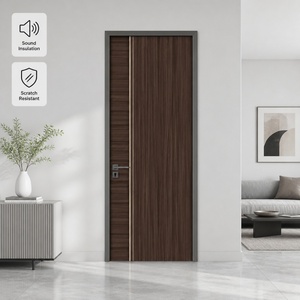 Acoustic & Fire Shield
Custom Aluminum Clad Wood Doors Waterproof Fireproof & Soundproof Composite Panel
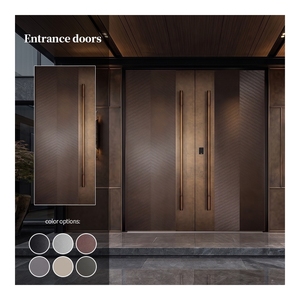 Biometric High-Security
Modern Aluminum Entry Door Bronze Textured Double Door with Fingerprint Smart Lock
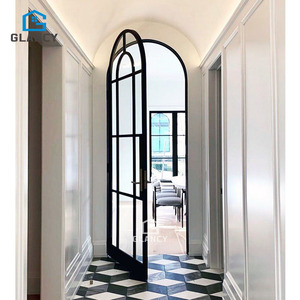 CE Certified Arch
French Exterior Entry Modern Glass Arch CE Certified Powder Coated Insulated Aluminium Door
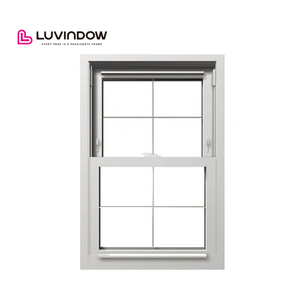 Integrated Fenestration
Modern Design Top Hung Aluminium Window With Security Multi-Latch & Micro Fly Screen
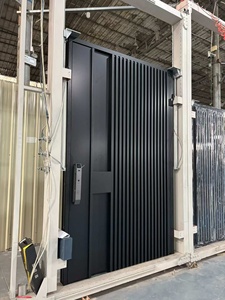 Contemporary Pivot
Architectural Aluminum Front Entry Door With Oversized Tempered Glass Insertion
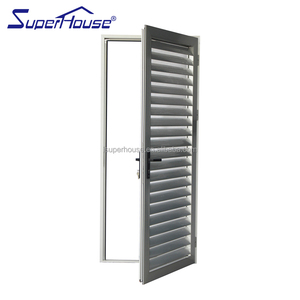 Engineered Louver
Exterior Aluminium Aerodynamic Louver Swing Door for Mechanical & Utility Ventilation
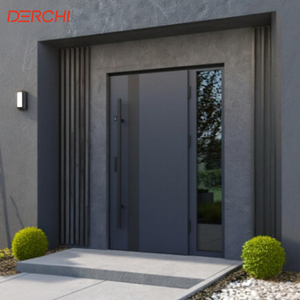 Heavy-Duty Security
Custom Sized Heavy-Duty Aluminum Entrance Door For Luxury Villas & Commercial Facades
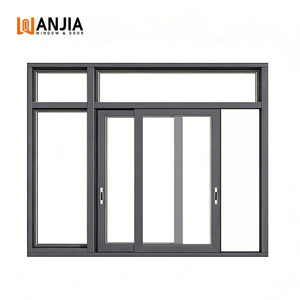 Hurricane Impact Rated
Hurricane Impact Resistance Sliding System With Interlocking Thermal Bar & SentryGlas
Material Science: The Engineering Shift to Aluminium Fibre Composite Systems
Why modern architectural envelopes are abandoning unreinforced timber, mono-metallic extrusions, and standard PVC in favor of multi-phase composite matrix door systems.
Zero-Deflection Multi-Core Integrity
Structural sandwich engineering incorporating continuous filament glass/carbon fiber sheets sandwiched between polyisocyanurate (PIR) cores and structural aluminum cladding prevents sag and bowing up to door heights of 4.5 meters.
- Flexural Modulus exceeding 14,000 MPa
- No hinge bind during extreme solar heating cycles
- Inherent acoustic attenuation exceeding STC 42
Hermetic Hydro & Air Sealing
Triple-barrier continuous EPDM synthetic rubber and vulcanized Santoprene co-extruded gaskets ensure airtightness meeting Class 4 (EN 12207) and water resistance over 1050 Pa (EN 12208).
- Zero perimeter draft or airborne sand infiltration
- Concealed drainage channels prevent splay splashback
- Thermal break threshold profiles prevent sweating
C4 & C5 Marine-Grade Surface Treatment
State-of-the-art horizontal and vertical electrostatic powder coating using certified AkzoNobel Interpon D2525 fluorocarbon PVDF systems guarantees colorfastness and anti-corrosion survival over 30 years.
- Over 3,000 hours of neutral salt spray testing (ASTM B117)
- Resistance to hyper-saline maritime air and UV radiation
- High-definition 3D textured wood-grain or micro-matte finishes
Parametric Performance Evaluation: Aluminium Fibre vs. Legacy Systems
| Performance Indicator | DERCHI Aluminium Fibre Doors | Solid Hardwood Doors | Standard Uninsulated Hollow Steel | Standard Monolithic UPVC |
|---|---|---|---|---|
| Thermal Transmittance (U-Value) | 0.75 – 1.10 W/(m²·K) | 1.80 – 2.40 W/(m²·K) | 3.20 – 4.50 W/(m²·K) | 1.40 – 1.80 W/(m²·K) |
| Hygroscopic & Thermal Warpage | Negligible (< 0.8 mm across 3m span) | Severe (Seasonal expansion 4-8mm) | Moderate (Linear expansion binding) | Extreme (Heat deflection above 40°C) |
| Forced Entry Security Classification | EN 1627 RC3 / RC4 Certified | RC1 – RC2 (Prone to jamb splitting) | RC2 – RC3 (Skin puncture vulnerable) | RC1 (Frame pry vulnerable) |
| Salt Spray Corrosion Resistance | 3,000+ Hours (ASTM B117 Class C5-M) | Fungal Rot / Varnish Peeling | Rapid Edge Rusting (< 500 Hours) | Discoloration & Surface Chalking |
| Acoustic Isolation Rating (Rw) | 38 dB – 45 dB Sound Transmission Class | 28 dB – 32 dB | 22 dB – 26 dB | 28 dB – 33 dB |
Global Fenestration Trends & Next-Gen Technology Vectors (2025–2030)
Insights for commercial project specifiers, architectural procurement officers, and Tier-1 general contractors navigating global supply chains.
1. IoT-Embedded Biometric Access Control
Modern developers are rapidly phasing out mechanical key cylinders in favor of embedded mechatronic locking systems. Future-proof procurement requires entrance portals pre-wired for fail-secure access protocols, 3D structured-light facial recognition, sub-dermal vein scanning, and open BACnet / KNX building automation integration.
2. Aerogel-Infused Ultra-Thin Composite Infill
The industry is transitioning from standard polyurethane foam to silica aerogel insulation blankets bonded within the fiber matrix. This allows an extreme thickness reduction (slender 65mm leaves achieving U-values historically limited to bulky 95mm door slabs) without sacrificing fire barrier ratings or physical intrusion resistance.
3. Embodied Carbon & Closed-Loop Circularity
Institutional developers demand Environmental Product Declarations (EPDs). Sourcing doors constructed from low-carbon primary aluminum (smelted via hydroelectric power) coupled with recyclable bio-resin basalt fiber matrices ensures maximum LEED v4.1 and BREEAM qualification credits for global infrastructure.
4. Monumental Floor-to-Ceiling Pivot Systems
Standard 2.1-meter doors are being replaced by monumental 3.5-meter to 5.0-meter floor-to-ceiling pivot structures. These massive architectural features demand heavy-duty concealed hydraulic floor springs, self-centering damping mechanisms, and balanced fiber composite cores that guarantee effortless opening forces under 20N.
5. Multi-Hazard Fenestration Hardening
Driven by unpredictable climate extremes, regional compliance requires unified fenestration testing: simultaneous resistance against hurricane large-missile debris impact (ASTM E1996), positive/negative cyclic wind pressures exceeding 4500 Pa, and UL 10C / BS 476 60-minute positive-pressure fire endurance.
6. Fully Modulated Pre-Hung Installation Systems
To eliminate on-site labor variances and reduce installation overhead by up to 65%, developers increasingly specify integrated pre-hung assemblies—delivered completely pre-adjusted with factory-aligned sub-frames, integrated perimeter flashing membranes, and pre-hung CNC architectural hinges.

Guangdong Dejiyoupin Doors & Windows Co., Ltd. (DERCHI)
Ranked among China’s top tier of premium window and door manufacturers, DERCHI operates an expansive 180,000 m² automated manufacturing hub situated in Foshan, Guangdong. Backed by 25+ years of dedicated industrial engineering, our facility combines automated 5-axis German CNC profile machining, robotic lamination, and precision multi-layer curing lines.
Serving general contractors, commercial developers, and high-volume importers in over 80 countries—including extensive delivery track records throughout the United States, Australia, the United Kingdom, the Middle East, and across major African trade ports—DERCHI provides end-to-end design, CAD detailing, structural FEA simulation, and export container packing.
Frequently Asked Questions for B2B Aluminium Fibre Door Procurement
Authoritative technical answers addressing commercial engineering criteria, logistics protection, custom engineering, and global certification compliance.
What specific advantages does an Aluminium Fibre composite door offer over standard thermal-break aluminum doors?
How does your factory protect custom doors against maritime corrosion during long ocean shipping routes?
Can DERCHI produce custom oversized pivot doors according to architect-supplied CAD and BIM drawings?
What certifications and compliance documents are provided for municipal building inspections?
What is the standard production lead time and Minimum Order Quantity (MOQ) for commercial developments?
• Bespoke Custom Orders: MOQ from 1 single custom set, standard fabrication lead time is 20 to 28 calendar days following final CAD drawing approval.
• Full Container Load (FCL) Commercial Contracts: Lead time is 30 to 40 days depending on specialized surface coatings and glass lamination specifications. Express fast-track channels are available for critical construction deadlines.
How are warranty claims, hardware replacements, and on-site technical installation handled internationally?
Launch Your Architectural Fenestration Specification Today
Partner with China’s leading custom engineering and manufacturing specialist. Whether you require engineered shop drawings, thermal performance calculations, or bulk factory-direct export container pricing, our engineering team is available 24/7 to support your project.
