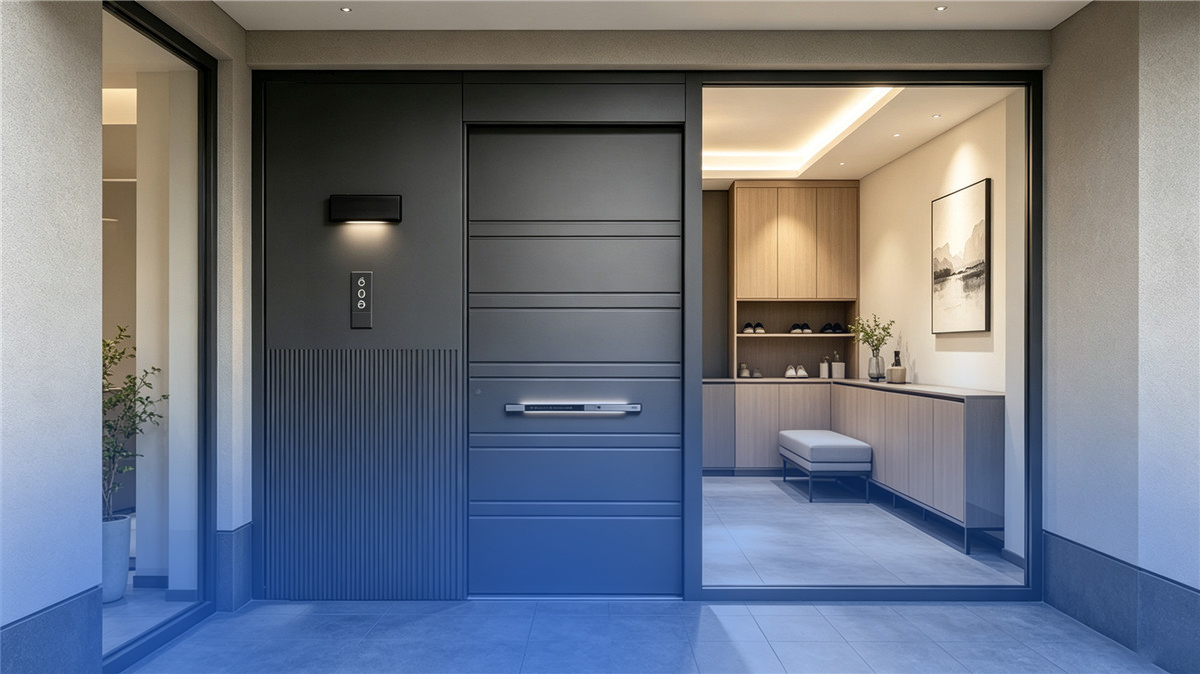
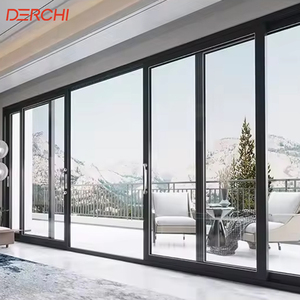
 Commercial Grade
Heavy-Duty Commercial Energy Efficient Glass Sliding Patio Doors & Windows
- U-Factor: 0.28 BTU/h·ft²·F
- Multi-point Stainless Track
- Heavy-duty Dual Glazing
Explore our precision-engineered, thermally broken, and impact-rated fenestration assemblies manufactured to exceed AAMA/WDMA, AS2047, and European CE standards.
Commercial Grade
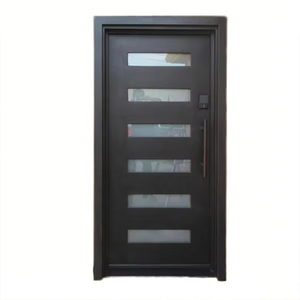 Security Rated
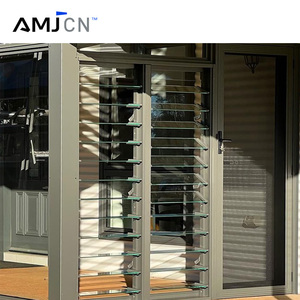 Ventilation System
 Hurricane Impact
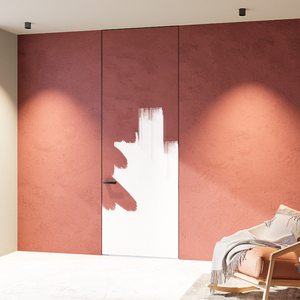 Fireproof Hybrid
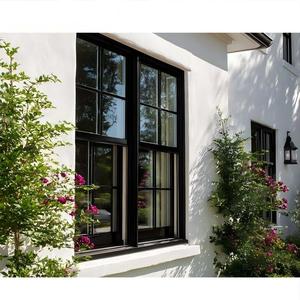 AAMA Verified
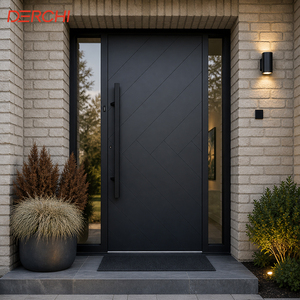 Acoustic Shield
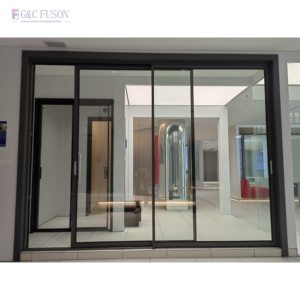 Impact Sliding
A deep dive into why China's premier fenestration exporters dominate international high-specification projects through composite extrusion precision, micro-cellular thermal isolators, and composite cladding synergy.
The structural backbone of export-grade aluminium composite windows relies on primary extrusion ingots of 6063-T6 or 6060-T66 aluminum-magnesium-silicon alloys. Wall thicknesses range strictly between 1.6mm and 3.0mm, adhering to ASTM B221 and EN 755-9 specifications. Unlike domestic utility-grade profiles that often blend contaminated post-consumer scrap, top-tier Chinese manufacturers enforce an iron (Fe) content below 0.25% to maximize tensile yield strength (≥ 215 MPa) and corrosion immunity against maritime chlorination.
Thermal bridging in metallic extrusions is eliminated using PA66 GF25 (polyamide 6.6 reinforced with 25% short transverse glass fibers) struts. These mechanical isolators offer an identical coefficient of thermal expansion ($2.4 \times 10^{-5} \text{ K}^{-1}$) to structural aluminium. This parity prevents shearing, crimping failure, and thermal warping under extreme diurnal temperature swings from -40°C in sub-Arctic environments to +65°C in arid desert climates.
Aluminium composite fenestration unites exterior architectural durability with interior structural or aesthetic substrates. Interior interior architectural faces utilize FSC-certified architectural hardwoods (White Oak, Larch, Black Walnut) joined via independent floating nylon clips, or cellular polyurethane co-extrusions. This architecture prevents stress concentration resulting from varying hygroscopic coefficients, ensuring lifetime zero-rot, condensation resistance, and acoustic dampening.
Navigating environmental product declarations (EPD), low-embodied-carbon aluminium quotas, automated robotics glazing, and supply-chain risk mitigation.
Global architectural procurement in the European Union, Australia, and North America now mandates documented Environmental Product Declarations (EPD) and Life Cycle Assessments (LCA). Top Chinese window exporters have rapidly shifted extrusion sourcing to hydropower-smelted primary aluminium from Yunnan and Qinghai. This transition lowers the carbon footprint from the industry standard of 14.5 kg CO₂e per kg of primary aluminium down to less than 4.0 kg CO₂e/kg, insulating importers from carbon border tax penalties like the EU's CBAM.
With ASHRAE 90.1-2022, Title 24 (California), and the revised UK Building Regulations Part L driving whole-building U-factors lower, legacy thermal breaks of 14.8mm are obsolete. Tier-1 exporters are standardizing on multi-cavity, low-emissivity foil-faced polyamide bridges exceeding 34mm in depth. Paired with triple-pane, double-argon warm-edge glazing (4Low-E+12Ar+4Clear+12Ar+4Low-E), complete composite window assemblies regularly deliver tested U-values under 0.85 W/m²K (0.15 BTU/h·ft²·F).
Procurement friction is shifting away from physical CAD exchange towards Cloud-BIM and Revit interoperability. Chinese manufacturing hubs now intake architect IFC (Industry Foundation Classes) data directly into 5-axis elumatec and FOM Industrie CNC machining centers. This digital-twin-to-spindle pipeline eliminates fabrication discrepancies, verifies structural deflection under finite element analysis (FEA), and ensures tolerances within ±0.5mm across massive 4.5-meter architectural spans.
Despite geopolitical shifts and shipping volatility, commercial real-estate developers continue sourcing from verified Chinese fenestration clusters in Foshan and Shandong. The rationale is financial and technical: European and North American composite fenestration fabrication entails lead times of 20 to 36 weeks at $850-$1,400/m². Specialized Chinese Tier-1 exporters deliver equivalent certified systems within 6 to 9 weeks at $280-$480/m² FOB, allowing large developers to preserve vital project cash flow.
An unvarnished engineering review comparing Aluminium Composite assemblies with Standard Thermal Break Aluminium, Solid Wood, and Vinyl (uPVC) profiles.
| Performance / Material Parameter | Aluminium-Wood Composite | Standard Thermal Break Aluminium | Solid Architectural Timber | Rigid Vinyl / uPVC |
|---|---|---|---|---|
| Thermal Transmittance (Uw Range) | 0.75 – 1.10 W/m²K | 1.30 – 1.85 W/m²K | 1.10 – 1.45 W/m²K | 1.20 – 1.60 W/m²K |
| Structural Wind Load Deflection (Pa) | 4,500 – 7,500 Pa (Severe Cyclonic) | 3,500 – 6,000 Pa | 2,000 – 3,200 Pa | 1,200 – 2,200 Pa (Requires Steel Core) |
| Exterior Weatherability & UV Retention | Class 1 / Class 2 Fluorocarbon (30+ Yrs) | Anodized / Powder Coated (20-25 Yrs) | Poor; Annual Staining / Painting Needed | Moderate; Prone to Yellowing / Chalking |
| Acoustic Attenuation (STC / OITC) | STC 40 – 46 dB (Substrate Dampened) | STC 32 – 36 dB | STC 35 – 39 dB | STC 30 – 34 dB |
| Coefficient of Linear Expansion (α) | 23.2 × 10⁻⁶ K⁻¹ (Compensated) | 23.8 × 10⁻⁶ K⁻¹ | 5.0 × 10⁻⁶ K⁻¹ (Moisture Sensitive) | 60.0 – 80.0 × 10⁻⁶ K⁻¹ (Extreme Warp) |
| Total Lifecycle Cost (30-Year TCO) | Lowest (Zero Maintenance, High Energy ROI) | Medium-Low | Extremely High (Continuous Upkeep) | Medium (Premature Frame Failure) |
With over 25 years of engineering leadership, our 180,000 m² smart production infrastructure in Foshan provides end-to-end assurance for global project execution.
Located in the heart of China's primary aluminium manufacturing zone (Shishan Town, Nanhai, Foshan), our manufacturing campus houses 28 fully automated CNC extrusion, corner crimping, and robotic structural glazing lines, outputting over 600,000 square meters of high-end architectural fenestration annually.
We eliminate regulatory import friction. Our complete systems undergo rigorous physical testing for cyclic wind load pressure, water penetration under dynamic wind fields, and forced-entry deterrence, achieving verified certification under Australian AS2047 N6, North American AAMA/WDMA/CSA 101, CE EN 14351-1, and UL 10C fire door compliance.
Every commercial inquiry receives direct support from our 45-person in-house engineering team. Prior to metal cutting, we supply full architectural CAD shop drawings, wind-load deflection calculations, thermal isotherm simulations via LBNL THERM/WINDOW, and structural anchor calculations for engineer-of-record approval.
Export fenestration demands zero-defect arrivals. Every glass unit and frame is wrapped in electrostatic protective tape, sealed in vapor-barrier poly wraps, protected by high-density polyethylene edge guards, and encased in custom fumigated steel-reinforced plywood crates engineered for crane sling and forklift offloading at port.
Critical answers to technical parameters, ocean transport, testing compliance, and factory direct transactions.
Send your project door and window schedules, architectural elevations, or structural tender specifications. Our technical engineering desk will analyze your profile spans, generate preliminary CAD section drawings, and provide complete factory-direct FOB/CIF container pricing within 24 business hours.