Engineering Whitepaper & B2B Procurement

China Top Aluminium Back Doors Manufacturer & Suppliers

Precision Thermal-Break Performance, Hurricane-Rated Engineering & Direct Architectural OEM/ODM Manufacturing by DERCHI (Guangdong Dejiyoupin Doors and Windows Co., Ltd.)

Industrial Specification Portfolio

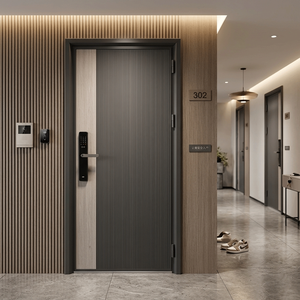
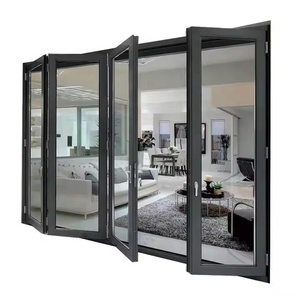
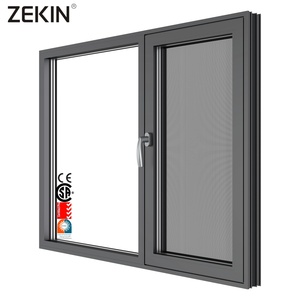
Featured Aluminium Back Door & Fenestration Assemblies

Explore engineered structural solutions designed for coastal weather barriers, commercial utility entries, and high-performance exterior rear living portals.

180,000㎡ Smart Production Base
600+ Skilled Technicians & Engineers
100+ Global Patents & Testing Certifications
25+ Years Architectural Fenestration Leadership
DERCHI Guangdong Dejiyoupin Factory Industrial Complex
Top-Tier Manufacturer Credential

Guangdong Dejiyoupin Doors and Windows Co., Ltd. (DERCHI)

DERCHI stands firmly among China's Top 10 premium door and window industrial manufacturers. Our intelligent manufacturing infrastructure located in Foshan, Guangdong Province, encompasses fully automated CNC profile machining centers, robotic precision corner crimping lines, and electrostatic fluorocarbon coating facilities.

Recognized as a reliable OEM/ODM partner for major project developers, general contractors, and trade wholesalers across North America, Australia, Europe, the Middle East, and Africa, DERCHI engineers bespoke fenestration solutions tested to AS2047, CE, ISO9001, and UL standards.

Get a Quote

Alloy Metallurgy (6063-T6)

We source virgin grade 6063-T6 primary aluminum billets, exceeding architectural standards with a web thickness of 2.0mm to 3.0mm for ultimate flexural strength.

PA66 GF25 Polyamide Bars

Equipped with German Technoform glass-fiber reinforced polyamide thermal-break insulation strips, eliminating condensation and slashing thermal heat conduction.

AkzoNobel & PPG Coatings

Advanced PVDF fluorocarbon coatings and 30-year marine-grade powder coatings provide superior UV stability, preventing chalking or corrosion in coastal environments.

Hermetic Seal Technology

Seamless vulcanized EPDM continuous co-extrusion gasket loops maintain airtight and watertight seal ratings under severe cyclic wind pressure forces.

Architectural Whitepaper: Technical Engineering & Global Procurement Evolution of Aluminium Back Doors

In modern envelope architecture, the humble aluminium back door has undergone an aggressive technical transformation. No longer treated as an afterthought or a secondary utility portal, back doors are critical junction points subjected to rigorous thermal energy codes (such as ASHRAE 90.1, IECC, and Australian NCC Section J), intense perimeter forced-entry threats, and high cyclic weather exposure. B2B buyers—including residential project developers, hospitality procurement managers, and commercial building contractors—must align their specifications with measurable structural parameters rather than aesthetic appearance alone.

1. The Shift to Polyamide Thermal Break & Multi-Chamber Extrusions

Traditional cold aluminium profiles are no longer viable in projects targeting high energy ratings. Modern aluminium back doors manufactured by DERCHI leverage multi-chambered 6063-T6 extrusions separated by PA66 GF25 (25% glass fiber-reinforced polyamide) thermal barriers. This mechanical break severs thermal bridge pathways, drastically depressing the overall thermal transmittance (U-value) below 1.6 W/m²·K when paired with low-emissivity argon-filled insulated glass units (IGUs). Furthermore, multi-cavity chambers are engineered with dedicated internal water diversion paths and pressure-equalization vents that repel capillary moisture even during wind-driven rainstorms.

2. Hurricane Wind Load & Severe Impact Certification (AS2047, ASTM E1886/E1996)

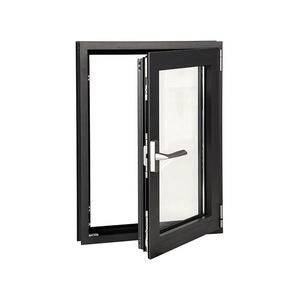
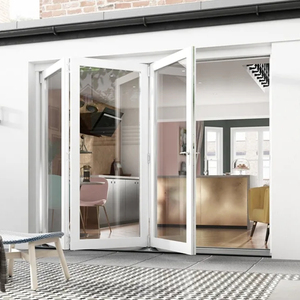
Rear elevations are notoriously susceptible to negative pressure vortexes during cyclonic events. Structural engineering mandates that back door frames, corner keys, and glazing beads resist deflection limits under severe Serviceability Limit State (SLS) and Ultimate Limit State (ULS) pressures. DERCHI's AS2047-compliant single-hinge, casement, and bifold back assemblies utilize CNC cast-aluminum heavy corner joints reinforced with injected two-component polyurethane structural adhesive, ensuring the perimeter remains perfectly squared and air-sealed during 4500 Pa wind pressures.

3. Future B2B Procurement Trends: What Global Buyers Prioritize for 2026–2030

Procurement professionals and envelope consultants are optimizing supply chains by looking at life-cycle assessment (LCA) data and operational efficiency:

  • Integrated Low-Profile ADA Flush Thresholds: Transitioning between indoor kitchens or mudrooms and outdoor back patios requires barrier-free thresholds that still maintain water penetration resistance of over 450 Pa through hidden drainage weeps and automatic drop-down mechanical seals.
  • Consolidated Multi-Point Micro-Mechanical Locking: Moving away from standard deadbolts toward stainless-steel multi-point interlocking shoot-bolts that secure the door leaf into the jamb at 4 to 7 distinct structural points, preventing crowbar leverage attacks.
  • Smart Automation & Access Control Integration: Commercial and villa back entries increasingly specify pre-wired concealed cabling raceways within the aluminium sash, supporting electric strikes, biometric scanners, and building management system (BMS) safety monitoring.
  • Decarbonized Circular Metallurgy: Demand for low-carbon recycled aluminium billets produced via hydropower extrusion to meet corporate Scope 3 emissions mandates in European and North American markets.
Macro Industry Vision

Technological Development Trends in Back Door Fenestration

Anticipating engineering breakthroughs in modern residential patio and rear-entry architectural systems.

Vacuum Insulated Glass (VIG) Hybridization

Integrating 0.15mm vacuum cavities into back door glazing channels to achieve center-of-glass U-values below 0.60 W/m²·K without adding excessive frame sash weight.

Concealed Heavy-Capacity Pivot Hinges

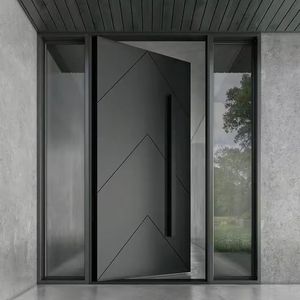
Replacing traditional exposed barrel hinges with 3D-adjustable concealed pivot hardware capable of supporting 400kg oversized architectural back glass panels effortlessly.

Bionic Smart Micro-Ventilation

Self-regulating humidity-sensing aeration channels built directly into upper door transom frames, exchanging fresh air while rejecting rainwater and external particulate matter.

Procurement Guidance

Frequently Asked Questions (FAQ) for B2B Importers

Essential technical, logistics, and compliance inquiries addressed by DERCHI's international engineering desk.

What distinguishes an architectural aluminium back door from a standard interior door? +
Exterior aluminium back doors require full structural envelope engineering: heavy-gauge corrosion-resistant 6063-T6 profiles, continuous perimeter thermal breaks (such as Technoform polyamide strips), multi-point lock shoot-bolts, argon-gas-filled tempered or laminated safety IGUs, and vulcanized EPDM compression gaskets. Interior doors lack thermal insulation barriers, water drainage weep weep holes, wind-pressure ratings, and exterior-grade fluorocarbon surface finishes.
How does DERCHI ensure structural compliance for international building codes? +
Our systems undergo continuous destructive laboratory testing to comply with international fenestration mandates: AS2047 (Australian standard for acoustic, water, and cyclic wind deflection performance), CE conformity for Europe, ISO9001 quality factory control systems, and UL fire-rating testing. We furnish comprehensive CAD shop drawings, calculation sheets, and third-party test reports for submission to architectural consultants and municipality building inspectors.
What surface treatment is recommended for back doors in coastal or high-salinity zones? +
For coastal zones within 5 miles of salt-water shorelines (e.g., Florida, coastal Australia, West Africa, the Gulf region), DERCHI specifies AAMA 2605-compliant PVDF (polyvinylidene fluoride) fluorocarbon coatings or marine-grade anodizing (minimum 25 microns). These finishes provide impenetrable protection against salt spray corrosion, pitting, and intense ultraviolet solar chalking, backed by long-term durability warranties.
Can DERCHI supply completely customized opening configurations and dimensions? +
Yes. As a true Chinese source manufacturer with a 180,000㎡ plant, 100% of our production is made-to-measure. Whether your project requires oversized floor-to-ceiling single swing doors, multi-panel corner bifold back partitions, heavy sliding pocket entries, or concealed pivot doors, our engineering office drafts free shop drawings (BIM/CAD) for sign-off prior to extrusion cutting and corner crimping.
How are aluminium back doors packaged to prevent transit damage on ocean freight? +
Export door assemblies are wrapped in multi-layer shock-absorbing pearl bubble wrap, corner-guarded with heavy plastic caps, sealed in moisture-barrier film, and crated in fully enclosed, IPPC-certified fumigated plywood cases. Steel strapping secures frames inside sea containers to eliminate abrasion, rack deflection, or glass breakage during intermodal transit.
What is the standard production lead time and minimum order quantity (MOQ)? +
Standard lead times for custom bespoke architectural door schedules range from 20 to 35 business days following final CAD drawing approval and finish color confirmation. DERCHI supports flexible project procurement: we handle small custom batches for luxury private villas (MOQ starting at 1 set/project) up to full 40ft high-cube multi-container commercial project schedules.

Partner with China's Premier Aluminium Door Manufacturer

Send us your door schedules, project elevation drawings, or bill of quantities (BOQ). Our technical sales engineers respond within 24 hours with complete structural estimations, CAD sections, and factory-direct FOB/CIF quotes.