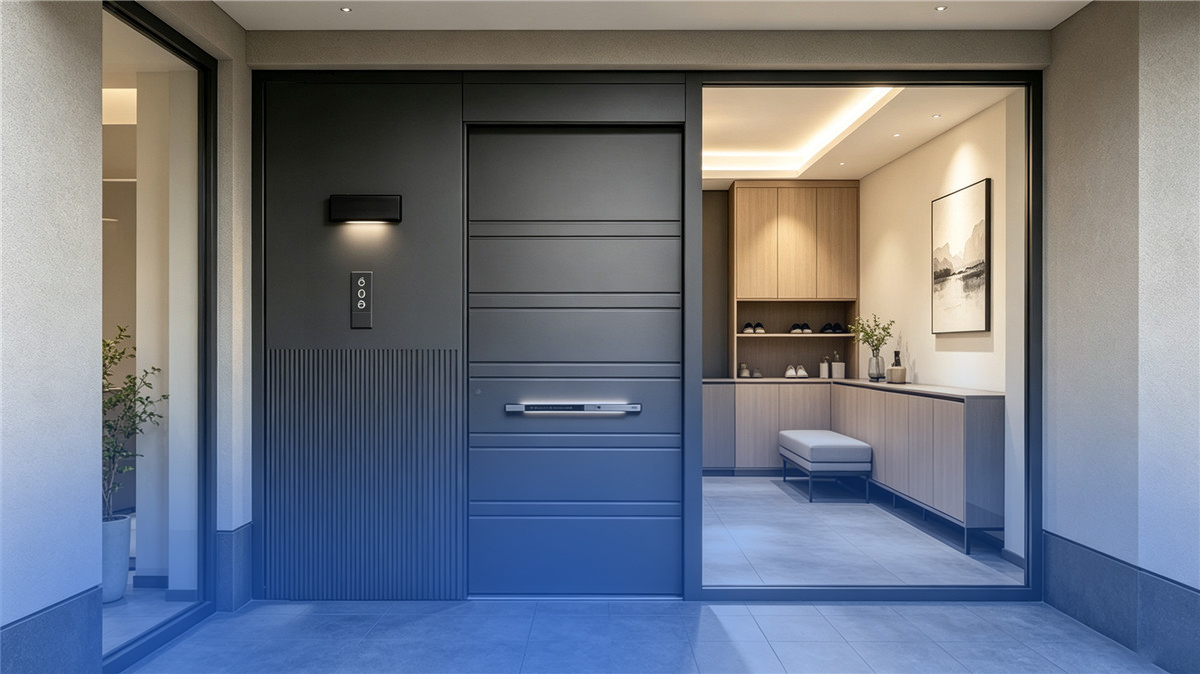
 Thermal Break
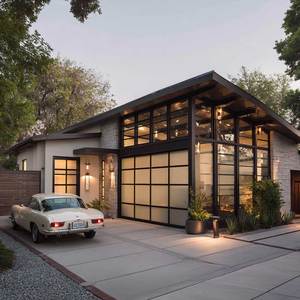
XIYATECH Double Pane Glass Aluminum Garage Door Thermal Break Frame Energy Efficient Sectional Overhead House Doors
Overhead Sectional
Double Glazed
Energy Efficient
Explore our flagship heavy-duty commercial entrance and high-performance architectural door collections. Engineered with structural-grade aluminium profiles, multi-point locking integrity, and thermal efficiency for contemporary commercial developments.
Thermal Break
 Hybrid System
 Heavy-Duty Sliding
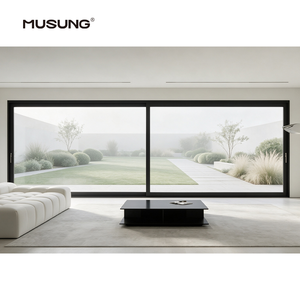 Lift & Slide
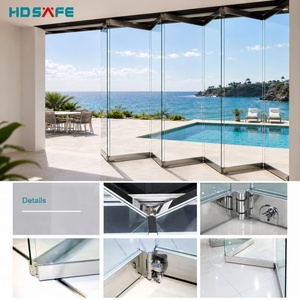 Bi-Fold System
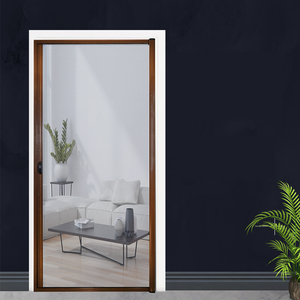 Integrated Screen
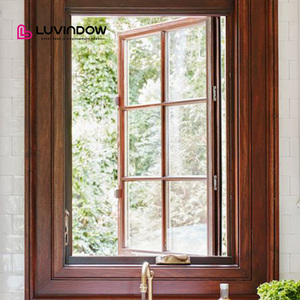 Tilt & Turn
 Commercial Entry
Modern commercial storefront entrances represent a complex intersection of wind load deflection resistance, seismic drift compliance, thermodynamics, and cyclic mechanical endurance. Sourcing from premier Chinese manufacturers requires rigorous evaluation of alloy compositions, thermal isolators, and fabrication tolerances.
Commercial storefront doors undergo thousands of operating cycles daily. High-tier Chinese factories utilize primary billet 6063-T6 or 6061-T6 structural aluminium rather than contaminated scrap recycling. Profile wall thicknesses span 2.0mm to 3.5mm at stress-concentration knuckles, ensuring corner joint tensile strength under continuous pneumatic closer loads.
Condensation and uncontrolled HVAC loss in commercial façades are mitigated using precision techno-polymer strips. Modern Chinese extrusion facilities incorporate 24mm to 34mm PA66 GF25 (polyamide reinforced with 25% glass fiber) continuous thermal barriers. This eliminates structural shearing while dampening conductive energy transfer across extreme thermal gradients.
Commercial storefronts in high-traffic urban corridors and coastal zones demand uncompromising surface finishes. Verified Tier-1 Chinese manufacturers adhere to AAMA 2605 specifications, utilizing 70% Kynar 500 / Hylar 5000 PVDF coatings or marine-grade Qualicoat Class 2 / Class 3 thermoset architectural powder coats resisting chalking, abrasion, and acid rain.
| System Specification | Standard Commercial Narrow Stile | Medium Stile Storefront | Heavy-Duty Wide Stile (Institutional) | DERCHI Thermal-Break Commercial Entrance |
|---|---|---|---|---|
| Nominal Extrusion Wall Thickness | 2.0 mm (0.078 in) | 2.5 mm (0.098 in) | 3.0 mm (0.118 in) | 3.0 mm - 3.5 mm Multi-Chambered |
| Stile Face Dimension | 50 mm (2.0 in) | 88.9 mm (3.5 in) | 127 mm (5.0 in) | 100 mm - 140 mm Reinforced |
| Wind Deflection Design (ASTM E330) | 1,200 Pa (~100 km/h) | 2,000 Pa (~130 km/h) | 3,200 Pa (~165 km/h) | Up to 4,500 Pa (AS2047 N6 Compliant) |
| Water Infiltration Resistance | 250 Pa (Static Test) | 350 Pa (ASTM E331) | 500 Pa (ASTM E331) | 600 Pa with Drained Sill Matrix |
| Corner Joint Construction | Mechanical Screws & Clips | Single Crimp Joint | Welded / Internal Lug Tie-Rod | Hydraulic Cold Crimp + Epoxy Matrix |
| Cycle Test Rating (EN 1191) | 100,000 Cycles | 250,000 Cycles | 500,000 Cycles | > 1,000,000 Duty Cycles |
Behind every high-performance storefront system is an integrated production ecosystem. Headquartered in Foshan, Guangdong—the world's architectural aluminium manufacturing capital—Guangdong Dejiyoupin Doors and Windows Co., Ltd. (DERCHI) combines massive industrial scale with millimeter fabrication precision.
Our intelligent workshop houses multi-axis German and Italian CNC milling centers capable of 0.05mm routing tolerances. Automated corner crimpers apply hydraulic mechanical pressure with two-part structural polyurethane sealant injection, creating seamless, water-tight, non-deflecting perimeter frames that outperform site-assembled knocked-down entries.
DERCHI products carry genuine third-party compliance credentials, including European CE certification, ISO9001 quality management, Australian AS2047 cyclonic pressure testing (N6 rating), and UL-classified fire-rated door assemblies. International developers submit our complete testing documentation to municipal building authorities without clearing bottlenecks.
Featuring in-house dual-seal and warm-edge insulated glass fabrication. Storefront systems accommodate up to 42mm triple-glazed IGUs with low-iron tempered glass, argon gas filling, warm-edge composite spacers, and dual Low-E coatings, dramatically reducing building Solar Heat Gain Coefficients (SHGC) while maintaining luminous optical clarity.
Overcoming specification errors before metal cutting: our senior facade engineers provide complete 2D CAD shop drawings, 3D Revit BIM modeling, and thermal calculation reports. Our English-speaking technical team consults directly with project architects, reducing design turnaround and avoiding costly dimensional discrepancies on site.
Long sea voyages across high-humidity ocean routes expose metal finishes to surface corrosion and micro-abrasions. DERCHI applies 5-tier packaging protection: peelable protective surface film, pearl cotton edge guards, desiccant pouches, vacuum wrap, and heavy-duty fumigated wooden crates reinforced with steel corner brackets.
By eliminating multiple tiers of regional import agents, distributors, and trading brokers, commercial contractors and developers capture 30% to 45% capital expenditure savings. Every order is produced directly within our Foshan facility with end-to-end transparent tracking from extrusion mill to container dispatch.
The commercial door and facade sector is experiencing a paradigm shift driven by stringent carbon caps, computerized automated accessibility, and unitized prefabricated construction. Procurement managers must align specifications with these dominant technical trajectories.
Global environmental metrics such as LEED v4.1, BREEAM, and the EU Carbon Border Adjustment Mechanism (CBAM) are compelling developers to quantify embodied carbon. Premier Chinese factories are adopting hydroelectric and solar-smelted low-carbon aluminium billets (≤ 4.0 kg CO₂ per kg Al), complete with verifiable Environmental Product Declarations (EPDs).
Visible surface closers and bulky card readers are being phased out in favor of concealed electromechanical overhead operators, magnetic drive sliding tracks, and biometrically integrated door pulls. Entrances link seamlessly into central Building Management Systems (BMS) via BACnet and KNX protocols for live traffic analytics and lockdown security.
Mounting on-site installation labor costs across North America, Europe, and Australia are driving demand for pre-glazed, unitized storefront frames. Simultaneously, rapid urbanization necessitates superior sound dampening. Expect widespread adoption of multi-layer PVB acoustic interlayers achieving Sound Transmission Class (STC) ratings above 42 dB.
Authoritative technical answers to common queries regarding specifications, testing protocols, thermal movement, import verification, and logistics when purchasing aluminium commercial storefront doors from China.
Whether you are sourcing heavy-duty thermal-break storefronts for a commercial plaza, high-traffic institutional doors, or luxury pivot entrances, DERCHI delivers factory-direct engineering expertise, comprehensive shop drawings, and turnkey export logistics.
Contact Us