Featured Security Doors & High-Performance Fenestration Systems
Explore our precision-fabricated security and exterior door portfolio manufactured with primary architectural 6063-T6 aluminum alloys, precision thermal breaks, and integrated multi-point locking mechanisms tested to stringent international criteria.
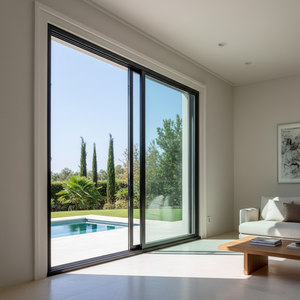 Villa System
American Standard ROTO Hardware Double Large Glass Glazed PVC Doors and Windows UPVC Vinyl Lifting Sliding Doors For Villa
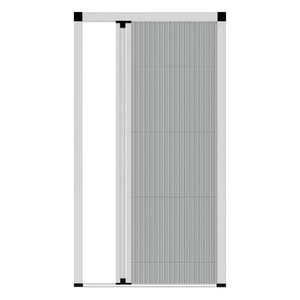 Insect Barrier
Customized Modern Aluminum Frame Invisible Folding Pleated Mesh Sliding Door for Home Window Anti Mosquito Door & Window Screens
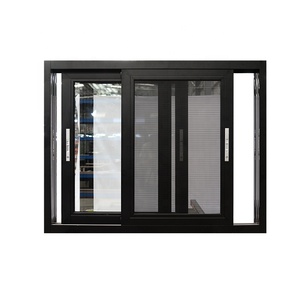 Thermal Break
Insulated Replacement Black Aluminum Silding Building windows Soundproof Solution
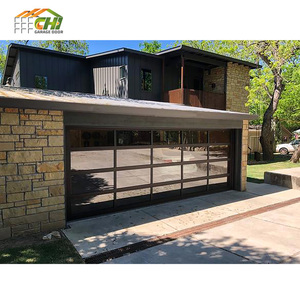 Overhead Security
CHI Custom Size Residential Black Glass Aluminum Sectional Door Automatic Double Tempered Glass Garage Doors for Villa
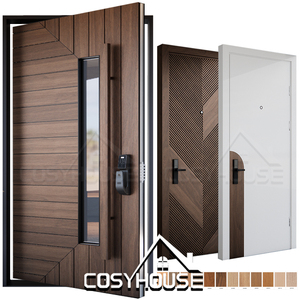 Grand Entrance
Custom Modern Aluminum Exterior Door Luxury Pivot Entrance Door for Villa and High End House
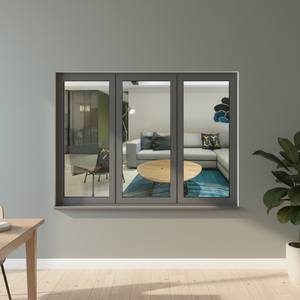 RG65 Architectural
RG65 Aluminum Alloy Doors And windows For Modern Residential Aluminum Doors And windows Factory Customization
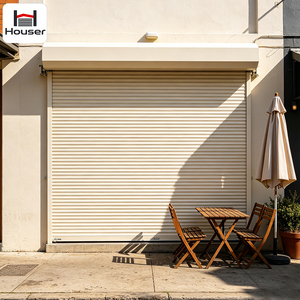 Commercial/Store
Silent Aluminum Roller Shutter Door Automatic Rolling Shutter for Residential House Modern Interior Counter Security
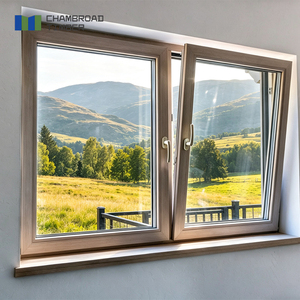 Wood-Alu Hybrid
Modern Wood Aluminum Window Casement Fireproof Anti-Theft Double Glazed Insulated Glass CSA Certified for Office
Engineering Integrity of CE-Certified Aluminum Security Doors: A Specification Benchmark for Global Exporters
In modern high-performance building envelopes, an entry portal cannot merely serve as a passive decorative partition. For international commercial property developers, luxury residential contractors, and institutional importers across Europe, the Middle East, the Americas, and Africa, external door assemblies must function as an integrated defensive system balancing structural anti-intrusion resistance, thermal efficiency, extreme atmospheric corrosion resistance, and digital access control.
As an authoritative CE certified aluminum security doors exporter and manufacturer, Guangdong Dejiyoupin Doors and Windows Co., Ltd. (DERCHI) operates at the nexus of metallurgical precision and mechanical security engineering. Holding full conformity with European Standard EN 14351-1:2006+A2:2016 (Windows and doorsets - Product standard, performance characteristics) and security classification under EN 1627:2021 through EN 1630, our manufacturing protocols establish a repeatable standard for heavy-duty architectural entrances.
The architectural mandate for aluminum alloy (predominantly 6063-T5/T6 and 6061-T6 grades) has grown exponentially over cast iron and low-gauge sheet steel. Aluminum combines a high strength-to-weight ratio with natural passivating oxide layers, eliminating structural oxidation failures common to carbon steels in tropical coastal settings such as Lagos, Mombasa, Miami, and Durban. By pairing primary billet extrusions with engineered multi-chamber polyamide thermal breaks (PA66 GF25) and multi-point hooked security locking systems, modern aluminum security doors deliver superior thermal transmittances (down to $U_d \le 1.1 \text{ W/m}^2\text{K}$) while surpassing RC3 and RC4 static and dynamic forced-entry impact resistance.
Structural Burglar Resistance (EN 1627 to EN 1630) Engineering Matrix
A comprehensive evaluation of mechanical parameters required for CE marking in security pedestrian doorsets. Specifiers must align resistance classification with project vulnerability profiles.
| Resistance Class (RC) | Static Load Test (EN 1628) | Dynamic Impact (EN 1629) | Manual Attack Tool Set (EN 1630) | Working Resistance Time | Recommended Architectural Application |
|---|---|---|---|---|---|
| RC 1 N / RC 1 | 1.5 kN applied at locking points | 30 kg drop mass; 450 mm drop height | Opportunistic physical force, kicking, shoulder thrust, lifting | 0 min (tool-less impact test) | Internal residential partitions, low-risk perimeter thresholds |
| RC 2 / RC 2 N | 3.0 kN applied along leaf & frame | 50 kg drop mass; 450 mm drop height | Simple hand tools: screwdrivers, pliers, wedges, small hand saws | 3 Minutes active contact | Standard residential villas, secondary entrance portals, apartments |
| RC 3 | 6.0 kN applied along all lock latches | 50 kg drop mass; 750 mm drop height | Heavy screwdrivers, crowbar (710 mm), hammer, punch tools | 5 Minutes active contact | Luxury villas, high-risk residential, suburban estates, retail boutiques |
| RC 4 | 10.0 kN hydraulic jack loading | 50 kg drop mass; 1000 mm drop height | Heavy tools: bolt cutters, axes, cold chisels, cordless drills (shear attack) | 10 Minutes active contact | Diplomatic residences, banks, high-value bullion rooms, luxury estates |
| RC 5 | 15.0 kN distributed load | Steel impactor ballistics verify | Power angle grinders (125 mm), sabre saws, high-output drill rigs | 15 Minutes active contact | Critical infrastructure, military command gates, commercial cash vaults |
Future Sourcing Trends in High-Performance Aluminum Security Doors
How major development conglomerates, government entities, and high-volume importers are redefining their global supply chain risk frameworks.
Supply Chain De-risking & Direct Mill Procurement
Trading intermediaries add 18–35% markups without assuming technical liability. Forward-looking procurement departments now integrate direct factory-to-port auditing via 360° virtual inspections, full raw-material mill certificates, and Factory Production Control (FPC) audit verification.
- Elimination of intermediary margin compounding
- Direct CAD/BIM shop drawing iteration with engineers
- Full batch-level EN 10204 3.1 inspection traceability
Decarbonization & Low-Carbon Extrusions (CBAM Compliant)
With the implementation of the European Carbon Border Adjustment Mechanism (CBAM) and LEED v4.1 certifications globally, procurement officers demand hydro-powered, scrap-recycled aluminum billets ensuring low embodied carbon (<4.0 kg CO2e per kg Al) without structural degradation.
- Verified Environmental Product Declarations (EPD)
- Energy-optimized PA66 thermal barrier insertions
- Compliant cross-border tariff structures under EU green mandates
Total Consolidation of Mixed-Architectural Fenestration
Contractors across fast-developing urban nodes (Lagos, Nairobi, Johannesburg, Dubai) increasingly refuse fragmented sourcing. Procurement trends heavily favor single-source tier-1 manufacturers capable of consolidating entry doors, security shutters, and glass curtain units into uniform maritime 40HQ containers.
- Optimized maritime cube efficiency; zero container voidage
- Unified finish palettes across anodized and PVDF surfaces
- Centralized warranty liability covered under one master OEM
Key Technological Developments in Modern Security Entrances
Breakthroughs in concealed hardware, digital biometric ecosystems, and climate-adaptive metallurgy are transforming architectural expectations.
Concealed Heavy-Capacity Pivot Hinges
Traditional flag hinges create visible vulnerability points susceptible to angle grinders and hydraulic spreading. Next-generation luxury security doors integrate concealed floor-and-header pivot systems supporting leaf weights up to 800 kg with 3-dimensional adjustability and integrated hydraulic closing control.
- Zero exposed hardware to exterior attack surfaces
- Supports monumental leaf dimensions exceeding 4000mm × 2000mm
- Adjustable hold-open and soft-damped closing curves
Mechatronic Multi-Point Interlocking Systems
Modern security doors fuse motorized mortise locking with biological encrypted authentication (sub-dermal 3D vein recognition, rolling-code RFID, and encrypted building management protocol integrations). Solid steel anti-saw hooks deploy automatically into reinforced strikes upon closure.
- Automatic 5-to-9-point steel latching without key turning
- Fail-secure integration with backup lithium battery banks
- Armored manganese anti-drill core plates protecting cylinders
Hyper-Resistant Marine-Grade Surface Chemistry
For high-salinity coastal regions, standard architectural coatings fail via filiform corrosion and blistering within 24 months. Innovation in pre-treatment (zirconium nanocoatings) combined with Qualicoat Class 2/3 super-durable powders or 70% Kynar 500 PVDF resins guarantees 20+ years of salt-fog resistance.
- Tested beyond 3,000 hours in neutral salt spray (ASTM B117)
- Unrivaled UV-absorption resistance preventing color fading
- Resistant to airborne dust micro-abrasion in arid environments
Guangdong Dejiyoupin (DERCHI): An Industrial Powerhouse for Global Exporters
Ranked among the premier top-tier architectural window and door manufacturers in China, Guangdong Dejiyoupin Doors and Windows Co., Ltd. (DERCHI) represents a quarter-century of rigorous precision manufacturing. Located within the world’s foremost hardware and extrusion cluster in Foshan, Guangdong, our infrastructure is engineered to absorb ultra-large volume commercial orders while executing micro-millimeter custom bespoke architectural commissions.
Unlike regional assembling shops, our 180,000 m² facility centralizes every critical step of door manufacturing: automated profile optimization and computerized five-axis CNC profile milling, automated thermal barrier crimping, multi-stage chemical pretreatment, dust-free vertical electrostatic powder coating, and specialized robotic polyurethane insulation core injection.
Our technical capabilities are validated by an extensive library of international credentials: full conformity under the European CE standard (EN 14351-1), ISO9001 quality management, Australia's AS2047 cyclonic pressure certification up to the extreme N6 classification, and UL fire-rated certifications. When you partner with DERCHI as your primary exporter, your shipments are accompanied by comprehensive factory inspection reports, laboratory testing certificates, detailed CAD assembly schedules, and robust compliance documentation designed to streamline clearance through agencies such as SONCAP (Nigeria), KEBS PVoC (Kenya), and NRCS (South Africa).
CE Certified Aluminum Security Doors Procurement FAQ
Direct engineering and commercial responses to the most critical technical, compliance, logistics, and installation questions encountered by international buyers.
What specific standards and test reports constitute a authentic CE mark for an aluminum security door? +
How do aluminum alloy security doors compare structurally against traditional pressed carbon steel security doors? +
Can DERCHI customize security doors to fit bespoke architectural dimensions and irregular rough openings? +
What protective measures are implemented to prevent damage during transoceanic container shipping? +
How does DERCHI assist international clients with local customs conformity programs (SONCAP, KEBS, NRCS)? +
What locking hardware options are integrated for high-security commercial and residential installations? +
Accelerate Your Project with Certified Architectural Door Engineering
Whether you are drafting an expansive villa development, upgrading perimeter commercial entrances, or consolidating high-volume regional imports, our engineering desk is ready to review your schedules, provide CAD details, and furnish certified factory-direct quotations.
Send an Inquiry