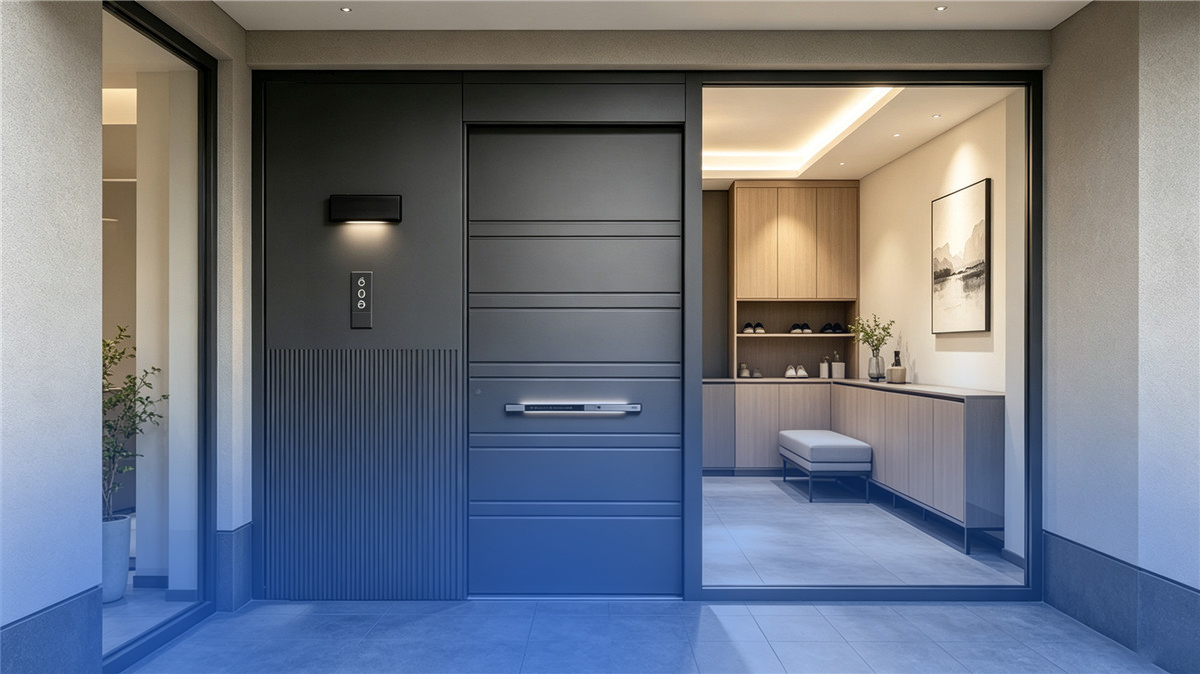
Precision Architectural Window Systems
Explore our export-certified thermal-break fenestration products. Built with 6063-T5/T6 structural aluminum alloys, multipoint security locking hardware, and high-performance Low-E insulated glazing units tailored to strict international codes.
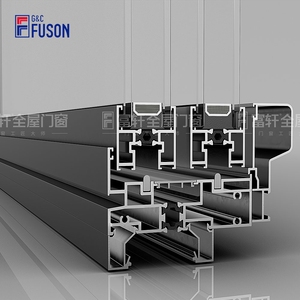 Impact Rated
Fuson Energy Efficient Sliding Window & Louver System
- Hurricane Impact
- Energy Efficient
- Custom Louvers
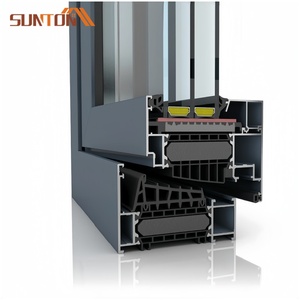 Acoustic Guard
Thermal Break Low-E Double Glazed Casement Window
- Soundproof 42dB
- Polyamide Barrier
- Waterproof EPDM
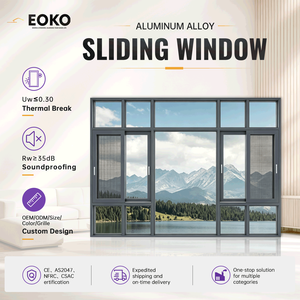 AS2047 / NFRC
EOKO Engineered Double Glazed Architectural Sliding Window
- AS2047 Certified
- NFRC Standard
- Heavy Duty Rollers
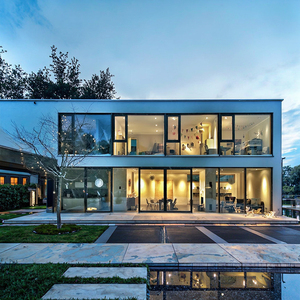 Panoramic
Modern Villa Soundproof Fixed Architectural Picture Window
- High Transparency
- Ultra Slim Frame
- Inert Gas Cavity
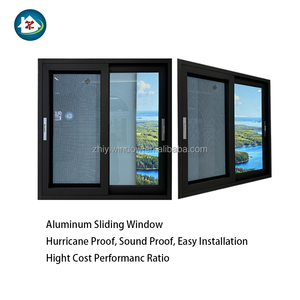 Marine Grade
Thermal Break Hurricane Window with Security Mesh Netting
- 304 Stainless Mesh
- High Structural Load
- Seaside Salt-Resist
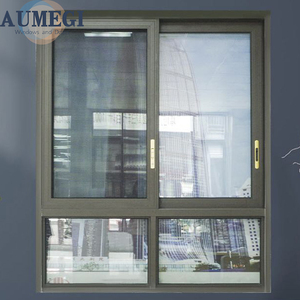 Architectural Tint
Aumegi Solar Control Glazed Residential Sliding System
- Solar Reflective
- Dual Weatherstrip
- Powder Coated
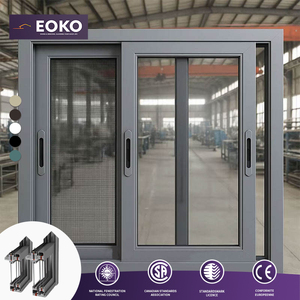 Tropical Heavy
EOKO AS 1288 Heavy-Duty Tropical Sliding Window System
- AS 1288 Certified
- Tropical Monsoonal
- Heavy Structural Rig
 Smart Building
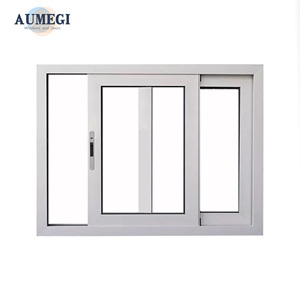
Aumegi Automated Motorized Aluminum Sliding Window Unit
- 1.4mm Profile Wall
- Smart Motorized
- Home Automation
Future Procurement Trends in Architectural Fenestration
Modern developers and general contractors are shifting procurement priorities toward holistic lifecycle value, stringent building performance directives, and risk-mitigated supply chains. Understanding these shifts safeguards project profitability.
Direct Manufacturer Consolidation
Procuring entities are rapidly bypassing intermediate brokerage to deal directly with certified manufacturers. Single-source manufacturing reduces communication latency, guarantees unified finishes across window and entry door lines, and cuts logistics expenditures via consolidated container loading schedules.
Stringent Traceable Certifications
Municipal planning authorities worldwide are enforcing mandatory structural, acoustic, and thermal compliance audits. Commercial tenders require verifiable documentation, including CE declarations, AS2047 structural testing reports, NFRC thermal metrics, and ISO9001 factory production audit trails before site delivery.
Pre-Fabricated Assembly Units
Rising on-site skilled labor costs in destination ports drive demand for completely pre-glazed, pre-hung, and calibrated modular sub-frame systems. Off-site fabrication guarantees micron-level structural accuracy, prevents glazing seal failures, and slashes on-site construction schedules by up to 40%.
Next-Generation Fenestration Technology Developments
Continuous technological iteration has transformed aluminum windows from mere passive barriers into active environmental management building components. Our engineering R&D department stays ahead with three core technical trajectories.
Ultra-Low U-Value Thermal Isolations
Advancements in glass-fiber reinforced multi-cavity polyamide (PA66 GF25) thermal insulation strips mitigate thermal bridging. Coupled with warm-edge composite spacers and argon/krypton filled Low-E insulated glazing units, whole-window U-values achieve compliance with stringent passive house energy conservation benchmarks.
Automated Actuation & IoT Building Integration
Window frames are increasingly re-engineered with concealed micro-linear actuators, smart rain and wind sensors, and centralized RS485/KNX building management integration. Automation provides optimal passive night-purge ventilation, motorized shading responses, and elevated security protocols via biometric authentication.
High-Resilience Surface Finishes
Standard architectural anodizing is rapidly giving way to high-durability fluorocarbon (PVDF) and architectural Qualicoat Class 2/3 powder coatings. These treatments exhibit extreme UV stability, salt spray resistance surpassing 3,000 hours, and abrasion protection critical for coastal, tropical, and desert environments.
Guangdong Dejiyoupin: Global Manufacturing Edge
Rooted in Foshan, Guangdong—the world capital of aluminum extrusion and architectural processing—our operational scale and 25-year manufacturing heritage ensure uncompromised precision, commercial viability, and institutional reliability.
Comprehensive Integrated Solutions
From high-performance aluminum house windows to armored entry doors, cast aluminum villa gates, and interior doors, we provide full-schedule envelope packages that eliminate supplier coordination errors and reduce freight overhead.
International Rigorous Verification
Our complete fenestration range carries CE Mark conformity, ISO9001 certified quality management systems, Australian AS2047 structural rating, and applicable UL certifications, streamlining local building inspection approval across global jurisdictions.
Bespoke Engineering Capabilities
Our in-house design engineering department produces turnkey CAD shop drawings, wind load calculations, and tailored extrusion dies to accommodate non-standard structural spans, curved geometries, and exact architectural schematics.
Dedicated Project Technical Support
We provide comprehensive project-lifecycle assistance. Our bilingual structural engineers assist project teams across multiple time zones with shop drawing validation, container loading planning, and remote technical installation support.
Frequently Asked Questions by Commercial Buyers
Authoritative technical answers to common procurement questions concerning CE-certified aluminum windows, material specifications, quality control, and export freight.
What specific performance parameters does the CE Certification validate?
Under EN 14351-1 standards, CE Certification validates critical building envelope parameters including air permeability (EN 12207), watertightness under driving rain (EN 12208), resistance to positive and negative wind loads (EN 12210), overall thermal transmittance U-values (EN ISO 10077), acoustic mitigation decibels (EN ISO 717-1), and load-bearing capacity of integrated hardware safety mechanisms.
Why is 6063-T5 aluminum alloy preferred over secondary reclaimed scrap aluminum?
We strictly utilize primary, virgin 6063-T5 and 6063-T6 aluminum billets. Compared to contaminated reclaimed scrap metal, primary extrusions maintain structural tensile strength exceeding 160 MPa, precise profile dimensional tolerances, superior surface smoothness for chemical bonding of PVDF coatings, and absolute freedom from internal metallurgical voids that cause brittle structural failure.
How are units packaged to guarantee zero glass fracture across long sea routes?
Export fenestration products undergo standardized multi-tier protective packaging. Each frame is wrapped in anti-static PE protective film, fitted with impact-resistant corner buffers, shielded in corrugated cell-board, and strapped inside fully enclosed, fumigated maritime plywood crates. Crates feature reinforced fork runners and internal moisture desiccant packs to withstand humidity shifts.
Can shop drawings and glazing configurations be engineered to meet regional building energy codes?
Yes. Our in-house engineering team works directly from your architectural elevation drawings and project schedules. We generate complete CAD shop drawings specifying structural mullion moments of inertia, glazing pocket depths, glass configurations (single, double, triple, low-E, laminated, or warm edge), and hardware layouts to ensure complete compliance with local building authority standards.