Export-Grade Architectural Envelopes
High-Performance Door & Fenestration Assemblies
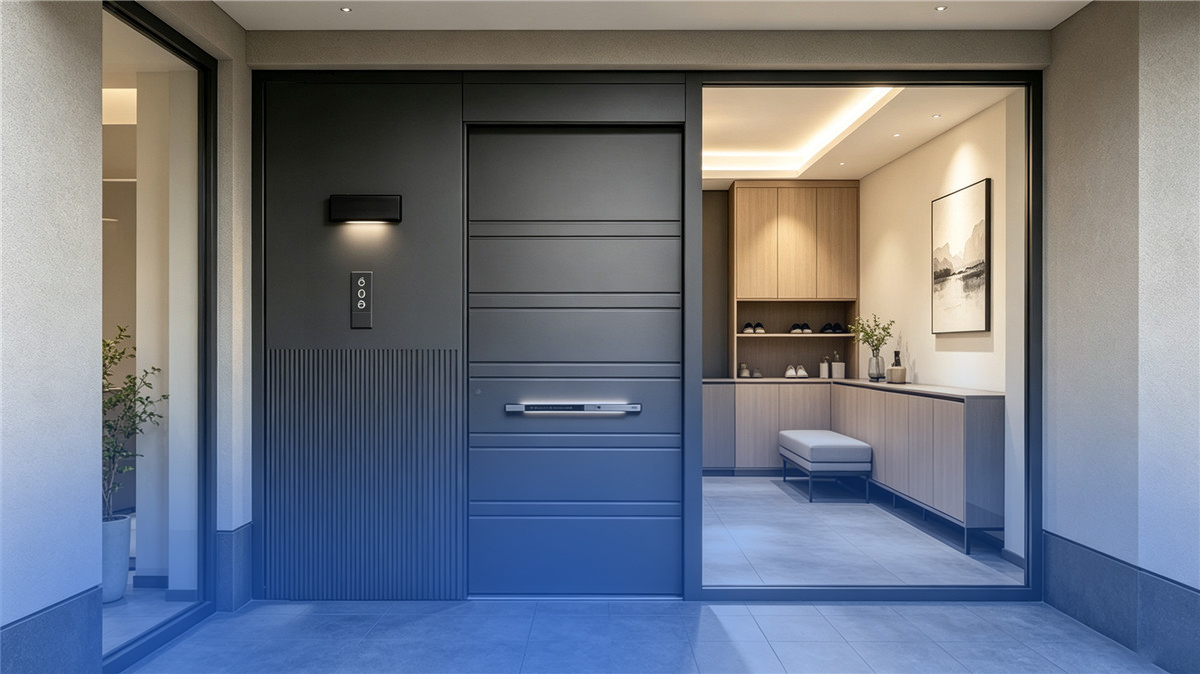
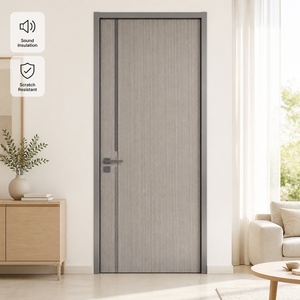
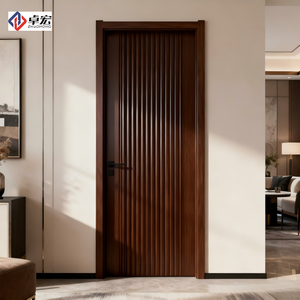
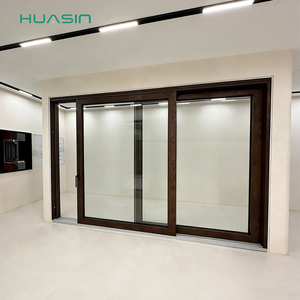
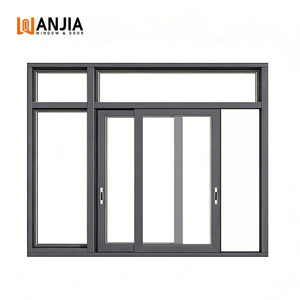
Engineered to harmonise structural exterior alloy shielding with organic solid timber cores, our export systems undergo strict European testing protocols to ensure structural load tolerance, water tightness, and maximum thermal insulation across diverse continental environments.
Enterprise Manufacturing Authority
Why Tier-1 Contractors and Global Importers Partner With Us
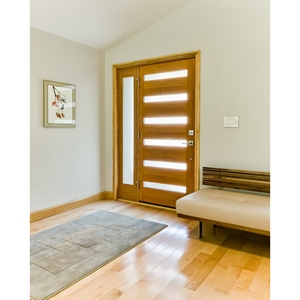
Operating out of Foshan, Guangdong—China's global capital for precision aluminum and structural door manufacturing—Guangdong Dejiyoupin Doors and Windows Co., Ltd. (DERCHI) represents over 25 years of continuous engineering evolution. We eliminate the vulnerabilities of broker-sourcing through unified vertical manufacturing.
Full CE, AS2047 & UL Listings
Every batch of aluminum clad wood doors undergoes certified testing for air permeability (EN 12207), water tightness (EN 12208), and wind resistance (EN 12210). We provide complete third-party verifiable testing dossiers required for smooth clearing and building authority approval.
Proprietary Clad-Timber Jointing
Unlike conventional adhesive-bonded framing, we employ independent nylon snap clips to secure the exterior 6063-T6 aluminum shell to the solid wood core. This accommodates disparate thermal expansion coefficients, eliminating warp, internal stress, and sealant rupture.
Global Containerized Logistics
We maintain comprehensive sea-freight packaging protocols: individual multi-ply foam wrappings, corrugated edge shields, and reinforced fumigated timber crates. We routinely export CIF and FOB to major hubs across Africa, North America, the Middle East, and Oceania.
Complimentary CAD & BIM Engineering
Our in-house technical draftsmen translate architectural schedules into fabrication-ready shop drawings within 24 to 48 hours. Precise reveal offsets, sub-sill drainage paths, and rough opening allowances are finalized before physical timber processing begins.
Advanced Kiln-Drying & Timber Selection
We source certified North American White Oak, European Larch, and Black Walnut. All natural timber undergoes rigorous computerized RF vacuum drying to stabilize moisture content precisely between 8% and 12%, preventing warping, mold, or checking in humid or arid destinations.
Dedicated Dedicated Sales Engineers
Communication friction causes costly site delays. Our team of English-speaking structural facade engineers supports contractors directly, matching architectural expectations with real-world fenestration tolerances and site installation hardware.
Technical Specification Benchmark
Engineering Differences: Aluminum-Clad Wood vs. Alternatives
Understanding the material dynamics between composite joinery and single-composition doors is vital for specifiers calculating whole-life lifecycle costs, thermal envelope compliance, and architectural value.
| Performance Metric | CE Certified Alum-Clad Wood | Standard Thermal Break Alloy | Unclad Solid Timber | Standard uPVC Profile |
|---|---|---|---|---|
| U-Factor (Thermal Insulation) | 0.85 – 1.20 W/m²·K Optimal | 1.60 – 2.20 W/m²·K | 1.40 – 1.80 W/m²·K | 1.30 – 1.90 W/m²·K |
| Exterior UV & Weather Defense | PVDF / AkzoNobel Powder Coat (30+ Yrs) | Powder Coat / Anodized (20+ Yrs) | Requires re-varnish every 2–3 yrs | Prone to discoloration / brittleness |
| Acoustic Attenuation (Rw) | 38 dB – 45 dB (Dense Timber Dampening) | 30 dB – 35 dB | 32 dB – 36 dB | 28 dB – 32 dB |
| Thermal Expansion Resistance | Floating Composite Snap-Clip System | Moderate Linear Expansion | Severe Swelling / Shrinkage Risk | High Expansion (Sash Sagging) |
| Architectural Interior Value | Furniture-Grade Oak/Walnut Finish | Metallic / Powder Coated Look | Natural Luxury Timber | Synthetic Plastic Profile |
Strategic Market Forecast
Future Procurement Trends in Architectural Clad Fenestration
Modern building codes such as the EU Energy Performance of Buildings Directive (EPBD) and ASHRAE 90.1 are reshaping how international buyers procure openings. As high-end residential and hospitality sectors evolve, door engineering is pivoting rapidly toward several clear trajectories.
1. Near-Zero Energy (NZEB) & Passive House Certification
Developers are transitioning away from double-glazed units toward triple-glazed, krypton-filled setups containing dual Low-E coatings. Aluminum clad wood is emerging as the default material for Passive House doors because solid wood possesses an intrinsically superior thermal conductivity rating compared to hollow metallics. Procuring certified assemblies with U-values below 0.8 W/m²·K provides forward-looking compliance against escalating municipal energy tariffs.
2. Concealed Multi-Point Electronic Access Systems
Mechanical keys are rapidly becoming obsolete in luxury residential and boutique hospitality projects. Next-generation procurement heavily prioritizes automated motorized multi-point locks concealed within the door rebate. These systems interface seamlessly with biometric sensors, smartphone access platforms, and smart building management systems (BMS), maintaining an uninterrupted perimeter seal without compromising architectural minimalism.
3. Oversized Flush Pivot Geometry
Traditional hinge systems are being superseded by heavy-duty bottom-bearing pivot hardware capable of supporting panels exceeding 400 to 600 kg. Architectural buyers require monumental entrance systems (reaching 3.5 to 5 meters in height) that present flush interior wood paneling while maintaining high wind-load deflection tolerances on the exterior aluminum shell.
4. Supply Chain Consolidation & Factory Pre-Hanging
Labor shortages on Western and African job sites have dramatically elevated the demand for completely pre-hung, pre-machined, and factory-glazed door sets. Procurement officers are reducing field installation errors by ordering systems where sub-frames, structural flashings, lock pockets, and perimeter seals are fully aligned and calibrated on the factory CNC line prior to container loading.
Procurement Clarity
Frequently Asked Questions by Commercial Buyers & Importers
Direct technical answers addressing manufacturing standards, logistics, custom hardware compatibility, and on-site performance verification.
What makes aluminum clad wood superior to standard wood-look aluminum doors?
Standard wood-look aluminum doors use metal tubes coated with a heat-transfer timber foil or powder finish; the frame remains cold, hollow, and thermally conductive. In contrast, authentic aluminum clad wood doors utilize a structural, solid kiln-dried hardwood body (such as red oak, larch, or black walnut) that provides natural acoustic dampening and low thermal conductivity, shielded on the exterior by an independent extruded aluminum profile that repels rain and UV radiation.
How does the door system prevent wood rot and internal condensation?
Our doors incorporate a dual-defense fenestration geometry. First, the exterior aluminum cladding does not touch the timber directly; it is mounted using engineered composite clip brackets that create a continuous 6mm to 8mm pressure-equalized ventilation cavity. Second, concealed drainage channels in the lower sill channel any wind-driven moisture away before it can contact the timber base, which is sealed with eco-friendly microporous anti-fungal coatings.
What certifications and compliance documents are provided for customs clearance?
We supply full European CE certificates conforming to EN 14351-1, ISO9001 quality management audits, AS2047 fenestration compliance reports, and UL-compliant fire-core listings where specified. For African destinations such as Nigeria, Kenya, or Ghana, we prepare necessary SONCAP, KEBS PVoC, and international fumigation certificates for export timber.
Can you accommodate custom architectural profiles, oversized heights, and bespoke hardware?
Yes. Approximately 85% of our factory production is fully made to measure. We fabricate door sashes up to 4 meters high and 2 meters wide. We rout lock recesses for global brands including German Roto, Siegenia, GU, Winkhaus, as well as American mortise locks and smart home multi-point electronic systems according to client schedules.
How are the products crated to prevent transit damage on multi-leg sea freight?
Doors are sealed in dust-proof shrink film, fitted with corner edge buffers, cushioned in 20mm high-density EPE foam, and enclosed inside heavy-duty fumigated wooden crates secured with steel banding. Crates are sized precisely to fit 20GP or 40HQ maritime containers without shifting during intermodal transit.
What is the typical production lead time and minimum order quantity (MOQ)?
Our standard production cycle is 25 to 35 business days following final sign-off on shop CAD drawings and hardware confirmations. For commercial projects and residential villas, our flexible modular assembly line supports orders from single bespoke entrance doors up to full multi-container mixed fenestration schedules.
Ready to Engineer Your Project Openings?
Submit your architectural schedule, door sizes, or CAD elevations. Our engineering team will review your specifications, calculate thermal and wind parameters, and deliver an itemized B2B export quotation within 24 hours.
Send an Inquiry