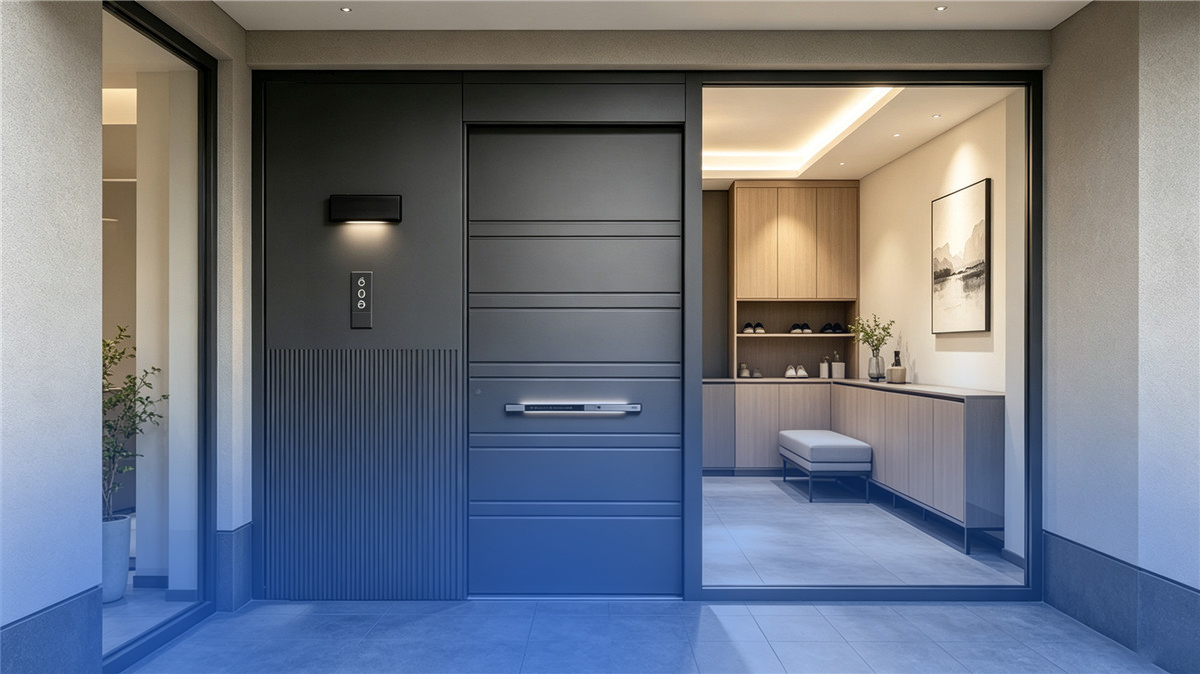
Pivot Door
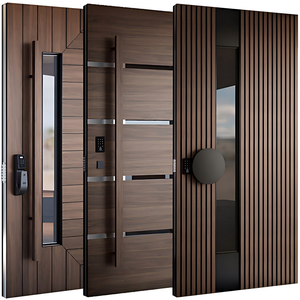
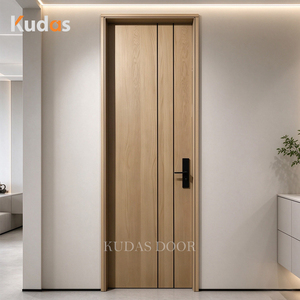
American Style Contemporary Modern Main Entrance Entry Wood Doors for Houses Modern Exterior Main Pivot Door
Dormakaba Pivot
Multi-Lock
Solid Veneer
Factory-direct engineering solutions spanning ultra-durable wood-grain sublimated aluminum casements, heavy-duty lift-and-slide patio doors, architectural pivot doors, and certified hurricane-proof building envelopes.
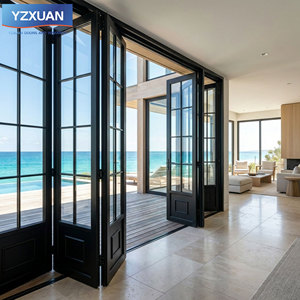
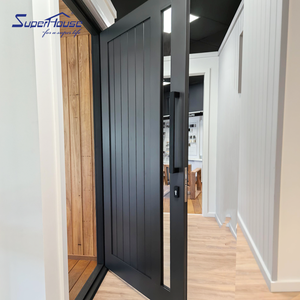
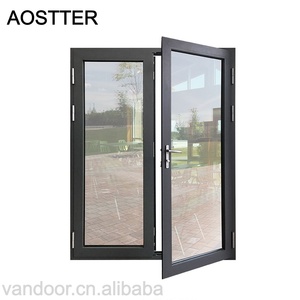
In modern architectural fenestration, the specification of exterior building envelopes requires balancing two historically conflicting demands: the natural, organic warmth of timber architecture and the structural durability, dimensional stability, and fire resistance of structural metals. Natural timber profiles suffer from hygroscopic expansion, anisotropic warping, biological degradation, and high lifetime maintenance cycles. Conversely, unadorned structural metal often fails to deliver the tactile and visual comfort required by luxury residential estates, boutique hospitality venues, and heritage preservation developments.
Our CE-certified aluminium wood-finish window and door assemblies bridge this gap through multi-layer thermotransfer vacuum sublimation technology combined with structural polyamide thermal break technology (PA66-GF25). Manufactured strictly under the European standard EN 14351-1:2006+A2:2016 (Windows and doors - Product standard, performance characteristics), our systems undergo rigorous physical testing for air permeability (EN 12207), water tightness (EN 12208), and resistance to wind loads (EN 12210).
| Performance Criterion | CE Wood-Finish Aluminium (DERCHI) | Solid Natural Hardwood (Oak/Teak) | PVC / Vinyl Wood Foil | Standard Anodized Aluminium |
|---|---|---|---|---|
| Dimensional Stability | Zero Warping (6063-T6) | High hygroscopic expansion | Moderate thermal creep | High structural rigidity |
| Thermal Transmittance (Uf) | 1.3 - 1.8 W/m²K (PA66-GF25) | 1.3 - 2.0 W/m²K | 1.4 - 2.2 W/m²K | 3.5 - 5.8 W/m²K (Unbroken) |
| UV & Weathering Index | Delta E < 2.0 (10 Yrs Q-Sun) | Requires re-oiling every 2 yrs | Chalking & delamination risk | Excellent color fastness |
| Fire Reaction (EN 13501-1) | Class A2-s1, d0 (Non-Combustible) | Class D-s2, d0 (Combustible) | Class B/C-s3, d0 (Toxic smoke) | Class A1 |
| Salt Spray Corrosion (ISO 9227) | > 1,500 Hours (Marine Grade) | Rot and fungal decay risks | Resistant but degrades | 1,000 Hours |
| Aesthetic Realism | Deep 3D tactile grain reproduction | 100% Authentic timber | Synthetic synthetic appearance | Metallic / Monolithic |
From an engineering perspective, the cornerstone of our wood-look window profiles lies in the structural alloy composition. We formulate extrusions using primary billet 6063-T5 and 6063-T6 architectural aluminium, maintaining profile wall thicknesses between 1.8mm and 3.0mm, well exceeding minimum commercial thresholds. The mechanical shear strength of our polyamide thermal barriers complies with EN 14024, guaranteeing structural integrity against horizontal wind loads exceeding 3,000 Pa (equivalent to Category 5 hurricanes).
Decades of specialized engineering allow us to provide commercial building developers, villa contractors, and international fenestration distributors with uncompromised manufacturing reliability.
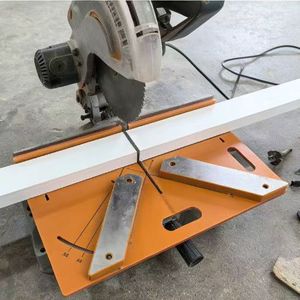
Equipped with computerized German double-miter precision saws, four-corner automated crimping centers, and automated continuous sublimation powder coating lines, ensuring micron-level machining tolerances.
Our complete fenestration assemblies carry European CE compliance markings, AS2047 cyclone compliance for the Australian market, ISO9001 quality audits, and optional UL-rated fire-resistant construction.
We do not merely supply standard profiles; our in-house engineering squad provides full CAD shop drawings, wind-load deflection calculations, and BIM models tailored to specific architectural blueprints.
Utilizing high-tensile corner cleat reinforcement injected with two-component German Henkel polyurethane corner sealant, eliminating water infiltration and ensuring structural stability for 30+ years.
Extensive experience shipping heavy-duty sea containers directly to global gateways—from European hubs to African ports (Lagos, Tema, Mombasa, Durban) and American commercial ports.
Coupled with dual or triple-glazed argon-filled acoustic laminated glass, our systems achieve sound reduction indices up to 45 dB (Rw), shielding interiors from high-decibel exterior urban noise.
Navigating environmental directives, material sustainability targets, and architectural shifts redefining the wood-grain aluminium window supply chain.
Commercial developers across the EU and North America are prioritizing Environmental Product Declarations (EPD). Modern window procurement mandates hydro-powered circular aluminium billets containing ≥ 75% recycled scrap content, drastically reducing scope 3 emissions without sacrificing structural alloy integrity.
With tightening international energy conservation codes (such as EU EPBD and ASHRAE 90.1), procurement is rapidly pivoting from standard double glazing to 34mm-54mm triple-glazed low-emissivity units with warm-edge composite spacers, pushing overall window Uw values below 0.80 W/m²K.
Architects are moving away from smooth flat wood prints in favor of tactile matte finishes that mimic the physical grooves of brushed wire-brushed European White Oak, Italian Walnut, and Teak. Qualicoat Class 2 fluoropolymer and polyurethane powders provide 10-year gloss and color retention guarantees.
Contractors increasingly bypass fragmented regional suppliers to procure entire building packages from a single certified manufacturing group—combining wood-finish main entrance pivot doors, terrace lift-and-slide doors, and matching casement windows in one consolidated container. Simultaneously, demand for concealed electromechanical multi-point lock drives, motorized ventilation actuators, and smart home automation (KNX/Zigbee) is growing at over 22% CAGR, requiring factory-integrated concealed wiring tracks within the aluminium extrusions.
Detailed answers addressing critical questions asked by facade consultants, structural engineers, quantity surveyors, and project developers.
Direct factory collaboration with Guangdong Dejiyoupin (DERCHI). Submit your architectural window schedules, CAD floorplans, or tender requirements to receive structural calculations, compliance documentation, and comprehensive FOB/CIF quotations within 24 hours.