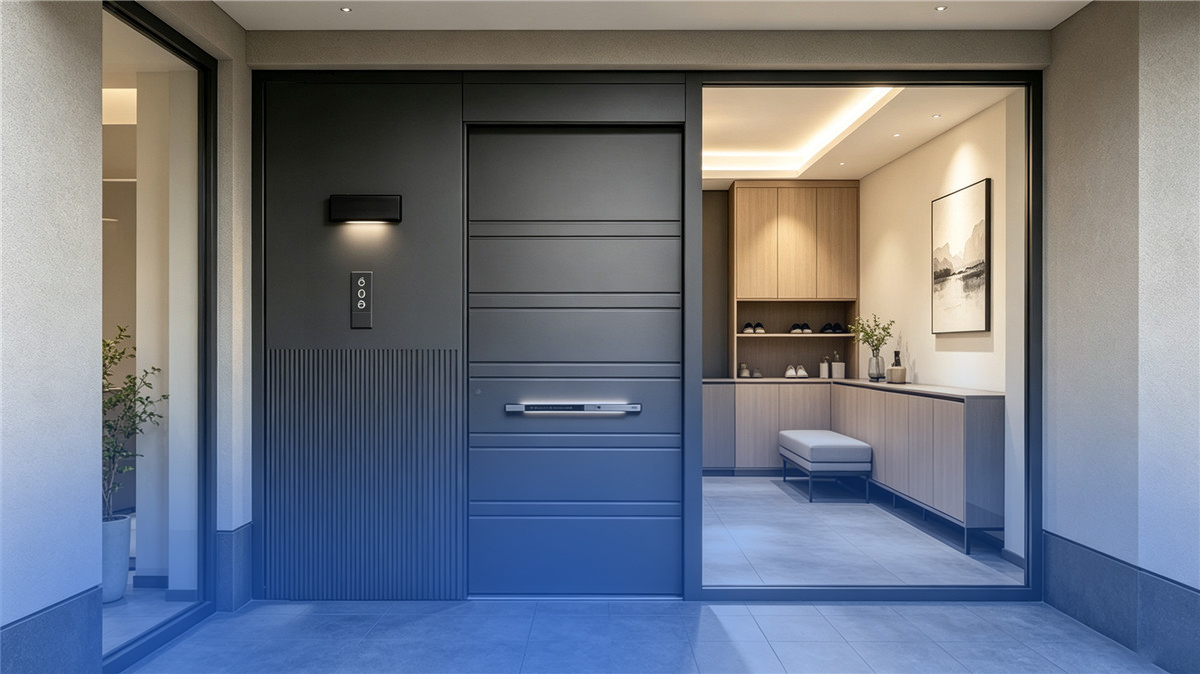
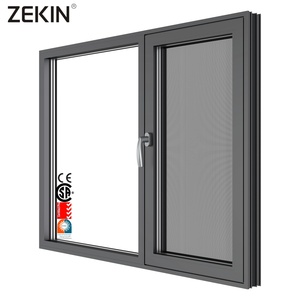
 Thermal Break
Precision Fenestration Lineup
Featured Architectural Systems & Coated Extrusion Assemblies
Engineered to harmonize rigorous thermal barrier performance with high-durability coated surface protection. Each configuration is calibrated for high-wind structural integrity, water-penetration resistance, and aesthetic longevity across residential, commercial, and hospitality master plans.
Thermal Break
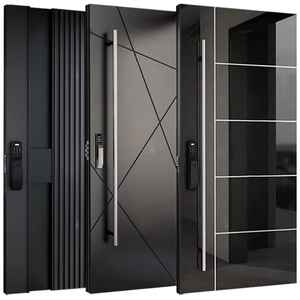 Pivot Portal
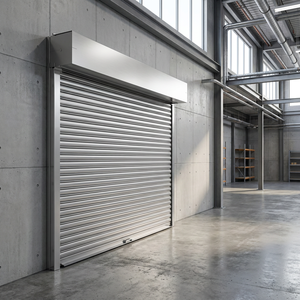 Automated Roll-Up
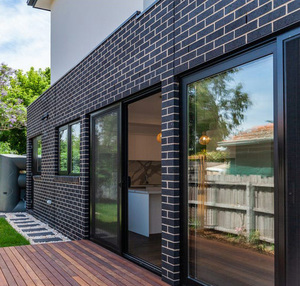 Stacking Slider
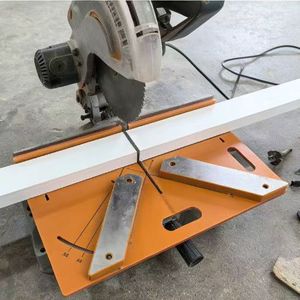 Tooling & Fab
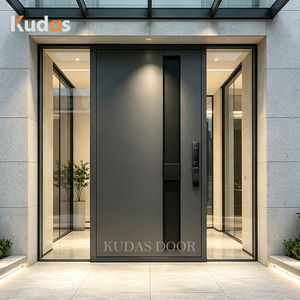 Cast Aluminum
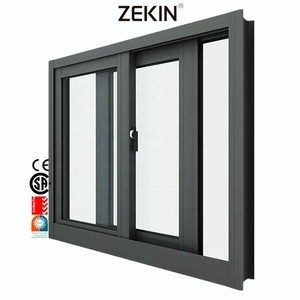 Hurricane Rated
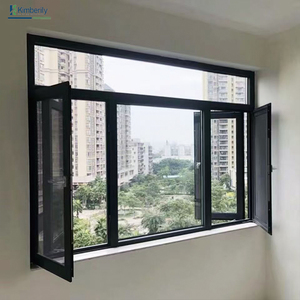 Energy Star
180,000㎡
Modern Manufacturing Plant
600+
Skilled Craftspeople & Engineers
100+
Global Patents & Testing Approvals
25+
Years Engineering Heritage
Industrial Whitepaper Analysis
Material Science, Surface Metallurgy & Thermal Barrier Dynamics
Architectural fenestration failure stems primarily from inadequate surface pretreatments, inferior alloy crystallization, or discontinuous thermal barrier mechanics. Review the technical baseline mandated across our production lines.
Primary 6063-T5/T6 Extrusion Metallurgy
We formulate exclusively using virgin A00 electrolytic aluminium billets, intentionally rejecting recycled secondary scrap that introduces microscopic iron and copper inclusions. Our extrusions maintain exceptional tensile strength (≥ 205 MPa) and yield strength (≥ 175 MPa).
- Magnesium-Silicide precipitate control ($\beta″-\text{Mg}_2\text{Si}$) for optimal ductal crystallization
- Profile wall thickness calibrated between 1.6 mm – 3.0 mm for structural wind compliance
- Strict web dimensional tolerances governed by EN 12020-2 international standards
Coating Chemistry: PVDF vs. Qualicoat Class 3
Exterior architectural surfaces require impervious polymer shields against solar degradation, moisture ingress, and atmospheric chlorides. We deploy automated vertical electrostatic spray and fluorocarbon baking lines.
- Fluorocarbon (PVDF): 70% Kynar 500 / Hylar 5000 resin; ≥ 40μm thickness; 4,000h salt spray resilience (ASTM B117)
- Architectural Powder: Qualicoat Class 2 & 3 super-durable formulations; ≥ 60μm coating thickness
- Non-chromate conversion chemical pretreatment ensuring molecular adhesion bonding
Polyamide Thermal Barriers & Condensation Control
Thermal bridging is eliminated using Technoform PA66 GF25 (polyamide reinforced with 25% glass fiber), which matches the coefficient of thermal expansion of aluminum alloy ($\approx 2.3 \times 10^{-5}/\text{K}$), preventing delamination across extreme cyclic temperatures.
- Low overall window thermal transmittance ($U_w$ down to $1.1\text{ W/m}^2\text{K}$)
- Co-extruded EPDM weatherstripping gaskets maintaining elasticity down to -40°C
- Pressure-equalized rain-screen chamber preventing capillary siphonage
Rigorous Compliance Protocols
EN 14351-1 Performance Metrics & Engineering Test Results
Obtaining CE Marking requires transparent Type Testing (ITT) and strict Factory Production Control (FPC) verified by certified notified bodies. The table below represents certified baseline values applicable to our coated window and door platforms.
| Performance Dimension | Harmonized European Standard | Classification / Result Achieved | Engineering Implications |
|---|---|---|---|
| Air Permeability | EN 1026 / EN 12207 | Class 4 (600 Pa) | Zero drafts at extreme wind velocities; minimum thermal dissipation and conditioned air leakage. |
| Water Tightness | EN 1027 / EN 12208 | Class E1500 (> 1500 Pa) | Guaranteed zero internal water seepage under severe, sustained driving tropical storm rains. |
| Resistance to Wind Load | EN 12211 / EN 12210 | Class C5 / B5 (2000 Pa) | Exceptional structural stiffness; frame deflection under full design gust load remains under L/300. |
| Thermal Transmittance ($U_w$) | EN ISO 10077-1 / EN ISO 10077-2 | 0.85 – 1.35 W/m²·K | Exceeds mandatory EU Near-Zero Energy Building (nZEB) standards using Argon warm-edge IGUs. |
| Acoustic Attenuation ($R_w$) | EN ISO 10140-2 / EN ISO 717-1 | 38 dB – 46 dB | Substantial noise dampening engineered for high-density urban infrastructure and coastal highways. |
| Operating Forces & Safety | EN 12046-1 / EN 14351-1 | Class 2 / Pass | Heavy sash hardware remains effortlessly smooth after 25,000+ mechanical open-close cycles. |

Factory Authority & Scale
Guangdong Dejiyoupin (DERCHI): Integrated Production Might
Operating from our monumental 180,000-square-meter manufacturing complex in Foshan, Guangdong, DERCHI stands as one of China’s Top 10 premier door and window engineering enterprises. Over the course of 25+ years, we have mastered full-lifecycle fenestration fabrication—from billet casting and precision multi-axis CNC profiling to robotic fluorocarbon spray lines and final crating.
By partnering directly with our manufacturing headquarters, commercial general contractors, facade fabricators, and architectural property developers eliminate intermediate broker markups while securing uncompromising traceability, dedicated engineering CAD drafting, and verified CE/AS2047 factory compliance.
Single-Source Accountability
Full control over extrusion, coating, double/triple glazing, and hardware fitting.
Complimentary CAD & BIM
Parametric shop drawings tailored directly to your architectural schedules.
Reinforced Export Crating
Heavy-duty treated timber cases with desiccant wraps designed for long sea crossings.
Fast Technical Response
Direct English-speaking project sales engineers ready within 24 operational hours.
Strategic Market Outlook
Future Procurement Trends in Architectural Coated Windows
The global fenestration market is moving beyond basic aesthetics toward carbon auditing, circular metallurgy, smart responsive glazing, and digitized supply chain traceability. Architects and procurement heads must plan around four prevailing vectors.
2025 – 2027 Trend
Low-Carbon & Hydro-Powered Smelting Billets
B2B buyers across Europe and the Commonwealth are mandating verified Environmental Product Declarations (EPD). Utilizing aluminum smelted with renewable hydro-power slashes embodied carbon below 4.0 kg $\text{CO}_2$/kg Al (compared to the coal-fired industry average of 14.5 kg $\text{CO}_2$).
2026 – 2028 Trend
Hyper-Durable Powder Finishes Displacing Liquid Solvents
Volatile Organic Compound (VOC) emissions restrictions are driving specifiers toward solvent-free electrostatic powder coatings. Qualicoat Class 3 super-polyester powders now rival fluorocarbon durability with a 30-year resistance against micro-cracking and chalking.
2027 – 2029 Trend
Integrated Micro-Ventilation & Concealed Actuators
Modern facades emphasize unencumbered sightlines. Smart multi-point concealed European casement hinges paired with motorized IoT micro-ventilation allow automated air cycling without compromising baseline thermal or burglar-resistance ratings.
2028 – 2030 Trend
Consolidated Turnkey Logistic Assemblies
Institutional contractors increasingly sidestep disjointed sub-contractors. Purchasing fully-glazed, factory-tested assemblies with integrated flashing, sub-sills, and stainless security screens saves substantial on-site labor and cuts site warranty disputes by over 70%.
Knowledge Base & Technical Consultation
Frequently Asked B2B Procurement Questions
Direct, highly specific engineering answers addressing testing verification, container loading protocols, coating lifecycles, and bespoke architectural specifications.
What specific test documentation constitutes valid CE certification for aluminium coated windows?
Under European Construction Products Regulation (CPR 305/2011) and EN 14351-1, valid CE marking requires more than a simple certificate. A compliant manufacturer must furnish an official Declaration of Performance (DoP), backed by Initial Type Test (ITT) reports from an accredited Notified Testing Body.
Our complete engineering documentation bundle includes certified test reports covering EN 1026/12207 (air permeability), EN 1027/12208 (water tightness), EN 12211/12210 (wind resistance), and calculation dossiers for EN ISO 10077-1/2 (overall thermal transmittance $U_w$), enabling effortless sign-off by municipal building inspectors.
How does fluorocarbon (PVDF) coating compare with electrostatic architectural powder coating in harsh coastal climates?
For installations situated within 3 kilometers of a marine shoreline (or subject to continuous high UV exposure), Fluorocarbon (PVDF) based on 70% polyvinylidene fluoride resin (AAMA 2605 compliant) provides unmatched resistance against atmospheric salt fog, acid rain, and solar ultraviolet radiation. It resists gloss loss and chalking for up to 30 years.
However, modern Qualicoat Class 2/3 Super-Durable Architectural Powder Coatings offer exceptional surface hardness, heightened scratch and impact resistance, and zero solvent VOC emissions during manufacturing. For high-traffic residential and commercial developments located further inland, Qualicoat powders represent a cost-effective, hyper-durable alternative available in thousands of RAL textures.
Can DERCHI manufacture custom dimensions, structural mullions, and unique opening mechanics?
Yes. Every single window and door system produced in our Foshan facility is 100% made to measure. Our engineering department operates dedicated BIM/CAD design stations where structural moment-of-inertia computations ($I_x, I_y$) are executed to determine exact mullion depths required for project-specific wind pressures.
Whether your drawings call for massive 6-meter-high automated stacking sliding panels, hidden sash minimalist configurations, frameless corners, or bespoke arching, our precision CNC fabrication centers deliver precise fitments matched to your site opening schedules.
How are completed window assemblies packaged to eliminate transit damage during ocean shipping?
Export damage is unacceptable. We utilize an engineered 5-stage packaging protocol: first, profile surfaces are shielded with low-tack protective film; second, high-density polyethylene edge protectors are wrapped around every corner; third, the entire unit is hermetically enveloped in bubble wrap and stretch film.
Finally, assemblies are placed within bespoke, heat-treated (ISPM-15 compliant) fully enclosed fumigated plywood crates or rigid steel-framed transport pallets. Crates feature shock-absorbing styrofoam beds and internal anti-rub spacers to guarantee safe arrival at major international sea ports worldwide.
What are the typical commercial production lead times and minimum order quantities (MOQ)?
Because we operate our own extrusion and powder coating facilities across 180,000 square meters, our typical production cycle is 25 to 35 calendar days following final CAD shop-drawing confirmation and glass tempering authorization.
For custom villa architecture or tailored mockups, our MOQ starts flexibly at 30 square meters. For commercial developments, containerized bulk consignments (20GP, 40HQ) receive optimized container-load layouts calculated to minimize maritime freight costs per unit.
What warranty coverage and long-term hardware support does the factory provide?
We provide a comprehensive 10-year structural warranty on all extruded 6063-T5 aluminum alloy framing members, a 10-to-20-year performance warranty on architectural fluorocarbon and super-durable powder finishes against delamination, peeling, and excessive fading, and a 5-year warranty on insulated glass units against seal failure and internal fogging.
Hardware systems (including Siegenia, Hoppe, Sobinco, or our proprietary heavy-duty multi-point mechanisms) carry replacement guarantees with dedicated spare-parts availability supported directly by our engineering after-sales division.
Accelerate Your Architectural Fenestration Tender
Direct factory collaboration ensures total dimensional control, uncompromised coating integrity, and verified CE EN 14351-1 testing conformity. Send our fenestration engineering desk your project schedules, opening elevations, or bespoke specification sheets today.
Direct Factory Pricing
Free Engineering CAD Drawings
CE & ISO9001 Certified
Worldwide Container Logistics