Engineered Anthracite Window Systems for Commercial & Residential Facades
Browse our precision-manufactured European standard casement, sliding, and top-hung systems featuring architectural Anthracite powder coating (RAL 7016), multi-point hardware, and advanced thermal acoustic barriers.
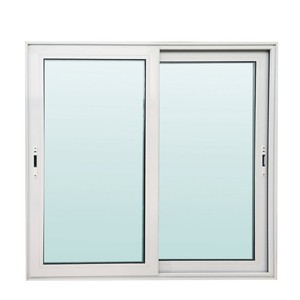
Modern Colonial Black Double Glazed Aluminum Sliding Windows Stainless Steel Screen
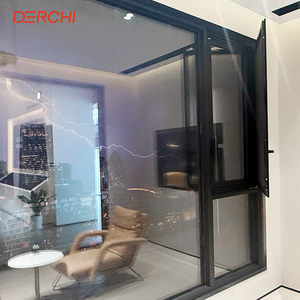
Hurricane Impact Windows Thermal Break Aluminum Casement Window Double Toughened Glass
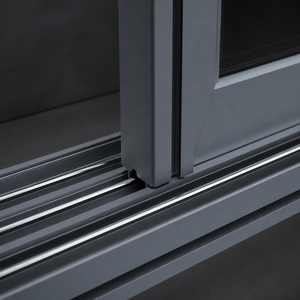
Aluminum Glass Interior Sliding Window Anthracite Frame Brush Seal Design
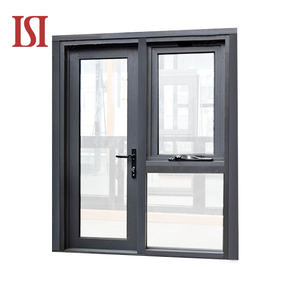
Top Brand AS2047 Modern Design Aluminium Casement Windows Hurricane & Impact Proof
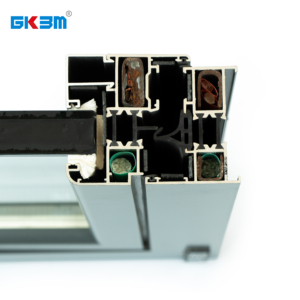
China GKBM Anthracite Grey Double-glazing Thermal Break Aluminum Casement Window
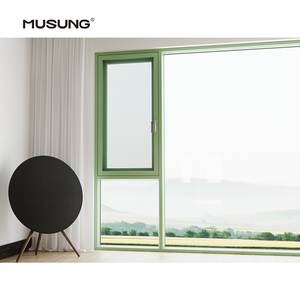
Soundproof Hurricane Impact Aluminium Window Outward Thermal Break Casement Windows
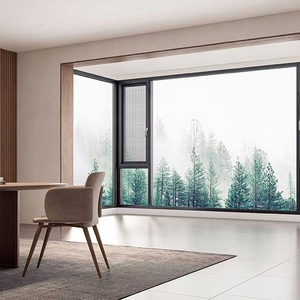
Prima High End Powder Coated Anthracite Grey Aluminium Casement Window
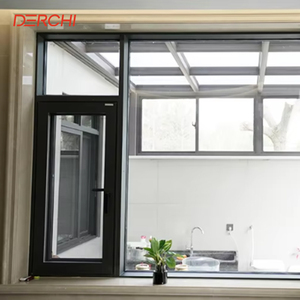
Residential Project Aluminum Thermal Break Low E Glass Aluminium Casement Window
Engineering Specifications: CE EN 14351-1 and Structural Dynamics of RAL 7016
Specifying dark anthracite finishes for commercial envelopes requires strict physical performance balancing. Below is our metallurgical and structural overview for engineering consultants, developers, and project estimators.
Thermal Expansion & Bi-Metallic Bowing Mitigation
Anthracite Grey (RAL 7016) exhibits a solar absorptance coefficient surpassing 0.85, resulting in surface temperatures climbing up to 80°C under peak irradiance. When combined with interior air-conditioned spaces at 22°C, an acute thermal delta (ΔT ≥ 55°C) is formed. Without rigorous structural separation, conventional extrusions suffer from bi-metallic bowing distortion, compromising weather seals and causing hardware jamming.
Our engineering solves this through multi-chamber Polyamide PA66 GF25 thermal breaks integrated with mechanical shear-relief sliding isolators. This decoupling neutralizes internal torque, guaranteeing operational smoothness even along exposed southern and western building facades.
- Shear-relieved polyamide composite struts prevent longitudinal warping.
- Calculated frame expansion coefficients integrated into sub-frame anchoring.
- Elimination of sash binding across extreme diurnal temperature fluctuations.
Qualicoat Seaside Class 2 Architectural Powder Chemistry
Color fastness and UV degradation are the critical failure points of sub-standard anthracite systems. Industrial pollution, sea salt spray, and prolonged UV exposure induce chalking and gloss loss on lower-tier hybrid coatings.
We exclusively apply Qualicoat Class 2 Superdurable Polyvinylidene Fluoride (PVDF) and architectural polyester finishes. Cured at tightly controlled ramp-up cycles, our finishes yield a 30-year resistance profile against color shift (ΔE < 2.0 under ISO 2810 testing). The formulation integrates inert inorganic pigments that resist severe chemical breakdown across maritime and high-density urban locations.
- Minimum coating thickness of 60–80 microns guaranteed across all extrusions.
- 1,000+ hours acetic acid salt spray (AASS) validation per ISO 9227.
- High mechanical mar-resistance during shipment and active site installation.
EN 14351-1 Harmonized European Conformity Protocols
A verified CE marking is more than a commercial export label; it represents rigorous compliance with the European Construction Products Regulation (CPR 305/2011). Our manufacturing facility operates under rigid Factory Production Control (FPC) audited against EN 14351-1:2006+A2:2016 standards.
Every batch of windows comes verified with complete Declaration of Performance (DoP) dossiers. Tested performance envelopes include Class 4 Air Permeability (EN 12207), Class 9A Watertightness (EN 12208), and Class C5 Wind Load Deflection (EN 12210), providing full documentation for architectural submittals, building envelope consultants, and structural engineers globally.
- Independent notified body verification with accredited test certificates.
- Factory traceability tracking every billet melt number and thermal break batch.
- Full structural calculation packages for regional wind load compliances.
| Performance Characteristic | Harmonized Standard | DERCHI Engineering Value | Standard Market Level | Compliance Status |
|---|---|---|---|---|
| Thermal Transmittance (Overall Uw) | EN ISO 10077-1 / EN ISO 10077-2 | 1.1 – 1.4 W/m²·K (Triple Glazed) | 2.2 – 2.8 W/m²·K | Passive House Ready |
| Air Permeability | EN 12207 | Class 4 (600 Pa test pressure) | Class 2 (300 Pa) | Air Tight Envelope |
| Watertightness Under Driving Rain | EN 12208 | Class E900 / 9A (up to 900 Pa static) | Class 4A (150 Pa) | Severe Weather Spec |
| Wind Load Resistance | EN 12210 / AS2047 (N6) | Class C5 (≤ 2000 Pa design, 3000 Pa safety) | Class B2 / B3 | High-Rise Approved |
| Acoustic Attenuation (Rw / C;Ctr) | EN ISO 717-1 | Rw 42 dB (-1; -4) (Acoustic PVB Laminated) | Rw 28 – 32 dB | Airport Zone Standard |
| Powder Coating Durability (RAL 7016) | Qualicoat Standard (Edition 16) | Class 2 / Class 3 Seaside Approved | Class 1 (Standard Industrial) | 25-Year Marine Grade |
Emerging Sourcing & Engineering Trends in Architectural Fenestration
Building envelope procurement is experiencing a major structural shift driven by decarbonization mandates, advanced automation, and evolving architectural demands. Here is how Tier-1 developers and contractors stay ahead.
1. Low-Carbon Billet Procurement & CBAM Verification
The European Union's Carbon Border Adjustment Mechanism (CBAM) has fundamentally altered global aluminum supply chains. Importers and contractors can no longer afford unverified, coal-fired aluminum billets due to impending tariff penalties.
Procurement teams are transitioning to audited factories utilizing hydropower-smelted low-carbon primary aluminum (≤ 4.0 kg CO²/kg Al) alongside certified post-consumer scrap blending. Future-proof supply contracts demand full cradle-to-gate Environmental Product Declarations (EPDs) to satisfy strict LEED v4.1 and BREEAM sustainability standards.
- Mandatory Scope 1 & Scope 2 carbon auditing across casting facilities.
- Third-party verified EPDs to secure municipal building green certifications.
- Full traceability minimizing border adjustment tariffs and import taxes.
2. Ultra-Narrow Sightlines with Concealed Motorization
Contemporary luxury residential and boutique commercial architecture is aggressively shifting toward structural minimalism. The demand for Anthracite frames has expanded from conventional casements into ultra-slim profile sightlines (sash frames as narrow as 28mm to 45mm) capable of carrying 400kg triple-glazed insulated units.
To achieve this without structural failure, factories leverage high-yield-strength 6063-T6 or 6060-T66 extrusion profiles bolstered by structural silicone bonding. Simultaneously, European smart-building systems demand concealed electric multi-point actuators, rain sensors, and invisible ventilation reveals built directly inside the frame rebate.
- Concealed friction hinges and integrated sash locks for monolithic aesthetics.
- IoT integration with Building Management Systems (BACnet, KNX, Zigbee).
- High-inertia structural transoms engineered for double-height architectural spans.
3. Direct-from-Source OEM Sourcing & Modular Glazing
Escalating logistics expenses and tighter project schedules have made the traditional multi-tier distributor framework inefficient for massive fenestration budgets. Engineering contractors are choosing direct OEM factory partnerships that offer comprehensive in-house value chains.
By shifting to single-source manufacturers handling aluminum extrusion, CNC machining, automated corner crimping, insulated glass unit (IGU) lamination, and export packing under one roof, project managers trim procurement cycles by 4 to 6 weeks while reducing intermediary markup by 20% to 35%.
- Pre-glazed unitized systems ready for rapid on-site crane hoisting.
- Barcoded container packing optimized for progressive site erection schedules.
- In-house shop drawing drafting (BIM / Revit / CAD) accelerating submittal approvals.

Guangdong Dejiyoupin Doors & Windows (DERCHI)
Operating across an extensive 180,000 square meter smart manufacturing campus in Shishan Town, Foshan, Guangdong Dejiyoupin Doors and Windows Co., Ltd. (DERCHI) stands among China's premier fenestration and entrance system manufacturers. Backed by over 25 years of specialized engineering mastery, our industrial complex employs more than 600 skilled technicians, engineers, and quality assurance specialists.
Our infrastructure encompasses dedicated European-standard extrusion lines, automated vertical Qualicoat powder coating towers, 5-axis CNC profile machining centers, automated sealant injection systems, and dust-free automated insulated glass processing lines.
From high-rise commercial facades across Australia and North America to prestigious estate developments in Europe and Africa, we maintain a complete export packaging framework. Heavy-duty fumigated wooden crates, internal shock-absorbing EVA foam wraps, and waterproof shrink sealing protect precision Anthracite finishes throughout maritime transit.
Frequently Asked Questions for Project Engineers & Specifiers
Technical clarity on certifications, thermal performance testing, ocean transport logistics, and custom system engineering.
What documentation accompanies your CE Certified Aluminium Anthracite Windows? +
How do your factories prevent color degradation and fading on Anthracite (RAL 7016) in high UV zones? +
Can your aluminum window systems achieve passive house thermal transmittance levels? +
How are the products secured against transit damage during containerized sea shipping? +
What is your capability regarding custom engineering, shop drawings, and hardware integration? +
What are your standard manufacturing lead times and minimum order quantities (MOQ)? +
Request a Formal Technical Fenestration Tender
Connect directly with our senior application engineering team in Foshan. Submit your project window schedule, CAD floor plans, or performance requirements for a certified factory-direct proposal and complete technical submittal.
