0%

Choosing among China’s best Aluminum Door manufacturers requires more than comparing photographs and factory prices. Global buyers need evidence of engineering quality, production control, and dependable communication. A strong supplier should explain alloy grades, profile thickness, thermal-break design, glass specifications, hardware brands, and surface-treatment options. Those details matter when a door faces coastal humidity, strong sunlight, or repeated daily use.

Building-envelope expert Dr. Joseph Lstiburek has stated, “Water is a building’s worst enemy.” His warning applies directly to Aluminum Door performance. Careful buyers should inspect drainage paths, corner joints, weather seals, threshold design, and installation instructions. Factory audits can reveal practical details, such as organized extrusion storage, calibrated cutting equipment, and sample doors tested before shipment. Product reports also deserve attention. Check whether test methods, laboratory names, and certification dates are clearly provided.

This guide introduces leading Chinese manufacturers for residential, commercial, and project-based applications. It considers customization capacity, export experience, quality inspection, packaging, lead times, and after-sales support. A reliable manufacturer should provide drawings, finish samples, performance data, and a clear replacement policy. It should also ask about local climate and building conditions, not only the required quantity.

No supplier is perfect. Even an impressive factory may communicate poorly during a complex project. That is worth remembering. Buyers should request a sample, verify references, and review every technical promise in writing. The right partnership is not always the cheapest choice. It is the one that delivers stable performance from the factory floor to the installed doorway.
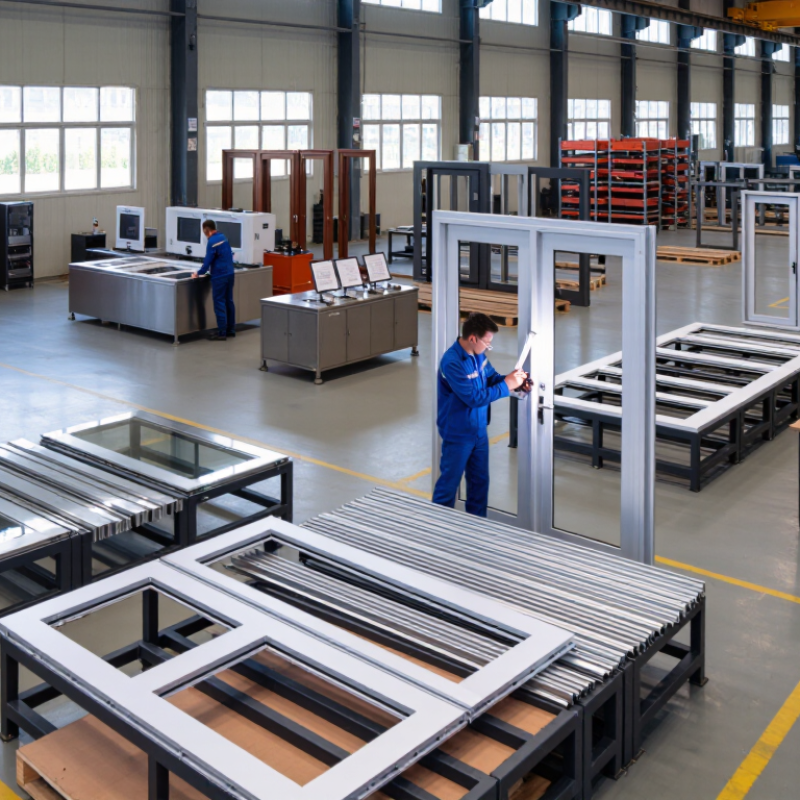
China Best Aluminum Door Manufacturers for Global Buyers

What Defines a Leading Aluminum Door Manufacturer in China

China Best Aluminum Door Manufacturers for Global Buyers

A leading aluminum door manufacturer is defined by more than modern equipment or attractive catalogs. It should understand climate, building use, and installation conditions in different markets. Experienced manufacturers discuss wind pressure, drainage, thermal breaks, glass options, and hardware before quoting. They can provide section drawings, test records, and clear production schedules. This practical detail shows professional knowledge, not simple sales language. Factory visits, sample reviews, and project references also help buyers judge real capability.

Reliable manufacturers control each stage, from aluminum extrusion inspection to surface finishing and final assembly. Workers should check frame dimensions, corner joints, seals, and lock alignment. Small errors become visible when a door meets the wall. Quality systems matter, but human judgment still matters. A leading supplier explains limitations honestly and accepts technical questions. It should also support packaging, shipping documents, installation guidance, and after-sales communication. No factory is perfect. Some promises may sound impressive but need verification through samples and records.

Tips: Request a complete sample door, not only a profile piece. Compare frame thickness, gasket fit, drainage holes, and opening movement. Ask for material certificates and performance reports that match your required standards. Confirm who handles design changes. A slow answer here can become a costly delay later. Test communication before placing a large order.

Key Aluminum Door Products and Customization Options

China Best Aluminum Door Manufacturers for Global Buyers

Key Aluminum Door Products and Customization Options

Aluminum door manufacturers in China commonly produce sliding doors, hinged doors, folding doors, entrance systems, and thermally broken models. Each type suits different building conditions. Sliding doors work well for wide openings and patios. Hinged doors provide stronger sealing for bedrooms, offices, and service areas. Folding systems can connect indoor and outdoor spaces, but their hardware needs careful alignment.

Global buyers can usually customize frame colors, glass types, dimensions, opening directions, handles, locks, and screen systems. Powder coating offers durable surface protection in many climates. Wood-grain finishes create a warmer appearance. Low-E glass can improve solar control, while laminated glass helps reduce injury risks after breakage. For coastal projects, buyers should request corrosion-resistant hardware and suitable surface treatments.

Experienced sourcing teams should review section drawings, drainage paths, wall thickness, and installation tolerances before ordering. A door may look excellent in a sample room but perform poorly on an uneven site. That detail matters. Ask for air, water, wind-load, and thermal test data when the project requires it. Confirm packing methods, replacement parts, warranty terms, and inspection procedures in writing. One common mistake is choosing glass and color before checking local energy requirements. Another is ignoring installation training. The factory can make a precise door, yet poor fitting may cause leaks, drafts, or difficult operation. Specifications should be checked twice.

China Best Aluminum Door Manufacturers for Global Buyers

The chart presents common aluminum door product configurations and representative panel counts used in international residential and commercial projects. Customization may include thermal-break profiles, low-E glazing, powder coating or anodizing, insect screens, multi-point locks, access control, and inward or outward opening options. Actual dimensions and panel limits depend on structural design, hardware, glass weight, wind load, and local building codes.

How Chinese Aluminum Door Manufacturers Manage Quality and Certification

China Best Aluminum Door Manufacturers for Global Buyers

How Chinese Aluminum Door Manufacturers Manage Quality and Certification

Reliable Chinese aluminum door manufacturers treat quality as a process, not a final inspection. They check aluminum profiles, glass, hardware, seals, and thermal-break strips before production begins. Each batch should carry a supplier code, production date, and inspection record. This simple traceability helps teams locate problems quickly.

Experienced factories test door samples for air leakage, water penetration, wind resistance, opening cycles, and coating adhesion. They may also perform salt-spray testing for coastal projects. Test methods should match the buyer’s target market and building standards. Certifications such as ISO 9001, CE, or other regional approvals must be verified for the exact product and application. A certificate alone proves little if its scope is unclear.

Quality engineers often review drawings with buyers before cutting begins. They confirm wall thickness, frame size, glass specifications, drainage paths, and packing requirements. Factory audits can reveal practical details, including calibration labels and storage conditions. No factory gets every batch perfect. A missed inspection record or small color variation can still occur. Honest suppliers report these issues, correct the cause, and retain evidence. Buyers should request test reports, material certificates, inspection photos, and pre-shipment checks. Clear records build confidence. Human judgment still matters.

Export Services, Production Capacity, and Global Buyer Support

China’s leading aluminum door manufacturers serve global buyers through structured export services. Experienced teams review drawings, dimensions, glass specifications, finishes, and installation conditions before production. This early check prevents expensive changes later. It also reveals practical issues, such as mismatched hardware or unsuitable drainage details.

Production capacity should be measured beyond factory size. Reliable manufacturers manage extrusion, cutting, CNC processing, powder coating, anodizing, assembly, and packaging through documented procedures. Buyers should request realistic monthly output, sample approval records, and inspection points. A clean workshop helps, but it does not prove consistent quality. Process evidence matters more.

Global buyer support continues after the order leaves the factory. Export teams can prepare commercial invoices, packing lists, certificates, loading photos, and shipment updates. They may also provide installation drawings, spare hardware, and video guidance for local contractors. Clear communication reduces errors across time zones. Some delays still happen. Weather, vessel changes, and customized finishes can affect delivery schedules. Honest suppliers report these risks early and offer workable adjustments.

A strong supplier relationship needs measurable details. Confirm tolerances, color standards, carton protection, pallet requirements, and replacement procedures in writing. Ask who answers technical questions after delivery. Support should not disappear after payment. In practice, even capable manufacturers can miss a detail during busy seasons. Regular inspections and shared checklists create a more dependable export experience.

China Best Aluminum Door Manufacturers for Global Buyers - Export Services, Production Capacity, and Global Buyer Support

Evaluation Dimension Typical Export-Supplier Data What Global Buyers Should Verify Export Service and Buyer Support
Product Range Sliding doors, hinged doors, folding doors, lift-and-slide doors, thermal-break doors, and entrance doors Confirm whether the supplier provides complete door systems, including frames, panels, hardware, seals, screens, and accessories. CAD drawings Sample development Custom finishes
Production Capacity Common factory planning range: approximately 5,000–30,000 square metres of finished door products per month Capacity varies by automation level, product configuration, order mix, and the number of production lines. Ask for recent production records and monthly loading plans. Production schedule Batch planning Order tracking
Aluminum Profiles 6063 aluminium alloy is widely used for architectural door profiles; common temper options include T5 and T6 Verify profile wall thickness, dimensional tolerances, alloy certificates, surface treatment, and whether profiles comply with the destination market requirements. Material certificates Profile samples Technical submittals
Surface Finishes Powder coating, anodizing, PVDF coating, wood-grain transfer, and mill finish For exterior applications, confirm coating thickness, colour reference, gloss level, pretreatment process, and test documentation. RAL colour matching Finish samples Inspection reports
Thermal Performance Thermal-break door systems commonly use polyamide insulation strips, often in the 14.8–34 mm range depending on the system design Request tested U-value data for the complete door assembly rather than relying only on the aluminium profile specification. U-value data Section drawings Energy documentation
Glass Options Single, double, and triple glazing; common insulated glass configurations include 5+12A+5 mm and 6+16A+6 mm Confirm glass thickness, spacer type, gas filling, low-E coating, safety treatment, visible light requirements, and local building-code compliance. Glass configuration Safety glass Packing protection
Hardware Compatibility Multipoint locks, rollers, handles, hinges, restrictors, and concealed hardware can be configured according to door type Check load ratings, corrosion resistance, replacement availability, compatibility with the selected profile system, and installation instructions. Hardware schedules Spare parts Installation guides
Customization Made-to-order dimensions, opening directions, panel layouts, colours, glass types, screens, thresholds, and hardware options Provide approved shop drawings before production. Confirm allowable dimensional tolerances and responsibilities for site-measurement data. Shop drawings Engineering review Prototype approval
Quality Control Typical controls include incoming material inspection, profile cutting checks, assembly inspection, hardware testing, and final appearance inspection Ask whether inspection records are retained by batch and whether third-party inspection is accepted before shipment. Pre-shipment inspection Photo records Non-conformity control
Certifications and Testing Relevant documentation may include ISO 9001, CE-related technical files, EN test reports, ASTM test reports, and local compliance documents Certification requirements depend on the destination country and product application. Verify certificate scope, issuing body, test method, and validity. Compliance files Test reports Regulatory support
Minimum Order Quantity Custom orders commonly start from one project or a small trial batch; exact quantities depend on profile, colour, glass, and hardware selection Confirm minimum quantities for non-standard colours, special profiles, custom moulds, and low-volume replacement orders. Trial orders Project quotations Mixed-container planning
Lead Time Common planning range: approximately 25–60 days after drawing approval, deposit receipt, and material confirmation Longer lead times may apply to custom extrusions, special finishes, imported hardware, large projects, or peak-season production. Milestone schedule Delay alerts Progress updates
Export Packaging Common methods include protective film, foam or corner protection, individual cartons, timber frames, and reinforced pallets Packaging should be selected according to door size, glass content, container handling, humidity exposure, and destination transport conditions. Loading plans Container photos Packing lists
Shipping and Documentation Sea freight is commonly used for project orders; typical documents include commercial invoice, packing list, bill of lading, and certificate of origin where applicable Confirm Incoterms, port of loading, cargo insurance responsibility, customs classification, and destination-country import requirements. FOB / CIF / DAP Document preparation Freight coordination
Warranty and After-Sales Commercial warranties commonly cover manufacturing defects for a defined period, subject to installation, maintenance, and usage conditions Review exclusions, warranty start date, glass and hardware coverage, replacement procedures, and evidence required for a claim. Remote assistance Replacement parts Claim handling
Data shown represents commonly used industry ranges and export practices for aluminium door suppliers in China. Actual specifications, capacity, lead time, testing, pricing, and service terms must be confirmed through the supplier’s current technical documents and project quotation.

How to Evaluate and Select the Right Chinese Supplier

Selecting among China’s best aluminum door manufacturers requires more than comparing catalog prices. The International Aluminium Institute reported global primary aluminum production of about 70.6 million tonnes in 2023. That scale supports strong manufacturing capacity, but it does not guarantee consistent door quality. Buyers should verify alloy certificates, extrusion tolerances, coating records, and production photographs from the actual factory. A polished website can still hide weak process control.

Request samples before approving a large order. Check frame joints, drainage holes, gasket compression, glass seating, and hardware alignment by hand. Ask for test reports covering air permeability, water tightness, wind resistance, and thermal performance. European projects may reference EN standards, while North American projects often require ASTM-based testing. The supplier must explain which laboratory performed each test. Unclear paperwork is a warning.

Factory audits should examine extrusion storage, powder-coating thickness, assembly lines, and final inspection records. The 2024 Global Aluminium Industry Outlook from CRU emphasizes energy, raw-material, and supply-chain pressures across the sector. Buyers should therefore confirm lead times, minimum order quantities, backup material sources, and packaging methods. Use a written quality agreement with measurable tolerances. Do not rely on promises alone. I have seen buyers focus too heavily on low unit prices, then absorb replacement costs and project delays. The evaluation can be imperfect, but documented evidence makes mistakes easier to detect and correct.

FAQS

What types of aluminum doors can manufacturers commonly produce?

Common options include sliding, hinged, folding, entrance, and thermally broken doors. Sliding doors suit wide openings and patios. Hinged doors usually seal better. Folding systems need accurate hardware alignment.

Which customization options are usually available?

Buyers can customize frame colors, glass, dimensions, opening directions, handles, locks, and screen systems. Wood-grain finishes add warmth. Powder coating helps protect surfaces. Check local requirements before choosing colors or glass.

Which glass types may suit different projects?

Low-E glass can improve solar control and indoor comfort. Laminated glass helps reduce injury risks after breakage. Coastal projects may require corrosion-resistant hardware. The cheapest glass may not be suitable.

What technical details should buyers review before ordering?

Review section drawings, drainage paths, wall thickness, frame sizes, and installation tolerances. Confirm air, water, wind-load, and thermal data when required. Check twice. A beautiful sample may fail on an uneven site.

How can buyers evaluate a supplier’s quality process?

Ask how the factory checks profiles, glass, hardware, seals, and thermal-break strips. Records should include supplier codes, production dates, and inspection results. Traceability helps locate defects quickly. Records matter.

Which tests are useful for aluminum doors?

Useful tests include air leakage, water penetration, wind resistance, opening cycles, and coating adhesion. Salt-spray testing may help coastal projects. Test methods should match local building standards and the intended application.

What should buyers verify about certifications and test reports?

Verify that certificates apply to the exact product and application. Confirm the testing laboratory and covered standards. A certificate alone proves little when its scope is unclear. Request material certificates and complete reports.

What should a factory audit examine?

Inspect profile storage, coating thickness, assembly lines, calibration labels, and final inspection records. Review packing methods and replacement-part availability. Also check storage conditions. A polished website is not enough.

How can buyers reduce installation and delivery problems?

Confirm lead times, order quantities, backup material sources, packaging, warranty terms, and inspection procedures in writing. Request installation training when needed. Poor fitting can cause leaks, drafts, or difficult operation. Human judgment still matters.

Conclusion

China’s leading aluminum door manufacturers combine advanced production capabilities, experienced engineering teams, reliable material sourcing, and flexible customization services. They typically offer a broad range of Aluminum Door solutions for residential, commercial, and industrial projects, including sliding, folding, hinged, thermal-break, and energy-efficient designs. Buyers can often select different profiles, finishes, glass options, hardware, dimensions, and opening systems to match project requirements.

Quality management is supported by standardized production processes, strict inspection procedures, performance testing, and internationally recognized certifications where applicable. For global buyers, dependable manufacturers also provide export documentation, secure packaging, production scheduling, technical communication, and after-sales support. When evaluating suppliers, buyers should compare product quality, customization expertise, manufacturing capacity, delivery reliability, certification records, communication efficiency, and total project value. A careful review of samples, factory capabilities, quality controls, and service commitments can help international customers choose a trustworthy long-term partner.


Evelyn

Evelyn

Evelyn is a professional marketing specialist dedicated to helping businesses better understand innovative products, practical solutions, and evolving market opportunities. With a strong background in product communication, customer research, and strategic content development, Evelyn combines......