Choosing the right Aluminum Window manufacturer can shape a project’s comfort, appearance, and long-term operating costs. Global buyers often compare price first, yet performance details deserve equal attention. A lower quotation may exclude glazing, hardware, testing, or export-grade packaging. Those omissions can surface later as damaged frames, water leakage, or difficult installation.
This guide examines leading manufacturers serving international markets. It focuses on measurable capability, not impressive claims alone. Key factors include alloy quality, thermal-break design, coating durability, glass compatibility, air tightness, water resistance, and wind-load performance. Factory experience also matters. A supplier that understands local climate conditions can recommend suitable profiles for coastal humidity, heavy rain, strong sunlight, or cold winters. Ask for test reports, project references, production photos, and clear warranty terms. Independent verification is valuable.
Reliable manufacturers should explain tolerances, inspection procedures, delivery schedules, and after-sales support in practical language. Their samples should show clean corner joints, consistent finishes, smooth hardware movement, and accurate dimensions. Small details reveal production discipline. Still, no shortlist is perfect. Certifications may differ by market, and a successful project in one region may not transfer directly to another. Buyers should confirm requirements with local consultants and test representative samples before placing large orders. This guide offers a practical comparison framework. It does not replace careful due diligence.
A top aluminum window manufacturer is defined by repeatable performance, not a polished catalog. Experienced teams understand how coastal salt, sharp temperature changes, and heavy rain affect frames. They select suitable alloy grades, thermal breaks, gaskets, and coatings for each climate. Their engineers should explain wind-load calculations, glass options, drainage paths, and expected service life clearly. This practical knowledge matters when windows must fit high-rise openings or humid residential projects. Good advice is specific.
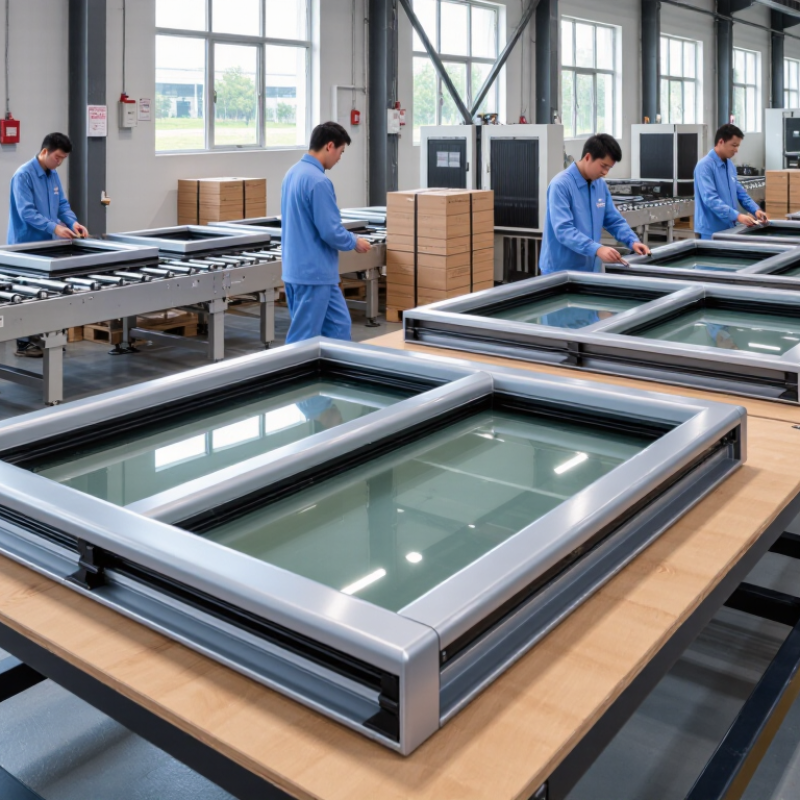
Professional manufacturers control every stage, from extrusion and cutting to assembly and final inspection. Each batch should have traceable material records and measured corner joints. Testing should address air leakage, water penetration, wind resistance, and repeated operation. Reliable suppliers share test reports, installation drawings, maintenance guidance, and realistic lead times. They also provide responsive after-sales support instead of disappearing after shipment. No factory is flawless. A top one admits defects, investigates causes, and improves processes. That honesty can matter more than perfect advertising.
Tips: Ask for recent project references in similar climates. Request sample corners, coating specifications, and test evidence before approving production. Check whether packaging protects frames from scratches during long transport. Confirm replacement-part access, warranty terms, and communication procedures in writing. Compare the delivered sample with the approved drawing, not just the sales promise. I would also inspect drainage holes personally; small omissions can create expensive failures.
Global buyers should evaluate aluminum window suppliers beyond catalog photos and quoted prices. A reliable review begins with factory evidence: production capacity, extrusion sources, coating equipment, and quality records. Ask for recent audit reports and traceability from billet to finished frame. Request physical samples. Check corner joints, drainage paths, gasket fit, glass seating, and surface consistency under direct light. A sample can look excellent while revealing weak hardware during repeated opening tests. Discuss thermal performance, air leakage, water resistance, and wind-load data for the intended climate. Documents should identify test methods, dates, and laboratories, not vague claims. This takes patience.
Supplier reliability also depends on communication and production control. Compare response times, technical drawings, revision handling, minimum order quantities, and spare-part availability. A capable supplier should explain tolerances clearly and flag design conflicts before manufacturing. Confirm that certificates match the destination market’s technical requirements. Review packaging with photographs of corner protection, separators, moisture barriers, and loading patterns. Ask how damaged units are recorded and replaced. Confirm payment terms, shipping responsibilities, delivery schedules, and warranty procedures in writing. Independent references from similar climates can expose issues that sales material misses. Yet references are not proof. A common mistake is trusting a polished showroom as evidence of consistent production. It is not. Visit the facility when order value justifies the cost, and inspect actual production records rather than only finished displays.
| Evaluation Dimension | Measurable Indicator | Practical Benchmark for Global Buyers | Recommended Evidence | Suggested Weight |
|---|---|---|---|---|
| Product Standards and Compliance | Applicable product and market standards | Compliance should match the destination market, such as EN 14351-1 for windows and external pedestrian doorsets or applicable ASTM test methods for North American projects. | Valid test reports, declarations of performance, technical drawings, and market-specific compliance documents. | 15% |
| Air Leakage Performance | Air permeability under pressure differential | Lower air leakage is preferred. Require tested performance under EN 1026 or ASTM E283, with the project specification defining the acceptance class or limit. | Laboratory report identifying the exact window configuration, dimensions, hardware, glazing, and test pressure. | 10% |
| Water Tightness | Resistance to water penetration | Specify a water penetration pressure suitable for the building height, exposure, and local weather conditions. Testing may follow EN 1027 or ASTM E331. | Independent test report, drainage details, sill design, and installation instructions. | 10% |
| Structural Strength | Deflection, operating force, and resistance to wind load | The design should be verified for the project wind load and span. Common test references include EN 12211 or ASTM E330. | Structural calculations, profile section properties, anchoring details, and complete-size specimen testing. | 10% |
| Thermal Efficiency | Whole-window U-value and solar heat gain | Use whole-window Uw or U-factor rather than center-of-glass values alone. The target should be based on the destination climate, energy code, frame type, spacer, and glazing specification. | Thermal simulation or accredited test report showing frame, glass, spacer, dimensions, and calculation method. | 12% |
| Aluminum Profile and Finish | Alloy, wall thickness, thermal break, coating, and color consistency | Confirm the specified aluminum alloy and temper, consistent profile thickness, suitable polyamide thermal barrier where required, and a coating system appropriate for the exposure category. | Material certificates, coating specifications, batch records, color samples, and coating test results such as AAMA 2603, 2604, or 2605 where applicable. | 10% |
| Glazing and Safety | Glass build-up, safety classification, spacer, sealant, and edge quality | Specify glass according to location and risk: insulating glass may reference EN 1279, laminated glass EN 14449, and thermally toughened glass EN 12150 where those standards apply. | Glass certificates, thickness schedule, sealant data, spacer specification, visual inspection criteria, and production inspection records. | 10% |
| Manufacturing Quality Control | Process control, inspection frequency, and traceability | Prefer documented incoming-material inspection, in-process checks, final inspection, nonconformity control, and batch-level traceability supported by an ISO 9001-based quality system. | Quality manual, inspection checklist, calibration records, corrective-action logs, and an audit or factory-visit report. | 12% |
| Customization and Engineering Support | Design capability and project documentation | The supplier should provide shop drawings, opening schedules, section details, installation guidance, hardware options, and engineering review for non-standard sizes. | Approved drawings, sample calculations, BIM or CAD files where needed, mock-up records, and revision-control procedures. | 8% |
| Delivery and Export Capability | Lead time, packaging, export documents, and shipment reliability | Evaluate quoted production lead time, packaging suitability for long-distance transport, container loading plan, Incoterm clarity, and ability to provide commercial and origin documents. | Sample purchase order timeline, packing specification, loading photos, export documentation checklist, and on-time delivery records. | 8% |
| Warranty and After-Sales Service | Warranty scope, exclusions, response time, and spare parts | Require separate written terms for frames, hardware, insulated glass, finishes, and installation. Confirm claim procedures, replacement-part availability, and technical response channels. | Signed warranty document, service-level commitments, spare-parts list, claim workflow, and references from comparable international projects. | 5% |
| Total Evaluation Weight | 100% | |||
Leading Aluminum Window Manufacturers by Market Region
Selecting aluminum window manufacturers requires regional knowledge, not only factory size. Climate, building codes, and installation habits vary widely. In North America, buyers often request thermally broken frames, insulated glass, and tested performance reports. Coastal projects need durable coatings and careful drainage design. Experienced suppliers should explain these details before quoting.
European projects commonly emphasize low U-values, airtightness, recycled aluminum content, and documented product testing. Buyers should ask for current declarations, not attractive claims on a website. In the Middle East, solar heat gain, dust control, and oversized sliding systems may matter more than maximum insulation alone. Manufacturers serving this region need packaging that protects finished frames during long, hot transport. Small details matter.
Across Asia, demand ranges from compact urban apartments to high-rise curtain-wall systems. A capable manufacturer should provide shop drawings, sample corners, hardware options, and production tolerances. In Africa and Latin America, robust ventilation, repairable hardware, and flexible delivery schedules can influence project success. Local installers may prefer simpler profiles, even when engineers specify advanced systems. That conflict deserves honest discussion. I have seen projects lose time because a beautiful specification ignored available tools and training. Regional sourcing is never perfect. Verify certifications, factory capacity, warranty terms, and after-sales response before placing a large order. Ask for references from similar climates, not just famous projects.
Global buyers should judge aluminum window manufacturers beyond polished catalogs. Product quality appears in alloy grade, thermal breaks, coating consistency, and hardware performance. Ask for test reports and production samples. A sample should open smoothly, close tightly, and show even corner joints. Inspect drainage paths, gasket compression, and frame thickness. These details often reveal more than showroom photographs. In my experience, cheap profiles can look excellent at first. Problems emerge after heat, rain, or repeated operation.
Certifications add confidence, but they need verification. Check whether documents cover the exact window series, glass package, and factory location. Useful evidence may include air infiltration, water penetration, wind-load, thermal, and acoustic test results. Quality systems also matter, especially when orders involve multiple container loads. Ask how inspections are recorded and how rejected components are handled. A certificate alone proves little. It can be outdated, limited, or unrelated to the model quoted. Buyers should compare destination-market standards instead of collecting the longest certificate list.
Customization should be technical, not merely cosmetic. Confirm opening types, dimensions, colors, glass specifications, screens, and installation interfaces. Request shop drawings before production, with tolerances clearly marked. Small errors can create large site delays. Tips: Build a comparison sheet covering test scope, warranty terms, lead time, replacement parts, and sample results. Request one pilot batch before a large order. It may feel slower. It often exposes unclear drawings or weak packaging early. Also ask for photos of packed corners and a water-testing video. Not every supplier can provide convincing evidence, and that is useful information.
Selecting top aluminum window manufacturers requires more than comparing catalog prices. Global buyers should examine production experience, engineering capacity, and export records. Ask for project references in similar climates and building types. A reliable supplier can explain alloy grades, thermal breaks, glass options, and drainage design clearly. Request physical samples before approving mass production. Small details matter, such as corner joints, gasket elasticity, and protective film quality.
Check factory documents, but do not trust certificates alone. Confirm whether testing covers air leakage, water penetration, wind pressure, and thermal performance. Requirements differ between coastal, tropical, cold, and high-rise projects. An independent inspection can verify dimensions, coating thickness, hardware, and packing quality. Buyers should also review warranty terms, replacement procedures, minimum order quantities, lead times, and after-sales communication. Get every promise in the purchase contract.
Logistics deserve equal attention. Confirm the delivery term, loading plan, container utilization, and moisture protection. Poor packaging can damage excellent windows before installation. A trial order is safer than committing to a large shipment immediately. It may reveal slow replies or inconsistent labeling. No checklist is perfect. I would still leave room for local installer feedback, because a technically strong product can fail through poor site handling. A supplier that accepts questions, reports limitations honestly, and corrects mistakes is usually more dependable than one offering the lowest quotation.
Dependability comes from repeatable performance, not attractive catalogs. The manufacturer should explain alloys, thermal breaks, drainage, glass, and service life clearly. Good advice is specific.
Check alloy grade, frame thickness, corner joints, gasket compression, coating consistency, and hardware movement. Open and close the sample several times. Look closely.
Request evidence for air leakage, water penetration, wind resistance, thermal performance, and repeated operation. Confirm the reports match the quoted window series. A certificate alone proves little.
Check the factory location, product series, glass package, testing scope, and document dates. Unrelated or outdated certificates create false confidence. Verify every detail.
Confirm opening styles, dimensions, colors, glass, screens, tolerances, and installation interfaces. Request approved shop drawings before production. Small errors cause large site delays.
Samples reveal corner quality, gasket elasticity, drainage paths, and protective-film performance. A pilot batch can expose weak packaging or unclear drawings. It may feel slower.
Confirm delivery terms, loading plans, container use, moisture protection, and corner packaging. Scratches can appear during long transport. Excellent windows can arrive damaged.
Put warranty terms, replacement parts, response procedures, and correction duties in writing. Ask how defects are investigated. No factory is flawless.
Not automatically. Compare testing, samples, lead time, packaging, references, and replacement access. A low price may hide later installation costs. I might still miss something.
A top Aluminum Window manufacturer is defined by consistent product quality, advanced production capabilities, reliable delivery, and strong customer support. Global buyers should evaluate suppliers according to material strength, thermal performance, weather resistance, safety design, production capacity, quality control systems, and relevant certifications. Regional market knowledge is also important, as climate conditions, building standards, and installation requirements can differ significantly between countries and regions.
Buyers should compare suppliers based on product durability, design flexibility, customization options, technical documentation, warranty terms, and after-sales service. A dependable manufacturer should be able to provide various profiles, finishes, glazing configurations, and hardware solutions while maintaining stable quality across different orders. Before purchasing, global buyers should clearly define project requirements, request samples and detailed quotations, verify certifications and production facilities, assess communication efficiency, and confirm lead times, packaging, shipping arrangements, and payment conditions. Selecting a supplier through this structured process can reduce purchasing risks and support long-term cooperation.